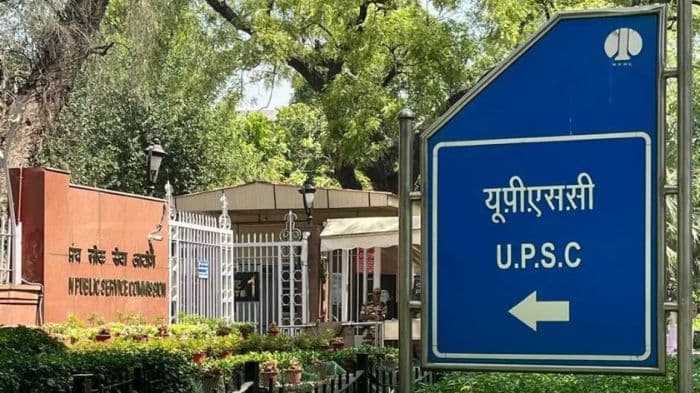
The Union Public Service Commission (UPSC) is looking at reforms to its recruitment and examination processes as it begins its second century, with shorter examination cycles, technology-based measures and changes in candidate assessment emerging as key areas of focus.
The issue of lengthy recruitment timelines also featured prominently during the UPSC’s centenary celebrations in New Delhi. Prime Minister Narendra Modi called for greater “time certainty” in competitive examinations and said recruitment cycles should be shortened without lowering examination standards.

Modi said delays of even a few months can create difficulties for young candidates and called for examination bodies to reduce the time taken to complete recruitment processes.
He also described shorter examination cycles as having an equity dimension because prolonged processes can increase the financial and practical burden on aspirants.
UPSC conducts around 250 recruitment processes
UPSC Chairman Ajay Kumar highlighted the scale of the commission’s work during the centenary deliberations.
The Commission conducts around 250 recruitment processes every year across areas including engineering, medicine, science, economics and defence. It also conducts the Civil Services Examination for services including the Indian Administrative Service, Indian Foreign Service and Indian Police Service.
The UPSC prepares its examination calendar around 18 months in advance, reflecting the planning involved in conducting its recruitment examinations.
The emphasis on reducing timelines comes alongside efforts to improve the examination experience and strengthen the integrity of the selection process.
Focus shifts beyond predictable answers
Ajay Kumar also outlined a broader approach to candidate assessment, saying examinations should test qualities such as reasoning, spontaneous thinking and judgment in situations involving ambiguity.
The emphasis is intended to go beyond candidates' ability to reproduce predictable or coached answers, according to the chairman's remarks at the centenary programme.
The commission's stated vision for its next phase is built around trust, transparency and technology, while retaining merit, fairness and equal opportunity as core principles.
Technology to strengthen examination security
UPSC has also introduced technology-based measures as part of its efforts to strengthen examination integrity.
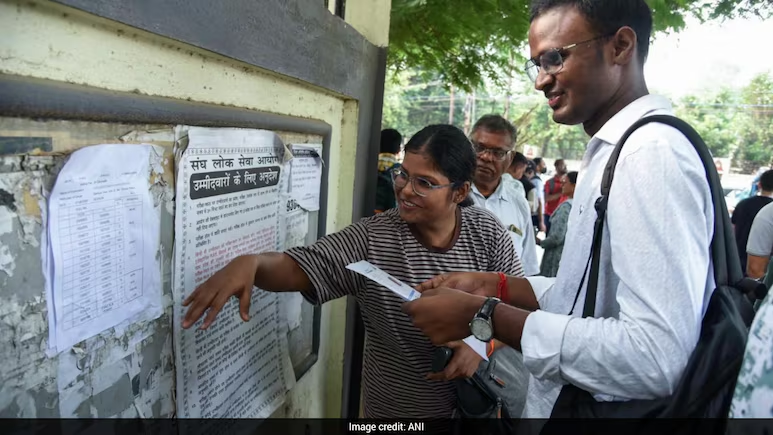
Recent measures include digital e-admit cards and face authentication. The Commission has also introduced a Universal Registration Number, randomised interview boards and a Candidate Helpdesk with a 30-channel IP call centre and a two-level escalation mechanism.
The UPSC's technological transition is not new. The commission's centenary discussions traced its use of computers back to 1978, with digital systems now playing a larger role in examination and recruitment processes.
Greater coordination among recruitment commissions
The reform discussion also extends beyond the UPSC to State Public Service Commissions.
During the centenary address, Modi called for greater cross-learning among recruitment commissions and suggested that existing forums where state commissions exchange practices could be strengthened through exposure to international standards and technological practices.
The objective, he said, should be to standardise procedures where appropriate and provide greater clarity to candidates participating in competitive examinations.
As the UPSC enters its second century, the reforms being discussed cover both the speed of recruitment and the way candidates are assessed, while the commission continues to emphasise the principles of merit, fairness and equal opportunity.







.webp&w=256&q=75)