


Severe burns, repeated surgeries and a secret courier network keep Iran’s Supreme Leader out of sight, as Revolutionary Guard commanders tighten their grip on power.
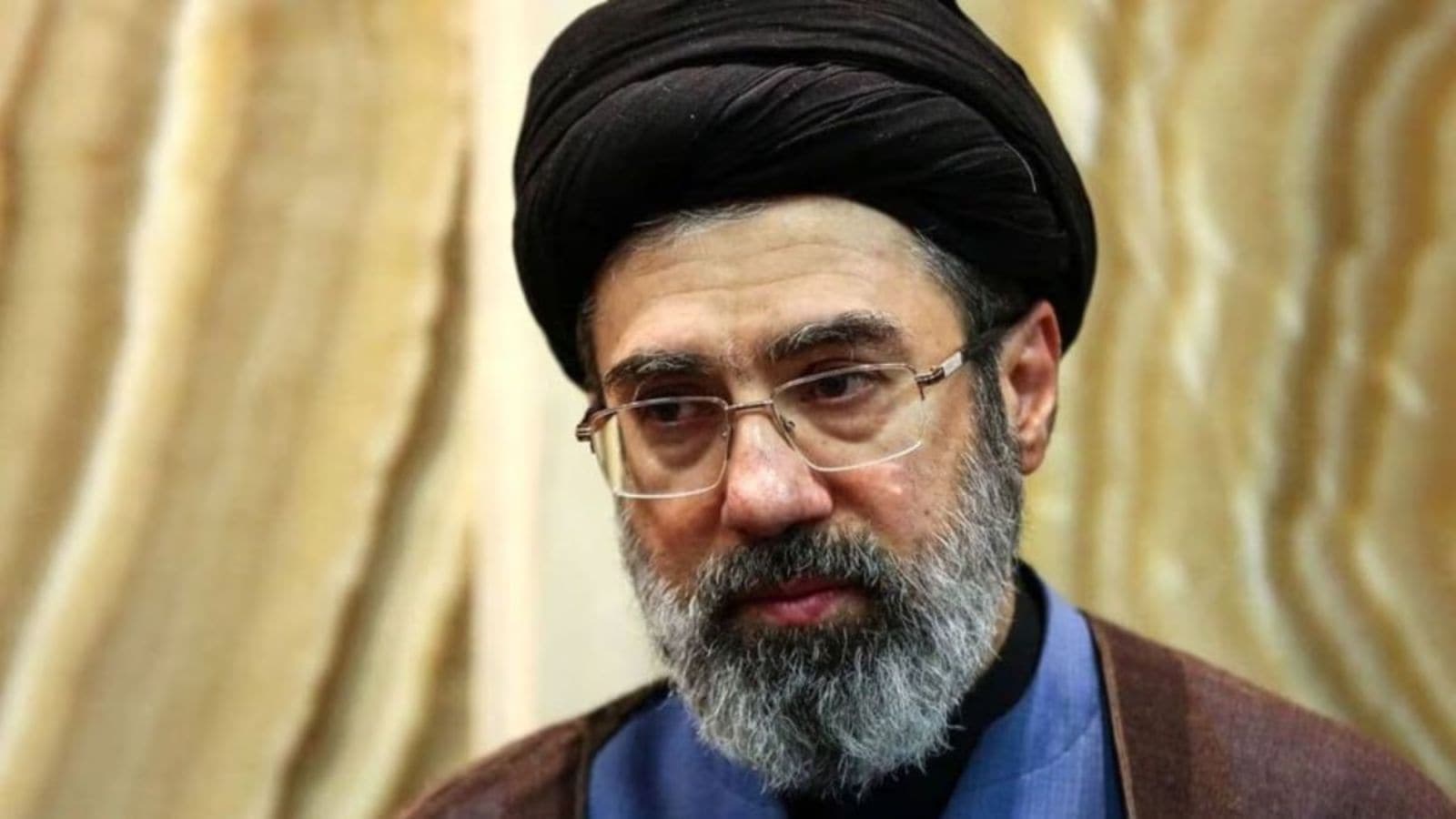
Iran’s political centre of gravity appears to be shifting quietly but decisively. Even as Tehran holds its ground in its ongoing confrontation with the United States, real authority is increasingly being exercised not from the Supreme Leader’s office, but by senior military commanders.
A report by The New York Times indicates that Supreme Leader Mojtaba Khamenei has been largely sidelined due to grave injuries sustained earlier this year, forcing a temporary but consequential transfer of power to the Islamic Revolutionary Guard Corps.

Mojtaba, who assumed leadership following the death of his father Ali Khamenei, has not made a single public appearance —audio or visual since his appointment in March. Behind the scenes, he is said to be battling the physical toll of multiple surgeries and long-term rehabilitation.
The turning point came on February 28, when a joint US–Israeli airstrike targeted his father’s compound — where Mojtaba also lived. The attack reportedly killed several close family members and left him critically wounded.
Since then, access to him has been tightly controlled. Confined to an undisclosed location, he remains under constant medical supervision, surrounded largely by doctors and healthcare staff.
Officials familiar with his condition were quoted by The New York Times as saying that Mojtaba has undergone multiple complex surgeries. These include three operations on one leg—likely to result in a prosthetic — as well as surgery on one hand, which he is slowly regaining use of.
Severe burns to his face and lips have further complicated his recovery, making speech difficult and necessitating additional procedures, including reconstructive surgery.
Despite the extent of his injuries, those close to the situation say he remains mentally alert and continues to participate in governance—albeit from a distance.
In his absence, a powerful circle of senior commanders within the Islamic Revolutionary Guard Corps has emerged as the dominant decision-making force, particularly on matters of national security, war strategy and foreign policy.
One observer familiar with Iran’s internal dynamics described the current system as resembling a “boardroom”, where decisions are made collectively rather than dictated from the top. Mojtaba’s role, they suggested, has become more supervisory than executive.
Even top civilian leaders, including President Masoud Pezeshkian—himself a trained heart surgeon—have reportedly been involved in his treatment. Yet senior military officials have avoided visiting him in person, wary that any traceable movement could reveal his location to Israeli intelligence.
With direct communication severely restricted, an unusual system has taken shape. Messages to and from the Supreme Leader are relayed through a chain of couriers, travelling across roads and highways to reach his undisclosed location. Replies follow the same route back.
These logistical constraints, coupled with his fragile condition, have effectively handed operational control to military leadership for now.
While political factions across Iran continue their internal debates, the balance of power, at least for now, appears firmly tilted towards those in uniform.

US probes nine universities over J-1 visas, halts PERM processing for eight firms
NLSIU Bengaluru announces NLSAT 2027 date for BA, LLB, MPP and PhD admissions

School Holiday Today, October 12, 2026: Are Schools Closed? Check State-Wise Updates

NIOS Date Sheet 2026: Class 10, 12 October-November Exam Timetable Released, Check Schedule
Yogesh Singh begins second term as Delhi University vice-chancellor
US probes nine universities over J-1 visas, halts PERM processing for eight firms
.jpg&w=256&q=75)
Regional universities face international student slump as visa refusals and political rhetoric deter applicants

AI may lift homework scores but weaken real learning, World Development Report raises concerns

Ken Griffin’s record $3 billion gift to Carnegie Mellon to fuel new Miami campus
Michael Jordan pledges $10 million to UNC social work school in mother’s honour

US probes nine universities over J-1 visas, halts PERM processing for eight firms
NLSIU Bengaluru announces NLSAT 2027 date for BA, LLB, MPP and PhD admissions
School Holiday Today, October 12, 2026: Are Schools Closed? Check State-Wise Updates
NIOS Date Sheet 2026: Class 10, 12 October-November Exam Timetable Released, Check Schedule
Yogesh Singh begins second term as Delhi University vice-chancellor
US probes nine universities over J-1 visas, halts PERM processing for eight firms
Regional universities face international student slump as visa refusals and political rhetoric deter applicants
AI may lift homework scores but weaken real learning, World Development Report raises concerns
Ken Griffin’s record $3 billion gift to Carnegie Mellon to fuel new Miami campus
Michael Jordan pledges $10 million to UNC social work school in mother’s honour
Copyright© educationpost.in 2026 All Rights Reserved.