


Flash floods triggered by a massive Himalayan landslide have devastated Nepal’s northern border, destroying settlements and infrastructure while leaving hundreds of foreign tourists and residents unaccounted for.
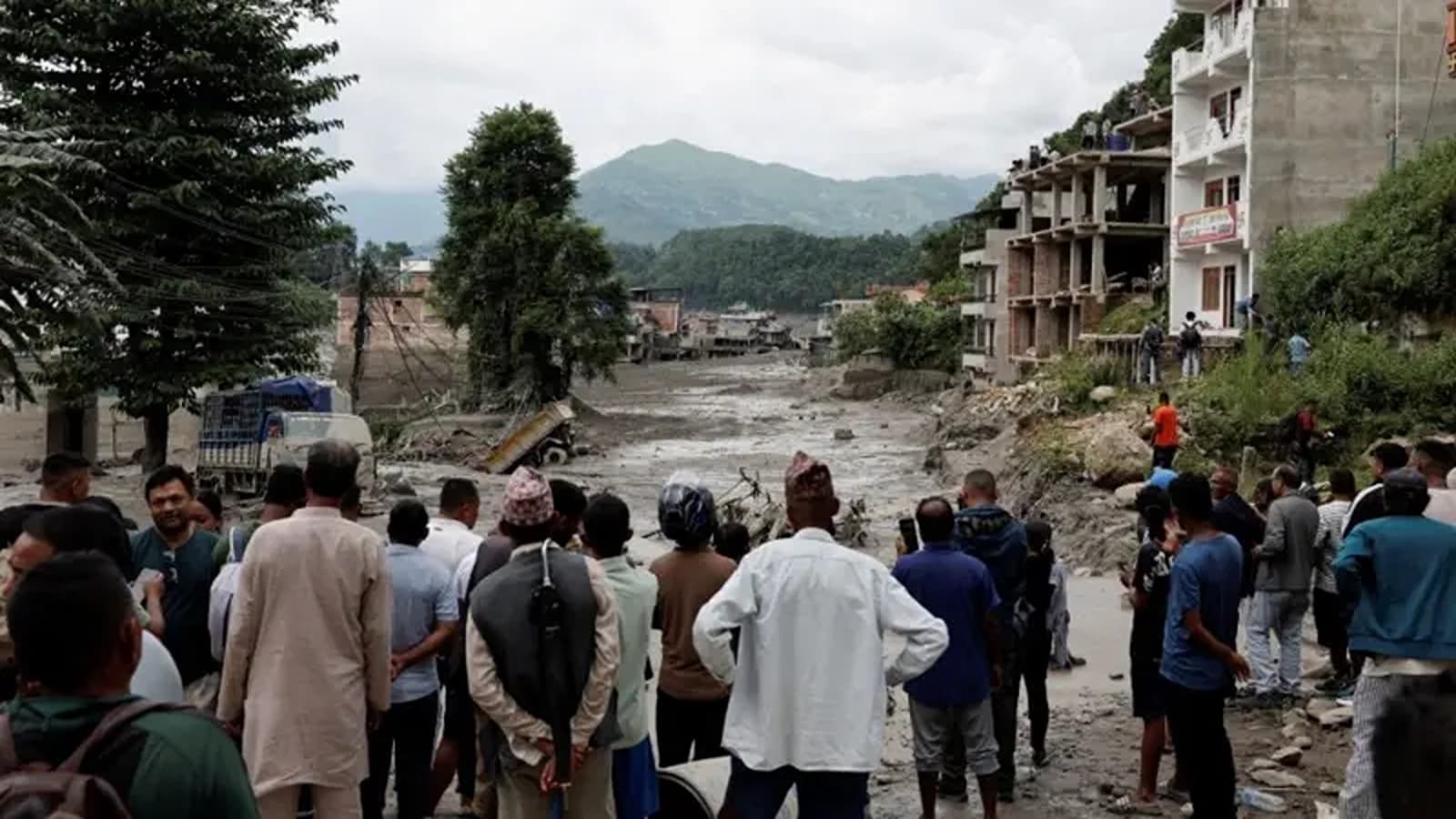
Aftermath of flash floods in Nepal's Nuwakot district - Image source: Reuters
Nepal’s devastating flash floods have killed at least 171 people and left hundreds missing, as rescuers backed by helicopters continue searching through destroyed settlements, riverbanks and debris along the country’s northern border with Tibet.
The disaster, which struck the Bhotekoshi and Trishuli river systems on Wednesday, has become an international rescue operation, with nationals from more than 30 countries among those reported missing. Nepal’s latest figures show 826 people unaccounted for, including 590 tourists. Of those tourists, 476 are foreign nationals and 114 are Nepali citizens.

Across the border in Tibet, Chinese authorities have reported three deaths and 558 missing people, bringing the combined number of missing across Nepal and Tibet to nearly 1,500, according to Reuters.
For residents in the worst-hit communities, however, the official figures offer little comfort.
“Around 50 of my neighbours are dead, and I’m not sure how many are missing. There is a very slim possibility of their being alive till now,” local resident Rajesh Shreshtha said.
Laxmi Khadka said two members of her family remain missing and that damaged telecommunications infrastructure has prevented her from contacting them.
“Two family members are missing, and I’m trying to contact them, but all the towers are gone. I’m extremely depressed now, and I have a very slim hope that they are still alive,” Khadka said.
The Nepal Army and other security forces have continued search-and-rescue operations, but the nature of the operation is rapidly changing as the chances of finding survivors decline.
“We gave up searching for the bodies of the missing now, as we are just recovering the dead bodies,” a Nepal Army representative said, according to the account provided for this report.
Death toll rises as search expands downstream
The 171 deaths recorded by Nepal’s National Disaster Risk Reduction and Management Authority have been spread across several districts after floodwaters travelled downstream through the Bhotekoshi and Trishuli systems.
Radio Nepal reported that 64 bodies were recovered in Chitwan, 27 in Dhading, 26 in Nawalparasi East, 20 in Gorkha, 12 in Nuwakot, nine in Tanahu, five in Nawalparasi West and two in Rasuwa.
The toll is expected to change as rescue teams gain access to areas that remain difficult to reach.
At least 85 security personnel are also among those missing, including 44 Nepal Army personnel, 28 Nepal Police personnel and 13 Armed Police Force personnel, according to NDRRMA figures cited by Radio Nepal.
Nepal Army helicopters have rescued at least 123 people from Timure in Rasuwa, including 94 Nepali citizens and 29 foreigners.
The scale of infrastructure damage is complicating the response. Authorities say 35 motorable bridges, 45 suspension bridges and around 40 kilometres of roads have been damaged.
Foreign tourists among the missing
The disaster has drawn international attention because many of those unaccounted for were travelling through the Himalayan region as tourists, trekkers or pilgrims.
Nepal Tourism Board figures cited by Kathmandu Post put the number of tourists reported missing or out of contact at 590, including 177 Indian nationals, 63 Americans, 53 Ukrainians, 34 Australians and 33 Britons. The list also includes 25 Canadians, eight Germans and six nationals each from Singapore and South Africa.
Reuters, using figures compiled from Nepal and China, reported that more than 700 foreign nationals were among those missing across the two sides of the border.
The affected route is particularly significant for international tourism and pilgrimage because it connects areas used by trekkers and people travelling toward Tibet and Mount Kailash, a major pilgrimage destination.
The large number of foreign nationals has prompted governments to begin tracing citizens through tour operators, local authorities and diplomatic channels.
India has been particularly affected, with Indian nationals making up the largest reported group of missing foreign tourists in Nepal. Indian authorities have activated assistance mechanisms while relief material has also been sent to Nepal.
What caused the flood?
The disaster was not caused by a conventional monsoon flood alone. Authorities and scientists are investigating a massive landslide, glacier or ice-rock collapse in the high Himalayas that sent a sudden surge of water and debris into the river system.
The initial event was powerful enough to produce seismic readings that were initially interpreted as an earthquake. Subsequent analysis indicated that the signal was associated with the collapse itself. The resulting surge travelled through the Lhende Khola and Bhotekoshi River before moving downstream into the Trishuli system. Entire settlements were hit within a short period.
At least 19 bridges and nearly 40 kilometres of roads were swept away, while several hydropower projects and border facilities were damaged. The destruction also cut communications and transportation routes, leaving rescuers dependent heavily on helicopters to reach isolated communities.
The warning controversy involving China
The disaster has also triggered questions about whether Nepal received sufficient warning of the danger from the Chinese side of the border. Claims have circulated that China had warned Nepal about the impending disaster in advance and that Nepal lacked the technology and infrastructure necessary to respond. However, China has denied that it failed to issue an early warning.
The Chinese Embassy in Kathmandu described allegations that China withheld a warning as false and misleading. It also rejected claims that the disaster was caused by the collapse of a geological dam on the Chinese side. According to the Chinese account, a landslide associated with an earthquake or earthquake-like tremor occurred on the Nepali side and caused the destruction on both sides of the border.
Nepal and China did agree on August 26 to strengthen the exchange of meteorological information after the disaster. Nepal's Department of Hydrology and Meteorology said Chinese authorities told their Nepali counterparts that there had been no significant rainfall on the Chinese side before the flood.
That means the claim that China warned Nepal a week before the disaster is not currently established by the available evidence. It should not be presented as fact without further independent verification.
What the disaster has established, however, is the vulnerability of a region where a hazard originating in the high Himalayas can cross national boundaries within hours.
Rescue operation enters critical phase
Nepal has deployed thousands of security personnel and emergency workers to the affected region. Choppers are being used to evacuate survivors, transport emergency supplies and search areas inaccessible by road. Reuters reported that rescue teams had recovered 125 people, including 20 foreigners, as operations continued.
Prime Minister Balendra Shah has visited affected areas and is monitoring the government response as rescue and relief operations continue. Authorities are also monitoring downstream rivers because floodwaters have moved through the Bhotekoshi and Trishuli systems toward the Narayani and Gandak river network.
India has separately placed parts of Bihar on alert because of rising water levels in the Gandak system. Water discharge at the Valmikinagar barrage reached about 150,000 cusecs before beginning to decline, according to Bihar authorities. The disaster has therefore extended beyond Nepal's immediate border region, with downstream communities in India also facing potential flood risks.
A crisis that extends beyond Nepal
The immediate priority remains finding survivors and accounting for those missing. But the disaster is also raising broader questions about disaster preparedness in the Himalayas.
The region is increasingly exposed to rapidly developing hazards involving glaciers, landslides, extreme rainfall and unstable mountain terrain. Scientists have warned that climate change is contributing to glacier loss and increasing instability in high-altitude environments, although determining the exact contribution of climate change to this particular event will require further scientific assessment.
Nepal has also experienced major flooding in the same Bhotekoshi region before. A sudden flood in July 2025 damaged infrastructure and raised concerns about the vulnerability of the border corridor. The latest disaster has exposed the consequences of limited access, damaged communications and the difficulty of providing warnings quickly enough in remote Himalayan terrain.
For the families waiting for missing relatives, however, those larger questions can wait. The immediate question remains whether the people listed among the missing will be found. For rescuers, every hour is now critical. For those still waiting for a phone call, the silence continues.
(Reporting direcly from Bhotekoshi: Rohit Wadhwaney, Managing Editor, Education Post)
This is a developing story. Figures and details may be updated as Nepalese and Indian authorities verify information from the affected areas.
Hunter of Underwater Threats: Why INS Mangrol Is Important for the Indian Navy

Delhi Protests Renew Debate Over Constitutional Right to Peaceful Assembly

Household Inflation Rises to 5.54% in September as Price Pressures Spread
Delhi High Court Allows Urgent Hearing on Protest Site Guidelines

India Rejects China’s Objection to Standardised Names of Places in Ladakh

Karnataka student elections return after 37 years: Why political restrictions and university polls remain contentious

Global education is shifting from simply going abroad to creating more flexible routes to opportunity

Delhi Police files FIR against Congress MP Bimol Akoijam over JNU sexual harassment allegations
Utkal University tightens security after late-night explosions ahead of student polls

IET India Scholarship Award 2026: DTU’s Kush Garg wins top honor for AI device for neurodivergent children

Hunter of Underwater Threats: Why INS Mangrol Is Important for the Indian Navy
Delhi Protests Renew Debate Over Constitutional Right to Peaceful Assembly
Household Inflation Rises to 5.54% in September as Price Pressures Spread
Delhi High Court Allows Urgent Hearing on Protest Site Guidelines
India Rejects China’s Objection to Standardised Names of Places in Ladakh
Karnataka student elections return after 37 years: Why political restrictions and university polls remain contentious
Global education is shifting from simply going abroad to creating more flexible routes to opportunity
Delhi Police files FIR against Congress MP Bimol Akoijam over JNU sexual harassment allegations
Utkal University tightens security after late-night explosions ahead of student polls
IET India Scholarship Award 2026: DTU’s Kush Garg wins top honor for AI device for neurodivergent children
Copyright© educationpost.in 2026 All Rights Reserved.