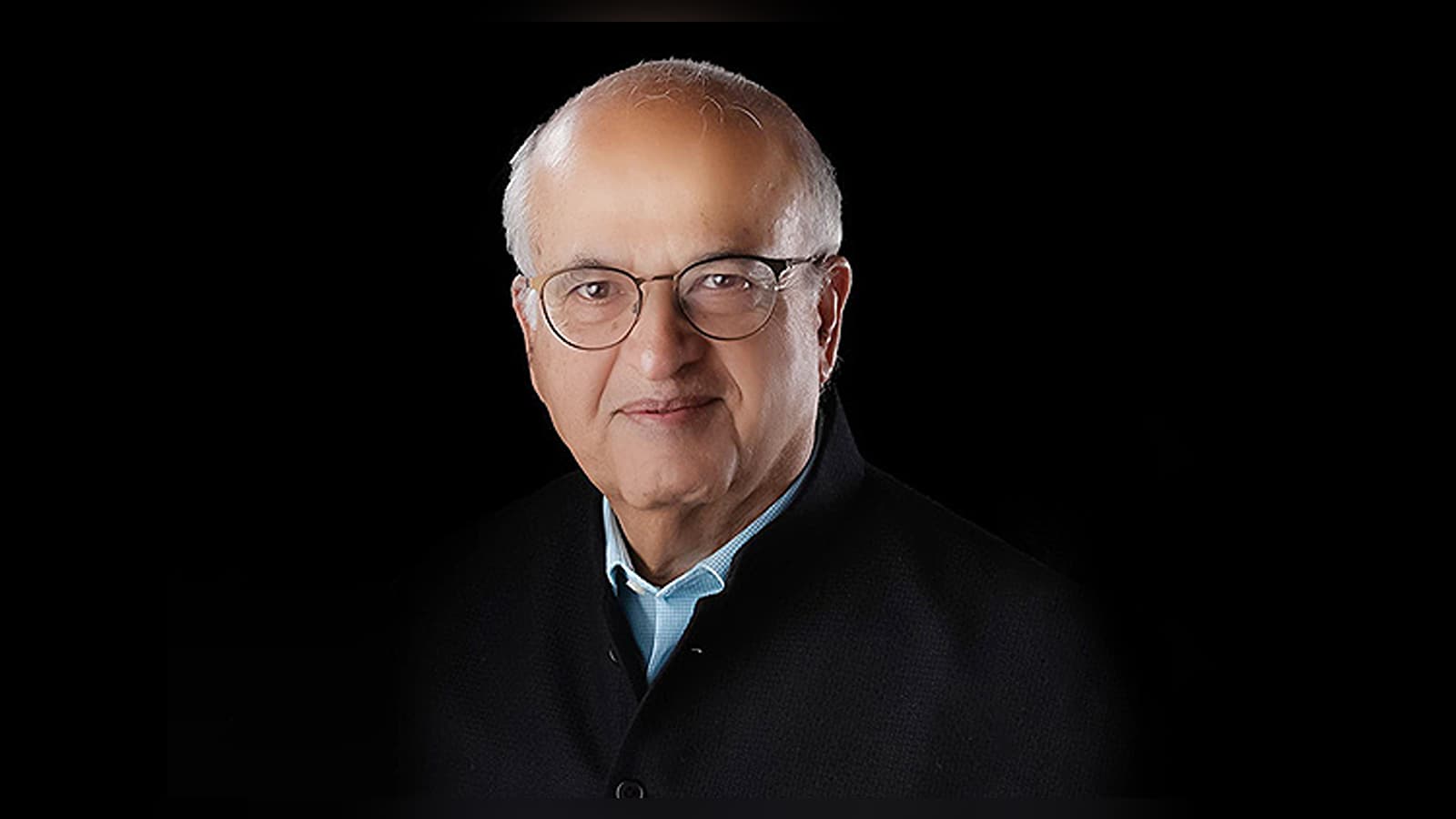
In an era where academic competition is intensifying and student stress levels are becoming a growing public health concern, conversations around mental well-being in education are more important than ever. In this insightful interaction, Dr. Rahul Mehra, Founder and Chairman of Tarang Health Alliance, shares his perspectives on the psychological preparedness of Indian students facing high-stakes examinations. Drawing from his experience in public health and education advocacy, he discusses the importance of goal setting, lifestyle balance, critical thinking, and systemic reforms in the examination ecosystem. In this interview with Education Post’s Prabhav Anand, Dr. Mehra highlights why nurturing mental resilience and holistic health is essential for students navigating competitive academic pathways.
Q1. India has over 30 million students appearing annually for various competitive examinations, ranging from board exams to national entrance tests. With rising reports of stress and burnout among teenagers, how do you assess the psychological preparedness of Indian students today? From your perspective as a public health advocate, what systemic gaps exist in how schools prepare students mentally for such high-stakes exams?

Yes, it's a very important question, and I’m aware of it. There’s a lot of stress among students, whatever exam they are taking. It could be the CBSE exam or going to IIT, IIM, whatever. There are hundreds of exams, so there’s a lot of stress among them. And that is normal. It’s not abnormal to have some stress when you take an exam.
But I think you have to prepare for it. And the first question a child should ask is, why am I stressed? Why do I have so much anxiety? And I think this is where goal setting is very important. Because if your goal is to go to college—let’s say somebody is graduating from 12th grade and wants to go to IIT or some college—then they have to do well. They know that if I don’t do very well, I will not get admitted.
So the first step of understanding stress is to define why I am stressed. Because there are many students who may not want to go to college. They may just want to join their father’s business. I’m just taking an example. So I call this part of goal setting. And this is what we don’t teach Indian children. You have to know what your goals are in life.
If your goal is to go to college and do well academically, well, you better do good in this exam. But if your goal is just because your parents are telling you that you must get a very good grade, but you’re going to join your father’s business, maybe you shouldn’t be so stressed. I mean you still have to pass the exam.
So this is something we don’t do in India. We don’t teach children goal setting. You have to know what your goals are. And goals can change in life. But if it’s an 11th or 12th grade student, they must know where they want to go. Do I want to go to college? Do I want to become a doctor? Or am I not really interested in further academic studies? Maybe I want to be a cricketer or a football player.
So to me the first step is that we don’t emphasise goal setting in schools. It will help children understand why they are stressed. Sometimes they are stressed because their parents are telling them to get good grades. But the motivation has to be intrinsic. If I want to go to IIT, I know I have to perform well. That motivates me. It’s called intrinsic motivation. It’s not that somebody is telling me to do well—I want to do well.
There is some parental pressure because every parent wants their child to do well academically. Education is given a very high priority in India. But stress itself is not the issue. Stress is normal. The question is how do I handle the stress.
There are two stages of stress management. One is preparation. If I know there is an exam coming in two months, how do I prepare for it? Then the second stage is the day of the exam. I have to have certain behaviours which are good in order to perform.
Q2. Your work with Tarang Health Alliance emphasizes the connection between physical health, emotional well-being, and learning outcomes. In the context of competitive examinations, how significant is the role of lifestyle factors such as sleep, nutrition, and physical activity in shaping a student’s mental resilience and cognitive performance?
I think it’s very important. Mental and physical health is very important.
If I’m preparing for an exam during my preparation period, I have a goal and I have to do well. So I should break that goal into small pieces. I say I have so much to study, so I’m going to study this topic for one week, this topic for another week. This is part of goal setting.
Then you have to say I have to be physically and mentally healthy during my preparation stage. I have to eat a good diet. I have to exercise daily—not play six hours of football—but you should be physically active. That’s good for your mental health.
You should have a good diet, good physical activity. If you do yoga or meditation, you should do it because that improves your mental state.
And then sleep—sleep is very important. Many students before the exam won’t sleep well. They keep cramming late into the night. That is the worst thing to do. Your mind needs to be alert and awake. You need a very good night’s sleep before the exam.
You should also have a good breakfast on the day of the exam. Then you tell yourself, I’m not nervous, I’m excited. Because this is a milestone for me and I want to do well. So you have to talk to yourself. Nervousness is not the right word. I’m excited because I want to go to the next stage.
Q3. Many countries such as Finland and Canada integrate structured health and well-being education into their school systems to reduce student stress and improve learning outcomes. Do you believe the Indian education system should adopt a similar model, and what reforms should policymakers prioritize?
Yes, I think so. We’ve been advocating for physical, mental, and social health as part of the curriculum. It should be in the curriculum. If you look at NEP 2020, it talks about holistic education. But if you look at the current curriculum and textbooks, it is not really there.
Mental health and physical health should be part of the curriculum. In many developed countries this already exists. If it is part of the curriculum, children will learn what is a good diet, why physical activity is important, and why they should be active every day.
Sometimes parents say don’t waste time playing with friends for half an hour. But that’s not right. Physical activity is very good for the mind.
Then there is mental health—how to manage stress. You can do meditation, breathing exercises, yoga. India has a strong tradition of yoga and it is already being introduced in schools. All of this should be part of the curriculum.
We’ve been advocating this for a long time. We’ve spoken to officials in the education ministry and also with NCERT about making physical, mental, and social health part of the curriculum.
Q4. India’s exam ecosystem often rewards memorization and rank-based competition rather than emotional intelligence and well-being. In your view, is the problem more about how students prepare or how the examination system is designed?
Students prepare based on how the system is designed. If the exam only tests memorization of facts, then students will memorise.
There is a difference between memorization and understanding. Understanding means you understand the concept. When I went to IIT, we used to say funda—if you understand the fundamental concept, you will have no problem. But if you just do ratta, memorization, you will not succeed.
So we have to emphasise fundamentals. The questionnaires have to change. In the age of AI, memorization has very little value. You can Google any information. Why should I remember the capital of every country in the world?
Exams should test understanding and the process of thinking. Tell me how you came to the answer, not just what the answer is. Every developed country is moving in that direction now as AI becomes more dominant.
Q5. From your experience working with schools across India, how significant is the influence of parents and teachers in shaping a student’s psychological readiness for competitive exams? What are the most common mistakes families and schools make while trying to motivate students?
Parents and teachers play a very important role. The first step is motivation. Why do I have to do well?
Parents or teachers should explain to the student that if you do well, you may get into a good college. But at the same time, success is not only determined by which college you go to. Many successful people didn’t go to top colleges.
The important thing is conversation between the child, the parents, and the school. Schools should have counsellors where the child can say, I don’t want to go to college, I want to start a business. Encourage the child if they have a good idea.
Goal setting should be taught in schools. In management studies we teach long-term and short-term goals, but nobody taught me that when I was a child. Parents should also act as role models and talk about their own goals.
If a child understands what their goals are, they become more motivated.
Q6. As a scientist and education advocate with decades of experience, could you share a personal experience from your student or research years that shaped your approach toward stress, discipline, and mental resilience?
In my mind, the most important thing I learned in college was to ask questions. People are usually taught to answer questions, but they are not taught to ask questions.
I used to challenge my professors a lot. I would say I don’t understand this, or I think this is wrong, and I would argue with them. Critical thinking is something I learned in IIT—to question everything and think about problems critically.
Many times before an exam there were things I didn’t understand. I would write down 20 questions on a sheet of paper. After the exam I would go to the professor and discuss those questions. I would debate and argue with them.
The point is critical thinking is a skill every child should learn. Schools should teach children how to think critically and how to be curious. In the age of AI, curiosity and critical thinking are extremely valuable.
Q7. If you were to give three practical mental strategies to students preparing for highly competitive examinations like JEE, NEET, or UPSC, what would they be?
The first strategy is time management. You have a goal and you want to do well in the exam, so break your syllabus into smaller pieces. Decide how much time you will spend on each topic and make a study plan.
The second is to keep yourself physically and mentally healthy. Eat a healthy diet, stay physically active, play sports for some time, or practise yoga or meditation if you do that. When your mind is alert and healthy, you absorb information much better.
And the third is sleep. Many students think they can reduce sleep before exams, but that is the worst thing you can do. The brain needs rest to retain information.
So manage your time well, stay physically and mentally balanced, and make sure you sleep properly. These things help your brain stay alert and efficient.




_1600x900.jpg&w=256&q=75)



.jpg&w=256&q=75)
.jpg&w=256&q=75)
