


The extended trial will run through the 2029–30 academic year and bring 11 additional institutions into a system that replaces the conventional bachelor’s and master’s structure with new levels of higher education.
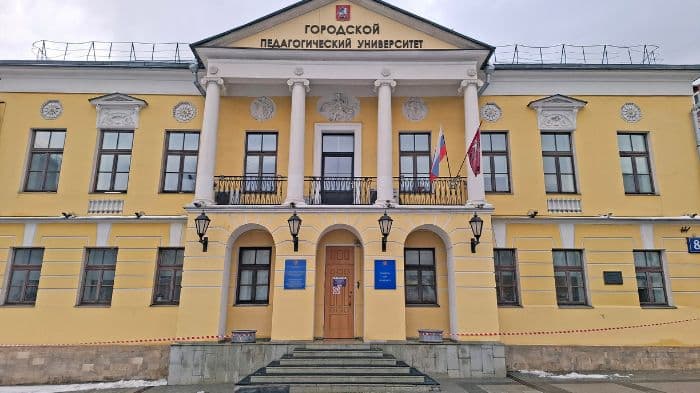
Moscow city University.
Russia has extended its pilot project to restructure higher education through the 2029–30 academic year, with 11 additional universities joining the initiative from the 2026–27 academic year.
The extension is governed by a Russian government resolution issued on June 19, 2026. The expanded pilot will involve 17 universities, according to the approved rules. The experiment began in September 2023 as part of a broader effort to change the country’s higher education system.

Under the revised framework, the pilot will continue to test new categories of higher education, with participating institutions implementing programmes according to government-approved rules.
New structure divides higher education into levels
The model distinguishes between basic higher education and specialised higher education, while postgraduate study is treated as a separate level of professional education.
Basic higher education programmes will generally last four to six years, depending on the field and qualification. Specialised higher education includes master’s programmes, medical residency and assistantship-internship programmes. Master’s programmes are designed to last between one and three years, depending on the discipline and programme requirements.
Postgraduate study, including doctoral training, falls under the separate professional education category.
The structure differs from the conventional bachelor’s and master’s degree framework associated with the Bologna Process. However, the reform remains a pilot rather than a nationwide replacement of the existing system.
Eleven more universities join the experiment
The pilot will expand to 17 institutions during the 2026–27 to 2029–30 academic years. The additional participants include Far Eastern Federal University, Moscow City University, Bauman Moscow State Technical University, MIPT, Pirogov Russian National Research Medical University, Ural Federal University named after the first President of Russia B.N.Yeltsin, and other higher education institutions selected under the revised framework.
Participating universities are required to develop educational standards and programmes consistent with the new structure. They must also report periodically to the government on implementation and propose adjustments where necessary.
The government will continue evaluating the project under established performance criteria during the extended period.
Reform continues beyond the initial trial period
The extension gives Russian authorities and participating universities several more academic years to implement and assess the revised degree structure.
The outcome could inform future decisions about how higher education qualifications are organised across Russia. For now, the changes apply to institutions participating in the pilot, rather than automatically changing degree programmes at every university in the country.

UAE trains university faculty to bring AI applications into classrooms
Russia extends higher education reform pilot to 2030, expands it to 17 universities
Russia prepares stricter rules for private universities amid quality concerns

Philippines audit agency flags lapses in CHEd scholarship programs

Singapore Management University’s Executive MBA enters global top 50 in Financial Times ranking
Philippines audit agency flags lapses in CHEd scholarship programs
Singapore Management University’s Executive MBA enters global top 50 in Financial Times ranking

NUS launches clinical psychology program to expand Singapore’s mental healthcare workforce
Wits researchers develop light-powered neural network to decode complex signals
How China is expanding vocational education through undergraduate degrees, industry partnerships and financial aid

UAE trains university faculty to bring AI applications into classrooms
Russia extends higher education reform pilot to 2030, expands it to 17 universities
Russia prepares stricter rules for private universities amid quality concerns
Philippines audit agency flags lapses in CHEd scholarship programs
Singapore Management University’s Executive MBA enters global top 50 in Financial Times ranking
Philippines audit agency flags lapses in CHEd scholarship programs
Singapore Management University’s Executive MBA enters global top 50 in Financial Times ranking
NUS launches clinical psychology program to expand Singapore’s mental healthcare workforce
Wits researchers develop light-powered neural network to decode complex signals
How China is expanding vocational education through undergraduate degrees, industry partnerships and financial aid
Copyright© educationpost.in 2026 All Rights Reserved.