


The program climbed to ninth worldwide for international course experience and 42nd for career progress, recording its strongest results in both categories amid growing executive education demand.
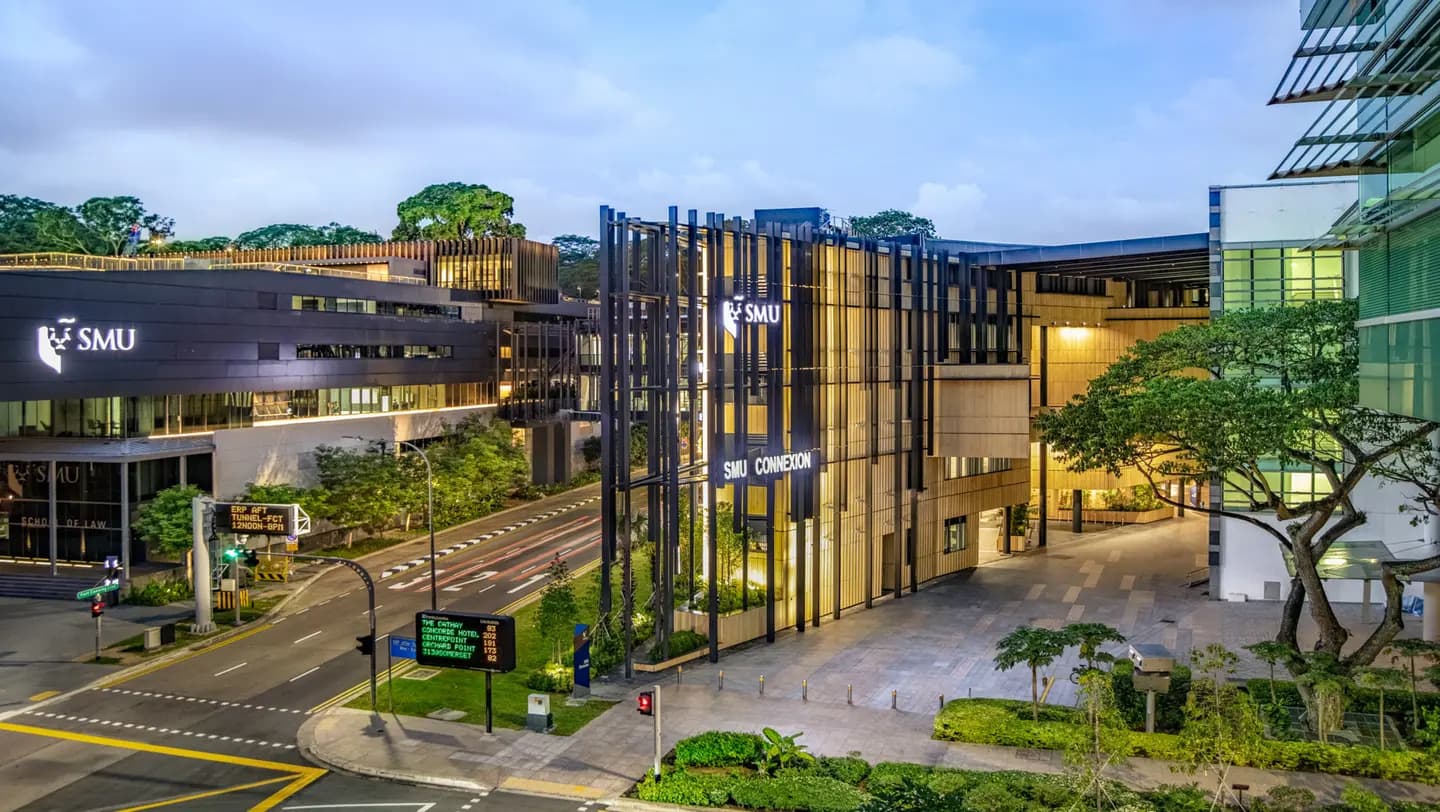
Singapore Management University's (SMU) Executive Master of Business Administration (EMBA) has broken into the global top 50 of the Financial Times (FT) Executive MBA Ranking 2026, securing 46th place worldwide after improving its position by nine places compared with its previous ranking in 2024.
The program recorded its most notable improvements in International Course Experience and Career Progress, two measures that reflect the global exposure offered to participants and the professional advancement of its graduates.

SMU climbed 18 places to rank ninth worldwide for International Course Experience, marking its best performance in the category to date. It also advanced 27 places to 42nd globally for Career Progress, setting another record for the program.
The latest ranking highlights the program's focus on preparing senior executives to operate across international markets while continuing to develop their leadership capabilities.
Through cross-border learning opportunities, exposure to different business environments and interaction with experienced professionals, the EMBA aims to help participants strengthen their understanding of global business and advance their careers.
SMU EMBA improves global exposure and career progression
The program's ninth-place global ranking for International Course Experience reflects its emphasis on learning beyond Singapore and providing participants with direct exposure to business environments in major global economies, including the United States, China and Europe.
International exposure is a central part of the program's approach to executive education. Participants have opportunities to examine how businesses operate across different markets, cultures and economic systems, helping them develop a broader understanding of international business practices.
The experience is intended to equip senior leaders with perspectives they can apply within their own organizations and professional responsibilities.
SMU's improvement in Career Progress also points to the progression of alumni into more senior positions within their existing organizations or into leadership roles elsewhere after completing the EMBA.
The ranking assesses changes in graduates' professional seniority and the size of the companies or organizations in which they work compared with their positions before completing the degree.
The program also reported stronger alumni evaluations of its professional network. Graduates gave higher ratings to the network's value for career opportunities, recruitment, entrepreneurship and access to events.
The development reflects the growing role of the EMBA alumni community as a professional ecosystem connecting leaders across industries and organizations.
Such networks can help executives exchange knowledge, explore career opportunities, develop business relationships and access professional events throughout their careers.
Dr. Ang Ser Keng, EMBA academic director at SMU's Lee Kong Chian School of Business, said the improvements in the two categories reflected priorities for experienced executives seeking to strengthen their leadership capabilities and broaden their international outlook.
“We are deeply encouraged by our gains in Career Progress and International Course Experience, as they reflect two things that matter greatly to experienced executives: continuing to grow as leaders and developing the perspectives to operate effectively across markets.”
He said international exposure was particularly important for senior executives working in an increasingly interconnected business environment, where decisions often require an understanding of different markets, cultures and economic conditions.
“Today’s senior leaders need to understand how business is conducted across different markets, cultures and economic environments. Our EMBA is designed to give participants that breadth of perspective. Through learning experiences in Asia, Europe and the United States, they engage with different business ecosystems, exchange perspectives with leaders and organisations across markets, and bring those insights back to their own leadership contexts. This international exposure, combined with the experience of their peers in the classroom, is an important part of how we prepare executives to lead in an increasingly interconnected world.”
The program's international learning components allow participants to engage with business ecosystems outside Singapore and exchange perspectives with leaders and organizations operating in different markets.
By combining these experiences with classroom discussions involving experienced peers, the EMBA seeks to help participants connect global business insights with the challenges they face in their own leadership roles.
How the Financial Times Executive MBA ranking is assessed
The Financial Times Executive MBA Ranking evaluates programs using information supplied by business schools and their alumni.
Its assessment covers several measures, including career outcomes, diversity, international experience, research and environmental, social and governance (ESG) considerations.
For the 2026 ranking, criteria based on alumni responses account for 52% of the overall assessment, while data provided by business schools make up the remaining 48%. The ranking therefore combines graduates' experiences and career outcomes with information about the programs themselves.
International Course Experience is measured according to the proportion of classroom teaching hours for the most recently graduating class that were required to take place outside the location where the business school is based. In-person, virtual and hybrid learning experiences are included in the calculation.
Career Progress is assessed by comparing alumni's current professional positions with their roles before completing the EMBA. The measure considers changes in seniority and the size of the company or organization in which graduates work.
SMU's results in these two categories indicate progress in areas associated with international learning and graduates' professional development.
Its ninth-place global position for International Course Experience represents its strongest result in that category, while its 42nd-place ranking for Career Progress is the program's best performance in the measure.
About SMU's Executive MBA program
The EMBA is offered by SMU's Lee Kong Chian School of Business (LKCSB). It is designed for senior executives seeking to strengthen their leadership capabilities and prepare to manage complex business environments shaped by international connections and rapid change.
The program focuses on developing globally minded, purpose-driven leaders who can respond to evolving business challenges. Its modular format is structured around the schedules and professional commitments of experienced executives, allowing them to pursue advanced management education while continuing in their careers.
Teaching is organized into intensive blocks that combine in-person classes, global immersion experiences and experiential projects. This structure is intended to provide flexibility while allowing participants to engage deeply with course material, examine business challenges and apply their learning to practical situations.
The program is aimed at mid- to senior-level executives with substantial professional experience, with participants averaging approximately 20 years of work experience. Many typically hold leadership or strategic positions in their organizations.
By bringing together professionals with extensive experience across different sectors, the EMBA also provides a setting for participants to exchange perspectives on management, leadership and business strategy.
Combined with international learning opportunities, the program seeks to help executives broaden their understanding of global markets and strengthen their ability to lead across organizational and geographic boundaries.
SMU's rise to 46th place in the 2026 Financial Times Executive MBA Ranking, alongside its results in International Course Experience and Career Progress, highlights the program's performance in global learning and alumni career development.
The ranking also underscores the role of international exposure, professional networks and executive education in preparing experienced business leaders for increasingly interconnected markets.
Singapore Management University’s Executive MBA enters global top 50 in Financial Times ranking
NUS launches clinical psychology program to expand Singapore’s mental healthcare workforce
DGT Partners with Medhavi Skills University to Expand Industry-Linked ITI Training
IIM Ahmedabad Opens Admissions for Second Batch of Blended MBA in Business Analytics and AI
Wits researchers develop light-powered neural network to decode complex signals
Singapore Management University’s Executive MBA enters global top 50 in Financial Times ranking
NUS launches clinical psychology program to expand Singapore’s mental healthcare workforce
Wits researchers develop light-powered neural network to decode complex signals
How China is expanding vocational education through undergraduate degrees, industry partnerships and financial aid

Singapore Institute of Technology launches new school for lifelong learning and career development

Singapore Management University’s Executive MBA enters global top 50 in Financial Times ranking
NUS launches clinical psychology program to expand Singapore’s mental healthcare workforce
DGT Partners with Medhavi Skills University to Expand Industry-Linked ITI Training
IIM Ahmedabad Opens Admissions for Second Batch of Blended MBA in Business Analytics and AI
Wits researchers develop light-powered neural network to decode complex signals
Singapore Management University’s Executive MBA enters global top 50 in Financial Times ranking
NUS launches clinical psychology program to expand Singapore’s mental healthcare workforce
Wits researchers develop light-powered neural network to decode complex signals
How China is expanding vocational education through undergraduate degrees, industry partnerships and financial aid
Singapore Institute of Technology launches new school for lifelong learning and career development
Copyright© educationpost.in 2026 All Rights Reserved.