


Regional governments are reforming academic programs, coordinating with industries, and providing targeted career guidance, internships, and job-search assistance to improve graduates’ transition into the workforce.
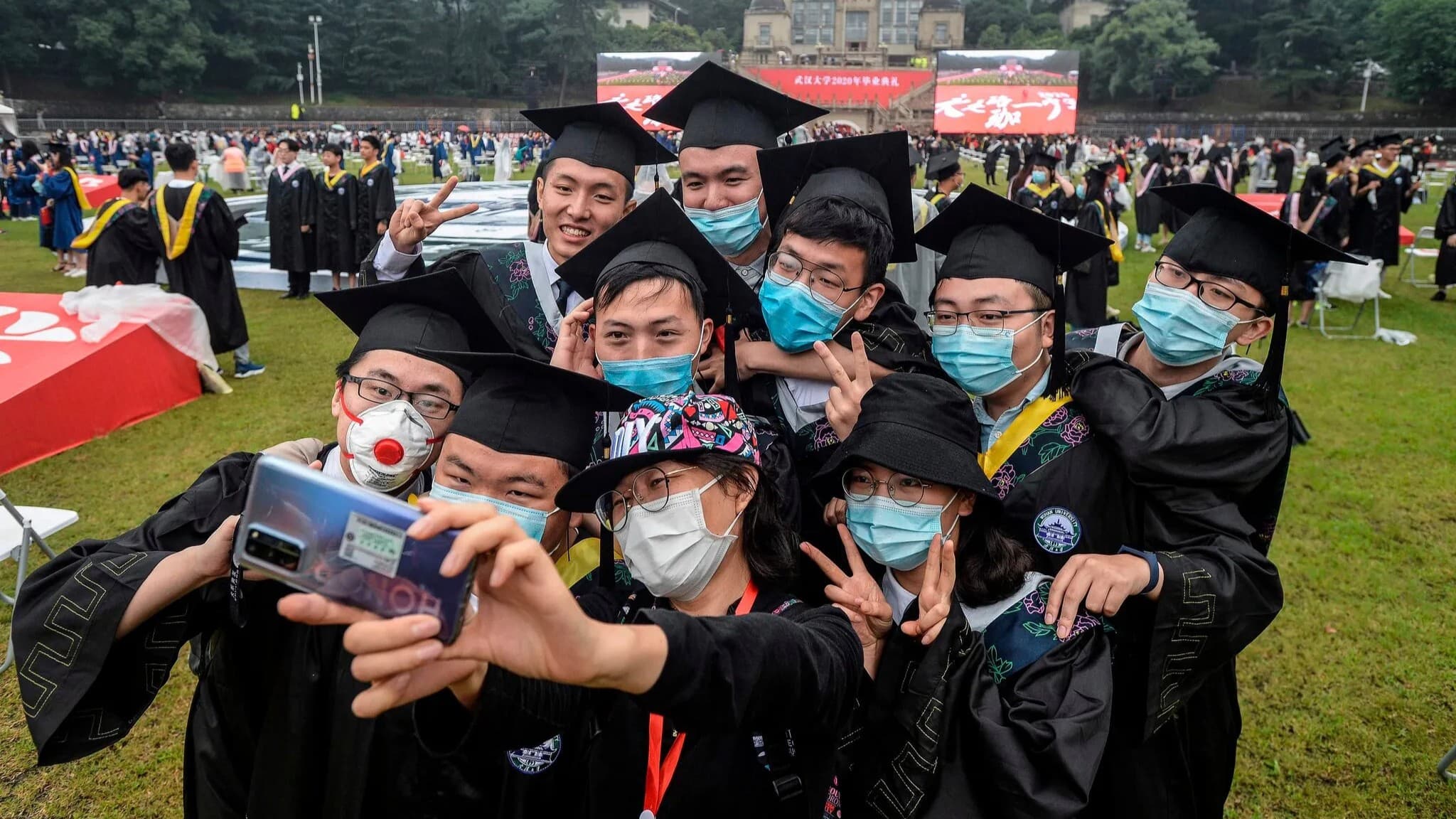
China’s education authorities are expanding campus recruitment, strengthening coordination between universities and employers, and providing targeted assistance to graduates from disadvantaged backgrounds as the country steps up efforts to improve employment outcomes for college students.
The Ministry of Education, working with relevant government departments, has introduced a series of policies and initiatives to advance employment opportunities for the 2026 graduating class while accelerating preparations for a dedicated employment action plan for the 2027 college graduates.

The measures aim to help more students secure jobs earlier and find employment that better matches their qualifications and skills.
College graduates represent an important human resource for the country and play a key role in supporting economic and social development.
Improving their employment prospects has therefore become a central focus of education authorities, which are working to expand job opportunities, improve coordination between talent supply and industry demand, and ensure that graduates receive continued guidance throughout their job search.
According to Xinhua News Agency, the initiatives combine large-scale recruitment campaigns, reforms in higher education, regional employment programs, and individualized assistance for graduates who face greater barriers to entering the workforce.
China expands recruitment drives to create more jobs for college graduates
The Ministry of Education has launched the “Golden Autumn Start” campus recruitment month for the 2027 national college graduating class, using a range of employment resources to connect students with prospective employers and improve access to job opportunities.
The initiative includes specialized recruitment events for individual colleges and academic departments, joint recruitment activities involving thousands of schools and enterprises across different regions, and targeted hiring campaigns covering multiple industries.
The recruitment month is part of a broader effort by education authorities to increase the number of available jobs and diversify employment channels for college graduates.
The ministry and other relevant departments have been coordinating their efforts around a four-stage employment support framework comprising “Autumn Start, Winter Break Support, Spring Offensive, and Summer Sprint.”
The framework is intended to maintain employment assistance throughout the academic year, allowing universities and government agencies to connect students with employers at different stages of their transition from education to work.
Through these measures, authorities are seeking to strengthen recruitment activity on and off campus, mobilize employers across industries, and ensure that graduates have access to a wider range of employment opportunities.
Regional recruitment initiatives generate thousands of job opportunities
The Ministry of Education has also expanded the geographical reach of its employment services through the “100 Schools Students' Local Tour” program, which connects college students with local governments and universities to improve their access to regional employment opportunities.
As part of the initiative, specialized recruitment events have been organized in cities with large numbers of college graduates, including Nanjing, Shenyang, Fuyang, Lianyungang, and Dezhou.
These events have brought together employers and job seekers and collectively generated more than 43,000 job opportunities.
The program is designed to help students explore employment options in different locations while enabling local governments and employers to connect with graduates who can meet their workforce requirements.
Online recruitment has also become an important part of the government's strategy to broaden access to employment opportunities. Since the fall of 2025, the National College Student Employment Service Platform has conducted regional online recruitment campaigns, offering more than 1.82 million job opportunities in total.
By combining in-person recruitment events with digital employment services, education authorities are seeking to reach more students, improve the circulation of job information, and make it easier for graduates to identify positions suited to their academic backgrounds and career goals.
Government agencies bring public employment services directly to campuses
Alongside recruitment drives, the Ministry of Human Resources and Social Security and the Ministry of Education have launched the “100-Day Action for Public Employment Services to Enter Campuses” initiative.
The campaign coordinates local governments and universities to strengthen the presence of public employment services on campuses.
It aims to bring employment resources closer to students and make better use of existing job opportunities available within local labor markets.
The initiative also encourages the establishment of public employment service stations on university campuses, allowing students to access job information and employment-related assistance more conveniently.
By bringing these services into educational institutions, the two ministries are seeking to reduce the distance between graduates and employment support systems.
The approach is intended to help students obtain information about available positions, connect with relevant service providers, and receive guidance as they prepare to enter the workforce.
The campus-based initiative complements the ministry's wider recruitment efforts by focusing not only on the availability of vacancies but also on how effectively employment information and services reach students.
Universities reform academic programs to improve alignment with industry demand
Education authorities are also pursuing reforms in higher education to improve the connection between university programs and the changing needs of the economy.
Universities across China are using graduate employment outcomes as a key consideration in the continued reform of higher education.
The objective is to ensure that academic disciplines, professional training, and graduate skills are more closely aligned with the requirements of employers and the broader process of economic and social development.
All 31 provincial-level regions and the Xinjiang Production and Construction Corps have established cross-departmental working mechanisms to coordinate employment-related efforts.
These authorities are also accelerating the introduction of local policies and measures based on regional industrial structures, available financial resources, and prevailing employment conditions.
The approach recognizes that employment challenges differ across regions and that recruitment strategies and education reforms need to reflect local economic circumstances.
In Shandong, the provincial Department of Education is leading reforms to adjust and optimize academic disciplines and majors. The province is also developing a coordinated mechanism linking student enrollment, education and training, and employment.
The “enrollment-training-employment” approach is intended to strengthen coordination across the stages of higher education, helping institutions consider employment prospects when making decisions about academic programs and student preparation.
Henan is organizing specialized recruitment events in eastern and western parts of the province, alongside industry-focused hiring activities covering sectors such as energy and power and biomedicine.
These initiatives aim to improve the match between the supply of qualified graduates and the workforce requirements of specific industries.
In Inner Mongolia, authorities are strengthening the management of entrepreneurship incubation bases and parks.
The initiative is intended to provide college graduates with support for developing innovative business ideas, establishing entrepreneurial ventures, and commercializing scientific and technological achievements.
These regional initiatives reflect different approaches to improving employment outcomes, ranging from academic program reform and sector-specific recruitment to entrepreneurship support.
With local governments introducing policies tailored to their respective economic and industrial conditions, authorities are seeking to improve the alignment between graduate qualifications and labor market demand.
The measures are expected to help establish a stronger foundation for college students entering employment after graduation.
Targeted support for graduates from disadvantaged backgrounds
Providing assistance to graduates from disadvantaged backgrounds remains a key component of China's efforts to improve graduate employment.
Education authorities are focusing on more targeted support for students who may face additional challenges in securing jobs, with the aim of ensuring that employment services reach those who need them most.
The National College Student Employment Service Platform has introduced an electronic ledger to track the employment support needs of graduates from disadvantaged backgrounds.
University Party and government officials nationwide have also been organized to provide paired assistance to these students.
The arrangement is intended to help institutions identify graduates who require additional support and coordinate assistance according to their individual circumstances.
The Ministry of Education has also expanded the “Hongzhi Zhuhang Plan,” which seeks to help more graduates from disadvantaged backgrounds strengthen their job-search skills.
Through these measures, authorities are providing additional guidance to students who may need help navigating recruitment processes, identifying suitable vacancies, and preparing for employment.
The focus on individualized support forms part of a broader effort to make graduate employment services more accessible and responsive to different groups of students.
Rather than relying exclusively on general recruitment campaigns, the measures seek to provide more direct assistance to graduates who encounter difficulties entering the workforce.
Employment assistance continues after graduation
China's employment support measures are not limited to students who are still enrolled in college. Authorities are also seeking to ensure that graduates who leave university without securing a job continue to receive assistance.
Relevant departments have launched a campaign to improve employment services for college graduates and other young people, with particular attention to those who remain unemployed after completing their studies.
Under the initiative, Party members, government officials, and employment service agencies are being organized to establish one-to-one assistance arrangements with graduates facing employment difficulties.
The support includes prioritizing the provision of high-quality job information, organizing training and internship opportunities, and offering career guidance to help graduates improve their prospects of finding work.
By continuing assistance after students leave campus, the initiative aims to prevent graduates from losing access to employment services at a critical stage of their job search.
The approach also extends the role of universities and public employment agencies beyond recruitment events during the academic year. Graduates who have not found suitable positions can continue to receive guidance and access resources intended to help them move into employment.
The combination of targeted assistance, job information, practical training, internships, and career counseling is intended to address different barriers that may prevent young people from securing employment.
China prepares to strengthen employment support for the 2027 graduating class
Looking ahead, education authorities plan to advance several priorities, including expanding job opportunities, improving job matching, strengthening assistance for graduates in need, and optimizing employment services.
The Ministry of Education will work with local authorities to strengthen capacity building and job creation while addressing key obstacles and bottlenecks affecting graduate employment.
The next phase of the effort is expected to focus on coordinating employment policies with regional economic conditions, improving the connection between universities and employers, and ensuring that graduates can access relevant support throughout their transition from education to work.
The measures build on the ongoing employment action plan for the 2026 college graduating class while preparations continue for a dedicated plan to promote employment among 2027 graduates.
Through expanded recruitment campaigns, closer coordination between education and industry, reforms to academic disciplines, and more targeted assistance for disadvantaged and unemployed graduates, authorities aim to improve both the availability of jobs and the quality of employment opportunities.
The broader objective is to help more college graduates find work earlier, secure positions that better match their skills and qualifications, and receive continued support if they encounter difficulties during their job search.

NEET-PG transparency plea reaches Supreme Court today

TEQSA proposes revised regulatory fees from 2027, invites feedback

Global Hunger Index 2026: India Ranks 100th, Remains in ‘Serious’ Hunger Category

BITS Design School Student Atharva Lele Secures Global Recognition in AGP Design Contest
Qatar career fair connects graduates with employers across key sectors
China races to place graduates as it readies its 2027 jobs plan
.jpg&w=256&q=75)
Irish university strikes force class cancellations across the country
Philippines audit agency flags lapses in CHEd scholarship programs

Singapore Management University’s Executive MBA enters global top 50 in Financial Times ranking

NUS launches clinical psychology program to expand Singapore’s mental healthcare workforce

NEET-PG transparency plea reaches Supreme Court today
TEQSA proposes revised regulatory fees from 2027, invites feedback
Global Hunger Index 2026: India Ranks 100th, Remains in ‘Serious’ Hunger Category
BITS Design School Student Atharva Lele Secures Global Recognition in AGP Design Contest
Qatar career fair connects graduates with employers across key sectors
China races to place graduates as it readies its 2027 jobs plan
Irish university strikes force class cancellations across the country
Philippines audit agency flags lapses in CHEd scholarship programs
Singapore Management University’s Executive MBA enters global top 50 in Financial Times ranking
NUS launches clinical psychology program to expand Singapore’s mental healthcare workforce
Copyright© educationpost.in 2026 All Rights Reserved.