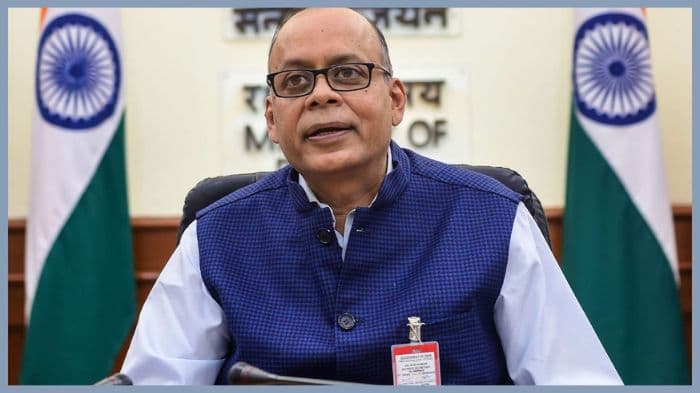
Union Public Service Commission (UPSC) Chairman Dr Ajay Kumar has said interview boards are advised to assess whether candidates have the mindset to enter public service, alongside other parameters used during the selection process.
Kumar said the approach has been followed by the Commission and that interview boards are specifically advised to consider a candidate’s commitment to serving the country and engaging in public service.

Public service mindset as an assessment parameter
Kumar said being highly qualified does not necessarily mean that a candidate wants to enter public service. He said the Commission therefore needs to select candidates who are prepared to join public service and dedicate their professional lives to it.
He added that the interview boards already follow this approach and that the Commission needs to continue giving importance to it during the selection process.
The chairman’s comments came in an interaction covering the UPSC’s examination process, technology, transparency and the changing information environment faced by candidates.
Technology in UPSC examinations
Kumar said technological changes have affected the UPSC as well as other areas of society. According to him, the Commission is using technology to make its processes more efficient, reduce the time required for various procedures and strengthen examination security.
He cited deduplication as one of the measures adopted by the Commission to prevent the same candidate from receiving two admit cards. He also said UPSC is using face authentication to prevent attempts to appear in examinations using fraudulent means.
The chairman said technology is also being used in functions handled by the Commission beyond examinations, including matters related to civil servants’ promotions, deputations and disciplinary proceedings.
Digital access brings opportunities and risks
Kumar said digital technology has expanded access to information for candidates, including those preparing for competitive examinations in rural and remote areas.
He said candidates can now access information and knowledge online and share information rapidly. At the same time, he pointed to the rapid spread of misinformation through social media as a challenge.
According to Kumar, the Commission needs to make adjustments from time to time in response to the impact of technological and social changes.
UPSC on transparency and confidentiality
Kumar also highlighted transparency as a key objective for the Commission. He referred to UPSC’s recent practice of releasing provisional answer keys soon after examinations as part of its efforts towards greater transparency.
At the same time, he stressed that confidentiality remains important in areas where information needs to be protected. He said maintaining both transparency and necessary confidentiality is important for retaining public trust in the Commission.
The UPSC chairman’s comments come as the Commission marks its centenary year. The body, established in 1926 as the Public Service Commission, became the Union Public Service Commission after the Constitution came into force in 1950.