IIT Bombay caste row: Activist calls for independent anti-discrimination panels outside universities
B Karthik Navayan has called for district-level bodies to investigate complaints of caste discrimination, arguing that such inquiries should not be handled by the institutions facing the allegations.
EPN Desk03 October 2026 14:10
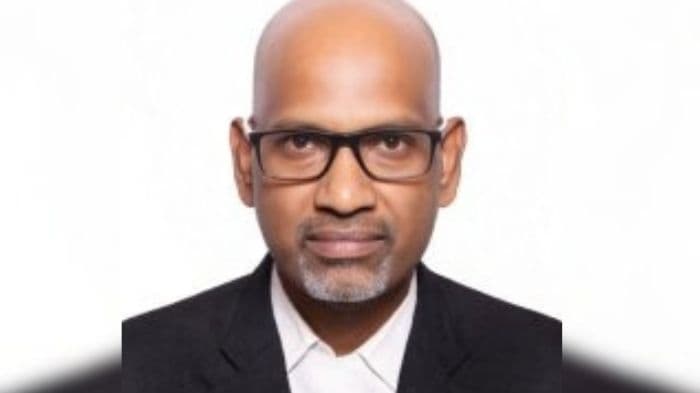
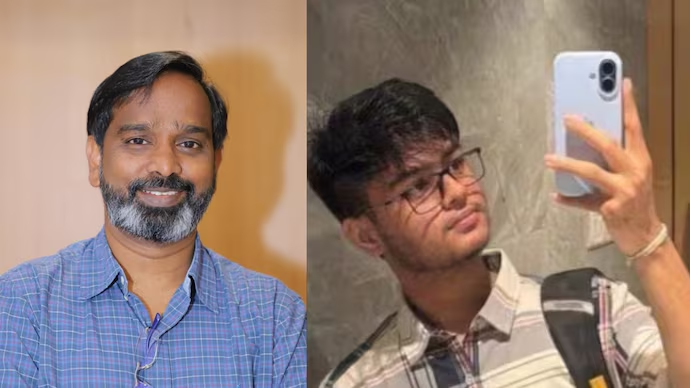
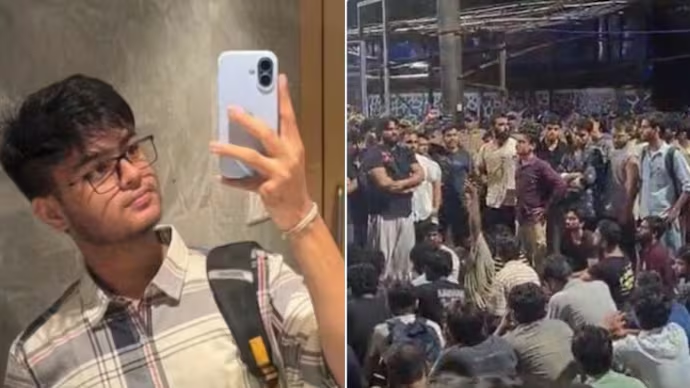
Amid the ongoing investigation into the death of IIT Bombay student Sahil Wakode, activist and Telangana High Court advocate B Karthik Navayan has called for an independent mechanism to investigate allegations of caste discrimination in higher education institutions.
In a post on X, Navayan said he had made a similar recommendation while submitting feedback on the proposed Rohith Vemula Act. He argued for replacing internal Equity Committees with District-Level Anti-Discrimination Committees (DLADCs) located outside universities.
According to Navayan's proposal, the committees should be based in the office of the District Collector and chaired by a retired judge. He said this would keep inquiries independent of the institution against which a complaint has been made.
Comments come amid IIT Bombay investigation
Navayan's comments come as Mumbai Police continue to investigate the death of 20-year-old IIT Bombay student Sahil Wakode, who died by suicide on September 18.
Wakode's family has alleged that he faced caste-based discrimination and harassment at the institute. The allegations are being investigated by the Mumbai Police Crime Branch.
The National Commission for Scheduled Castes also conducted a spot inquiry at IIT Bombay on September 24 after receiving the family's complaint.
IIT Bombay has denied allegations of caste-based discrimination. On October 2, Mumbai Police recorded statements from IIT Bombay Director Shireesh Kedare and Professor Suryanarayana Doolla. Both denied allegations that Wakode was subjected to casteist remarks and maintained that institutional procedures had been followed, according to police.
Calls for an external inquiry
The question of institutional independence has also emerged in demands made by students following Wakode's death.
Students protesting at IIT Bombay have called for the dissolution of the 10-member inquiry committee constituted by the institute's Board of Governors and its replacement with an external panel that does not include current IIT Bombay employees or students. They have also sought changes to student welfare and disciplinary mechanisms.
Separately, Ambedkarite, Buddhist and anti-caste organisations and IIT alumni have called for the reconstitution of the institute's internal inquiry committee in a letter to the IIT Bombay director.
What Navayan has proposed
Navayan's proposal is linked to the broader campaign for legislation addressing caste discrimination in higher education following the death of University of Hyderabad scholar Rohith Vemula in 2016.
Draft versions of a proposed Rohith Vemula Act have included institutional Equity Committees to receive and investigate complaints of discrimination. A 2026 analysis of the Campaign for Rohith Act draft said the proposed committees would have investigative powers, including the ability to summon witnesses, examine evidence and seek documents.
Navayan's position differs on the question of where such inquiries should be conducted. Rather than placing the primary mechanism within the university, he has argued for district-level bodies operating outside the institution.
IIT Bombay had introduced anti-discrimination guidelines in 2023 and circulated them again in 2024. The guidelines cautioned students against asking peers about their admission category, JEE Advanced ranks, GATE scores or other information that could reveal caste or reservation status.
The police investigation into Wakode's death is continuing, and allegations of caste discrimination against IIT Bombay officials have not been established by the investigation so far.