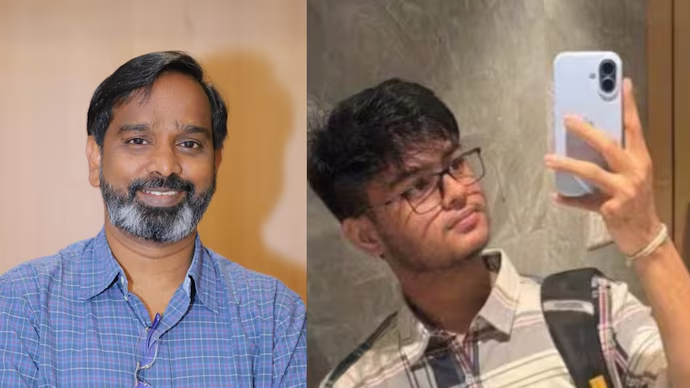
The Mumbai Crime Branch has questioned IIT Bombay professor Suryanarayana Doolla for around eight to 10 hours in connection with the death by suicide of BTech student Sahil Wakode, as investigators examine allegations of caste-based harassment and the events leading up to the student’s death.
Doolla, questioned on Friday at the IIT Bombay campus in Powai, denied using casteist or derogatory language against Sahil and told investigators that he had followed the institute’s prescribed rules and procedures while dealing with the student, sources said, as reported by ANI.

The professor’s statement is now being examined alongside accounts from students, faculty members, Sahil’s family and other witnesses, as well as digital and forensic evidence gathered during the investigation.
Crime Branch builds evidence trail
The Crime Branch has so far recorded statements from around 40 people connected with the case, including Sahil’s family members, fellow students and hostel staff.
Investigators have also sent Sahil’s mobile phones and other electronic devices to the Forensic Science Laboratory in Kalina for examination. The digital evidence is being analysed to establish a timeline of events before his death and to understand his communications and interactions in the final days and hours.
Police are also examining Sahil’s last conversation with a friend. According to information emerging from the investigation, the conversation included concerns over a Thermodynamics examination. Investigators are also looking into a claim that Sahil told his friend he had been caught cheating during the examination.
The circumstances surrounding the examination, however, form only one part of the wider investigation into what preceded Sahil’s death.
Sahil, a second-year BTech student at IIT Bombay, died by suicide on September 18. The Mumbai Crime Branch later took over the probe from Powai Police.
Family alleges caste-based harassment
Sahil’s family has alleged that he faced caste-based discrimination and mental harassment at the institute and has named Doolla in connection with those allegations.
The family has alleged that the professor used casteist language against Sahil and that the student was under considerable mental pressure before his death.
Doolla has denied the allegations. During questioning, he maintained that he had not used caste-based or derogatory words and had acted according to institutional guidelines, sources said.
The Crime Branch will now assess his statement against other witness accounts and the documentary, digital and forensic evidence collected during the probe.
No final conclusion has been reached on the allegations, which remain under investigation.
Student protests intensify
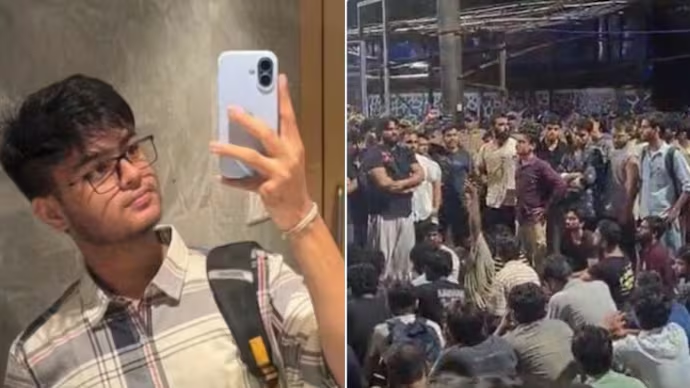
Sahil’s death has also sparked sustained student protests at IIT Bombay, with students demanding greater accountability and changes to the institute’s student support and disciplinary systems.
After 14 days of protests, students on October 2 announced a hunger strike and presented a 10-point list of demands. These include reforms in student welfare mechanisms, disciplinary procedures and action on concerns surrounding caste discrimination.
The protesters have also called for an independent investigation into Sahil’s death and raised concerns about the handling of student grievances, examination pressure, mental health support and disciplinary processes.
The protests have continued as the Crime Branch pursues its investigation.
Probe remains open
The Crime Branch is now piecing together the circumstances surrounding Sahil’s death through witness statements, electronic evidence and forensic examination.
The agency is expected to scrutinise Doolla’s account alongside the allegations made by Sahil’s family and the accounts of students and other people connected with the case.
For Sahil’s family and the students demanding answers, the investigation remains a search for clarity over what happened in the period leading up to his death. The Crime Branch has yet to reach a final conclusion on the allegations or the circumstances surrounding the death.