


In this conversation, Anushika Jain discusses bridging academia and industry, global exposure, mentorship, women’s leadership, and how innovation and social responsibility are reshaping future-ready education.
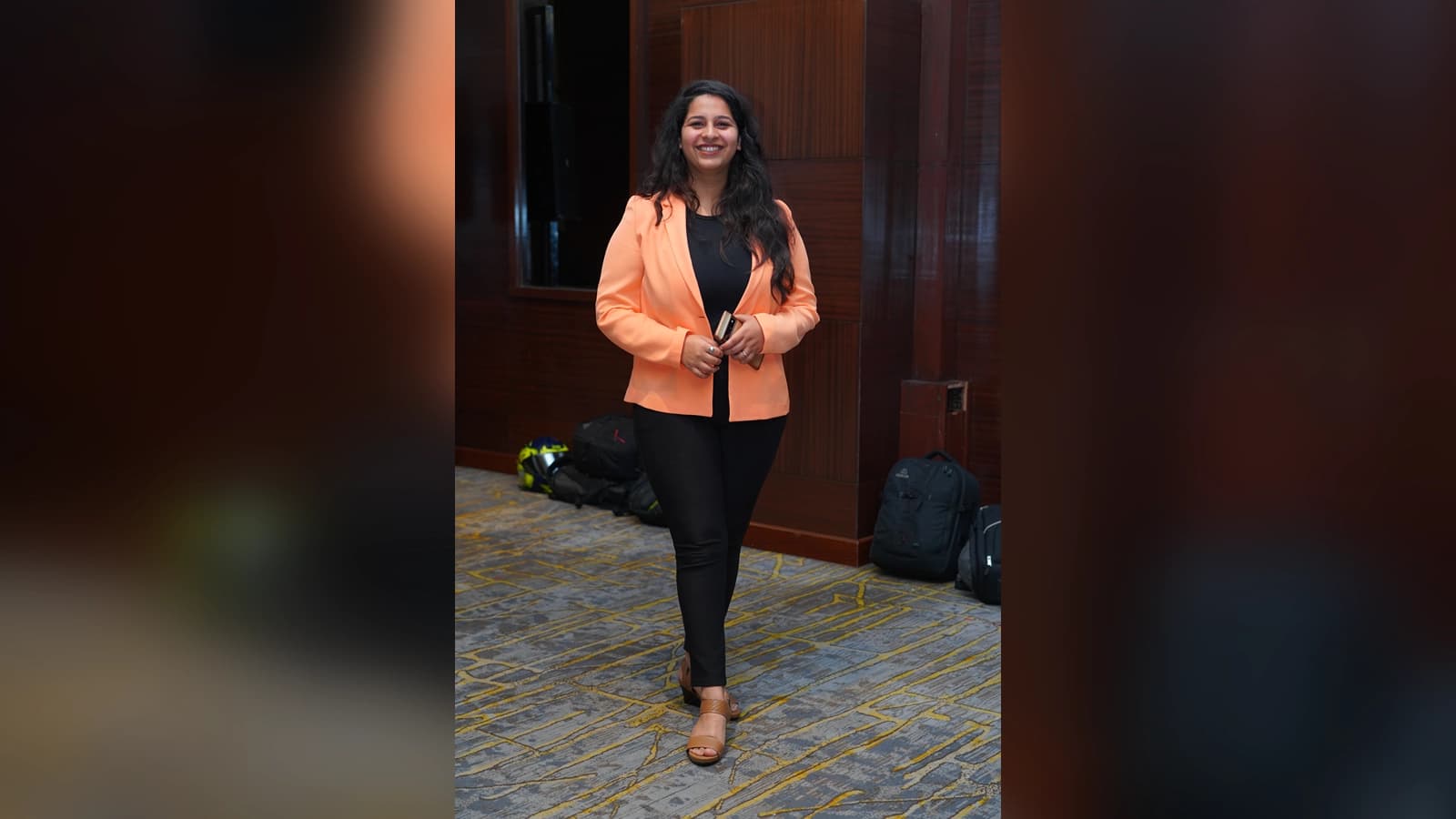
Anushika Jain, Founder & CEO of GlobalShala
In an increasingly interconnected world, bridging the gap between academic learning and real-world opportunities has become a pressing priority. In this conversation with Anushika Jain, Founder & CEO of GlobalShala, we explore how global exposure, mentorship, and hands-on learning can transform the way students prepare for their careers. In this insightful interview with Education Post’s Prabhav Anand, Jain shares insights on building a globally aware workforce, empowering young women, and integrating innovation with social responsibility in education.
1. Your journey toward founding GlobalShala reportedly began during a phase when you were exploring your own career direction and observed how many students struggle to find meaningful opportunities after graduation. Could you take us through that turning point in your life and explain how those early observations shaped the vision behind GlobalShala and its mission to bridge the gap between students and real-world opportunities?

The idea for GlobalShala began to take shape while I was pursuing my master’s in leadership at Northeastern University. Studying in an international academic environment revealed an interesting pattern among students. Many of them were talented and motivated, but they were still looking for more specific methods to apply their knowledge in the workplace. It made me really consider how academic learning may be linked sooner to real-world work contexts.
I had witnessed how early professional exposure may boost students' confidence through my broader work in talent engagement and global education collaborations. Building on that realization, GlobalShala was created to provide students with chances to work on actual problems, interact across geographical boundaries, and graduate with clearer professional direction.
2. Traditional education systems often emphasize theoretical knowledge, while employers increasingly demand practical skills and real-world exposure. Through GlobalShala’s internships, global competitions, and mentorship initiatives, how are you attempting to redesign the learning experience so that students graduate not just with degrees, but with practical competence and global exposure?
Education has always played a strong role in building intellectual foundations. What we increasingly see now is an opportunity to complement that foundation with earlier exposure to professional environments. We at GlobalShala make an effort to provide that experience to young professionals while they are still studying. Students participate in projects that mirror actual industrial situations through internships, international competitions, and professional mentoring.
Students learn more than just topics. They put them to the test. They see how teams collaborate, how choices are made, and how concepts are turned into useful results. Students have a more comprehensive understanding of professional cultures and working methods when they engage with classmates and mentors from other nations. Students eventually gain confidence that goes well beyond the classroom thanks to this mix of applied learning and global contact.
3. GlobalShala collaborates with international universities and organizations to create cross-border opportunities for students. From your perspective, what are the biggest advantages of exposing young learners to global ecosystems early in their careers, and how do such collaborations contribute to developing a more adaptable and future-ready workforce?
Students’ understanding of the workplace often shifts once they begin interacting with mentors and peers from other countries early in their careers. They quickly realise that many professional challenges extend beyond national boundaries, and that meaningful solutions often emerge when people collaborate across regions and perspectives.
GlobalShala’s partnerships with universities and organisations abroad create those opportunities for interaction. Students connect with professionals and fellow learners from different parts of the world, sometimes working together on shared projects. In the process, they learn how to communicate clearly, listen to different viewpoints, and contribute to teams that may be spread across several locations.
With time, this experience builds a different kind of confidence. Instead of preparing only for a single local job market, students become comfortable navigating varied professional cultures and working styles. That exposure reflects the reality of modern careers, where international collaboration has increasingly become part of everyday work.
4. GlobalShala’s initiatives, including programs like the Superhero U competition, draw inspiration from the United Nations Sustainable Development Goals, encouraging students to think about global challenges and solutions. How important is it for educational platforms today to integrate social responsibility, sustainability, and innovation into their learning frameworks?
Today's education offers a great chance to introduce pupils to the global issues influencing our future. Concerns like sustainability, fair development, and responsible innovation have a growing impact on how businesses function and how sectors change.
Students are encouraged to investigate these topics by considering workable solutions to real-world issues through programs such as Superhero U, a program recognized by the United Nations. The goal is to assist students in comprehending how innovation can lead to significant change.
Early exposure to these concepts helps students make the connection between a wider sense of responsibility and professional aspirations. It will be required of the upcoming generation of professionals to develop their professions while carefully considering the systems they impact.
5. Your organization reportedly has a strong representation of women within its workforce and emphasizes empowerment through opportunity. As a woman entrepreneur in the ed-tech ecosystem, what structural changes do you believe are still needed in education and entrepreneurship to ensure that more young women step into leadership roles and global careers?
I’ve rarely seen capability as the issue. Young women's leadership journeys are frequently accelerated by increased visibility and access to opportunities.
Expanding the channels that link students with business may have a big impact, even though educational institutions already play a big part. Young women may witness leadership in action and see themselves in similar roles through internships, mentorship networks, and international partnerships.
Additionally, entrepreneurship ecosystems may facilitate this change by promoting leadership development programs, fostering peer groups, and expanding access to capital.
Women engage in decision-making spaces more organically when these components are integrated into the larger system rather than being separate initiatives. More young people are eventually inspired to take the initiative and pursue leadership positions in a variety of sectors and international occupations as a result of this visibility.
6. With the rise of AI, digital learning platforms, and remote collaboration, the concept of “global work” is rapidly evolving. In this changing landscape, how do you envision platforms like GlobalShala shaping the future of talent development, and what skills should today’s students prioritize to remain competitive in a truly global job market?
Work no longer fits neatly inside national lines. Teams work across time zones, projects span borders, and technology enables professionals to participate from practically anywhere.
Graduates today are ready for cross border opportunities. Platforms such as GlobalShala enable learners to get this experience early on by collaborating with mentors and peers from other locations.
These exchanges provide students with a realistic grasp of how distributed teams communicate, how projects are managed remotely, and how varied viewpoints influence decision-making.
Technical skills will always be vital. At the same time, abilities like problem-solving, cultural awareness, flexibility, and continual learning are becoming increasingly important in assisting professionals in translating information into meaningful contributions.
7. Having built a platform that encourages students to innovate, collaborate globally, and solve real-world challenges, what message would you like to share with young learners who aspire not just to build careers, but also to create meaningful impact in society?
One concept I frequently share with students is that substantial influence generally starts with curiosity. Many significant ideas develop when people take the time to investigate and thoughtfully connect with the situations around them.
Young professionals now have greater access to global viewpoints, learning materials, and collaboration platforms than ever before. This provides an excellent chance to explore, acquire new perspectives, and work on problems that transcend a particular subject or area.
Collaboration, or working with others who think differently and bring new ideas to the table, is frequently how innovation arises.
Careers change. That's unavoidable. What seems to remain consistent is the importance of curiosity, responsibility, and a desire to continue learning. These characteristics enable individuals to do work that adds long-term benefit to society.
Madurai Kamaraj University seeks grants for college struggling to pay salaries amid ₹2 crore annual deficit
IISc Study Challenges Chandrasekhar Limit, Finds White Dwarfs Could Grow Far Beyond Expected Mass

Surat medical college ragging case: Two senior doctors arrested after PG student’s death

IIIT Ranchi student death: NHRC to examine allegations of administrative negligence and delayed medical aid
.jpg&w=256&q=75)
Karnataka introduces 7.5% sub-quota for rural government school students in professional course admissions
Madurai Kamaraj University seeks grants for college struggling to pay salaries amid ₹2 crore annual deficit
IISc Study Challenges Chandrasekhar Limit, Finds White Dwarfs Could Grow Far Beyond Expected Mass
Surat medical college ragging case: Two senior doctors arrested after PG student’s death
IIIT Ranchi student death: NHRC to examine allegations of administrative negligence and delayed medical aid
Karnataka introduces 7.5% sub-quota for rural government school students in professional course admissions

Madurai Kamaraj University seeks grants for college struggling to pay salaries amid ₹2 crore annual deficit
IISc Study Challenges Chandrasekhar Limit, Finds White Dwarfs Could Grow Far Beyond Expected Mass
Surat medical college ragging case: Two senior doctors arrested after PG student’s death
IIIT Ranchi student death: NHRC to examine allegations of administrative negligence and delayed medical aid
Karnataka introduces 7.5% sub-quota for rural government school students in professional course admissions
Madurai Kamaraj University seeks grants for college struggling to pay salaries amid ₹2 crore annual deficit
IISc Study Challenges Chandrasekhar Limit, Finds White Dwarfs Could Grow Far Beyond Expected Mass
Surat medical college ragging case: Two senior doctors arrested after PG student’s death
IIIT Ranchi student death: NHRC to examine allegations of administrative negligence and delayed medical aid
Karnataka introduces 7.5% sub-quota for rural government school students in professional course admissions
Copyright© educationpost.in 2026 All Rights Reserved.