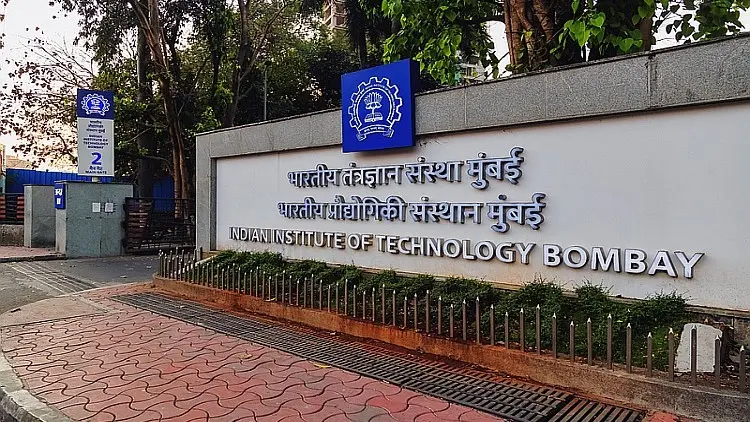
IIT Bombay and the Indian Institute of Science (IISc) have expanded their research collaborations with IBM to advance work in agentic AI, sovereign AI, quantum computing and next-generation computing systems.
The partnerships bring IBM researchers together with faculty and students at both institutes to pursue research across emerging computing technologies. The collaboration with IIT Bombay builds on an association established in 2018, while IBM and IISc have been working together since 2021.

At IIT Bombay, the expanded research agenda will cover sovereign and Indic language model adaptation, multimodal AI, AI infrastructure and knowledge retrieval. Researchers will work on improving multilingual AI capabilities for Indian languages through efficient model adaptation and optimization tools.
The IIT Bombay-IBM collaboration will also examine multimodal AI systems for applications including software programming education, human-AI collaboration and intelligent operations across hybrid cloud environments.
The research on sovereign AI and Indic language models is aimed at supporting the development of AI systems that can better address India's multilingual requirements. The institutions will explore approaches for adapting and optimizing models for Indian languages.
At IISc, the collaboration with IBM will expand into agentic systems, AI applications and quantum computing algorithm development. The two institutions plan to work on technologies that can support more advanced AI workflows and computing applications.
One area of research will involve developing agentic AI workflows designed to improve orchestration across hybrid cloud environments. These systems are intended to coordinate multiple tasks and processes across such computing environments.
The IISc-IBM collaboration will also focus on lightweight time-series foundation models based on IBM's Granite model family. The models will be developed for energy analytics, with potential applications in forecasting, anomaly detection, load disaggregation and energy optimization.
The expanded collaborations build on research carried out by IIT Bombay, IISc and IBM across artificial intelligence, hybrid cloud, distributed systems and quantum computing.
According to the institutes, the partnerships have also provided students and researchers with opportunities to work on industry-related challenges and engage with research involving emerging technologies.
With the new research areas, IIT Bombay and IISc aim to strengthen interdisciplinary work, support scientific talent and develop technologies in areas expected to influence the future of computing.





.webp&w=256&q=75)