France student protests intensify nationwide as more than 400 schools shut over teacher shortages and funding
More than 700 educational establishments were affected, with students citing overcrowded classrooms, deteriorating buildings and shortages of learning materials as protests spread beyond the Paris region.
Pragya Kumari03 October 2026 08:31
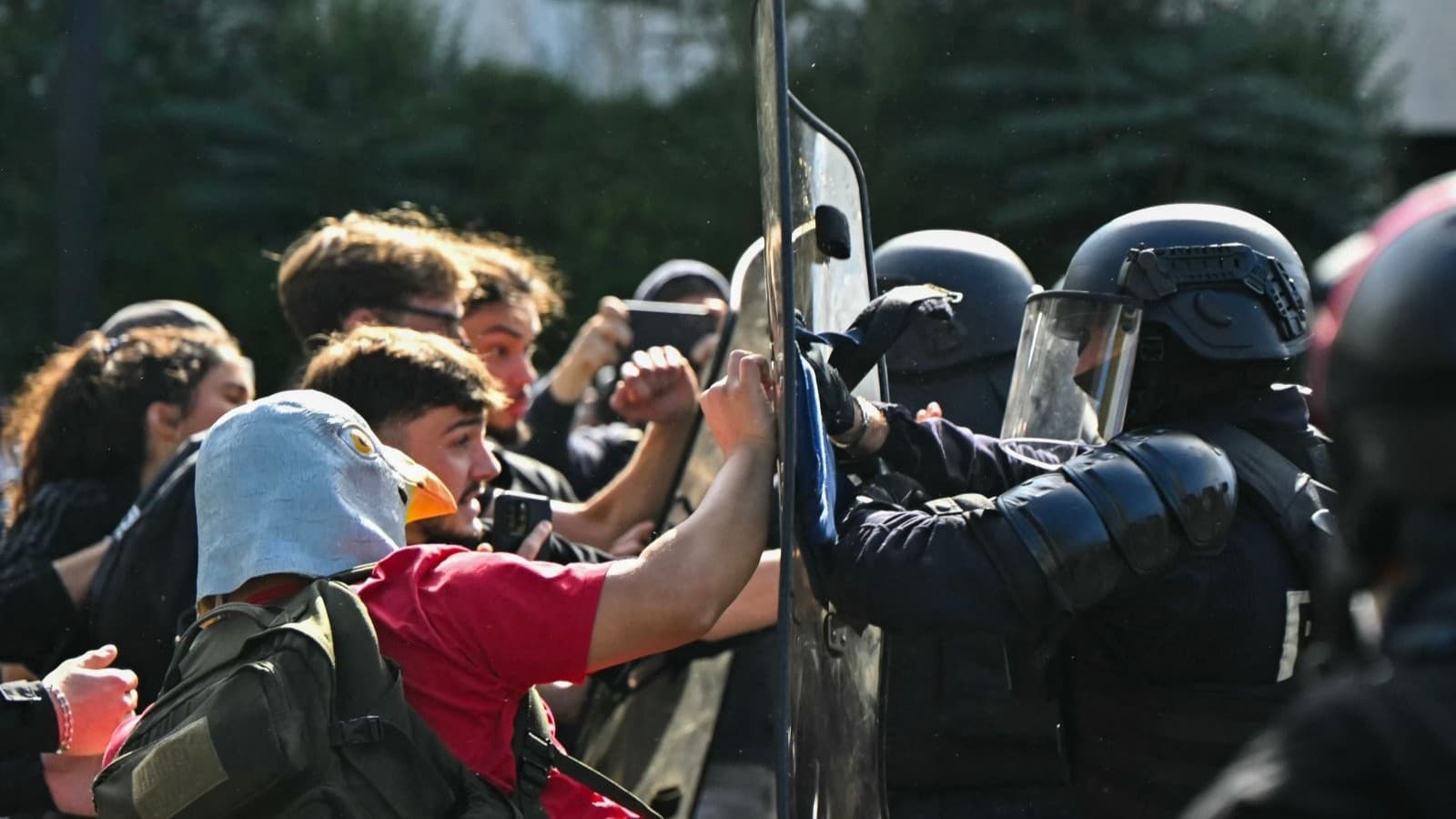
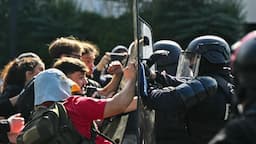
More than 400 schools and colleges across France remained closed on Oct 2 as student protests over teacher shortages, overcrowded classrooms, deteriorating buildings and a lack of learning materials spread nationwide, with clashes between students and riot police reported in several cities.
Education Minister Edouard Geffray said 735 teaching establishments were "affected" on Oct 2, "30% fewer than yesterday."
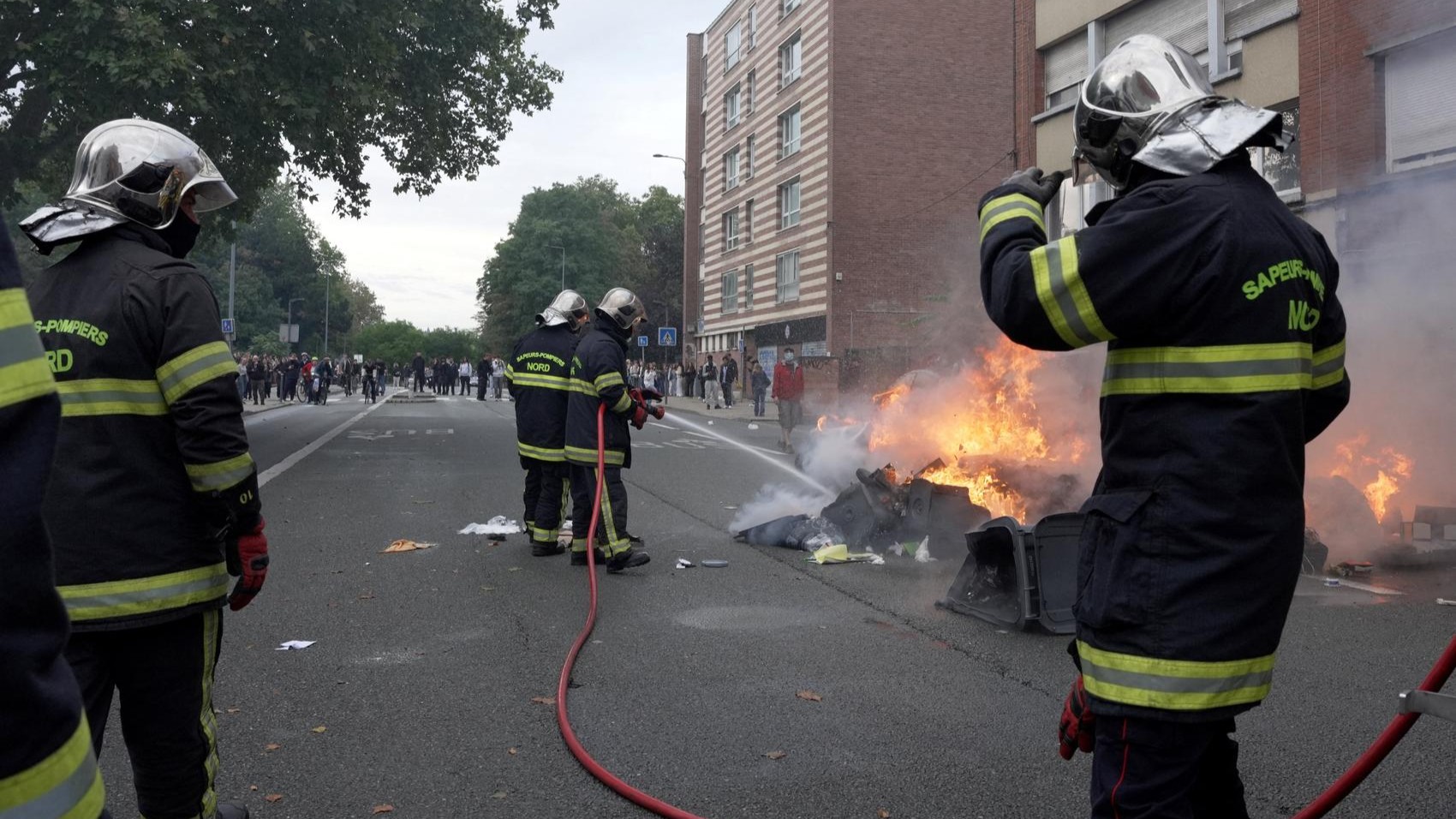
He said three emergency services personnel were injured while responding to incidents, compared with 31 the previous day, and condemned what he called "acts of extreme violence" within the wider protest movement.
The demonstrations began at lycées, equivalent to US high schools, in the Paris region last month before spreading across the country this week.
Students have raised concerns about overcrowded classrooms, teacher shortages, damaged school buildings and inadequate learning materials.
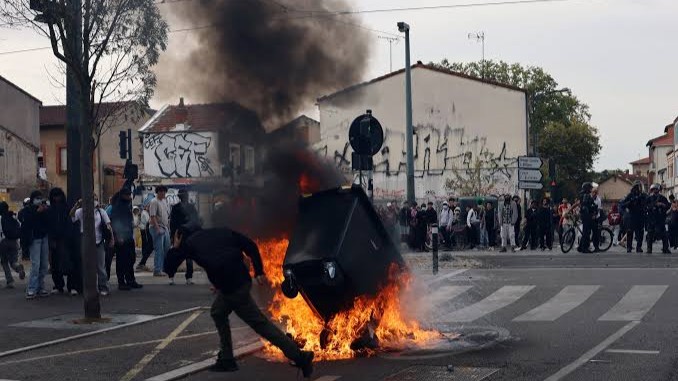
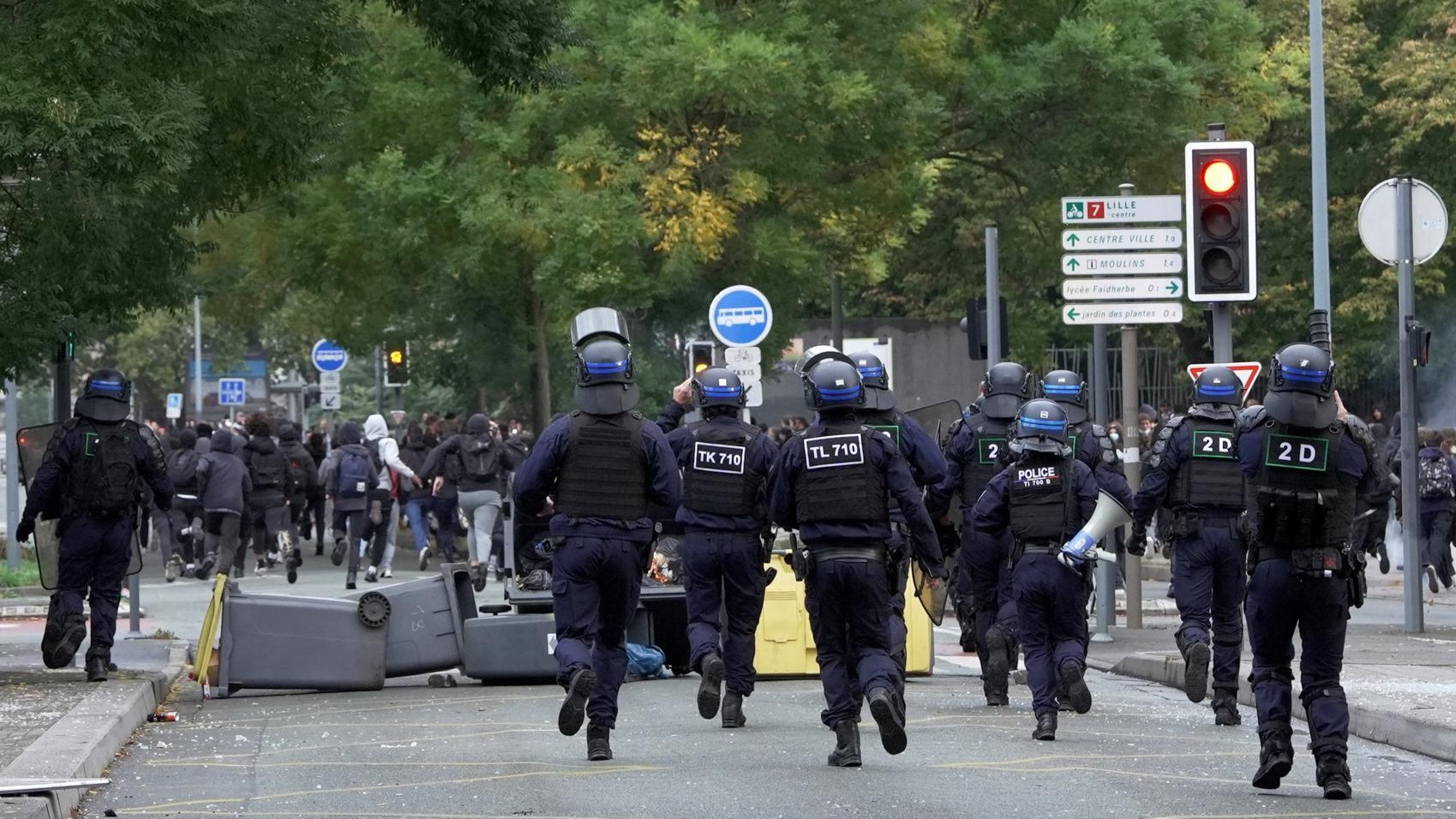
Tear gas was used in the eastern city of Strasbourg, while fireworks were aimed at police lines in Marseille and rubbish bins were set on fire in Rennes. In Pantin, on the outskirts of Paris, protesters set fences and other objects on fire and threw firecrackers at riot police before running away.
Riot police also clashed with youths in Toulouse in southwestern France. At least one car was torched in Strasbourg.
In La Ciotat near Marseille, a youth sprayed petrol at a teacher, according to a spokesperson for the region's educational authority.
Fires were started at at least two high schools on Oct 1, while teachers were reportedly inadvertently splashed with petrol at a third school in Marseille, according to officials.
Some of the roughly 400 schools and colleges that closed had also sustained damage during the demonstrations. Lycee Mandela in Nantes was among the worst affected and was expected to remain closed until mid-October after a fire damaged its entrance hall.
Police have made around 2,000 arrests, while scores of people have been injured, including 40 high school principals, according to Geffray.
Authorities in the southeastern Auvergne-Rhone-Alpes region said at least €25 million in damage had been recorded in their jurisdiction. The Ile-de-France region, which includes Paris, estimated damage at around €7 million.
Students have also criticized the police response. Rights groups have accused police of using heavy-handed tactics against minors, including batons, tear gas and non-lethal flash-ball guns. French authorities have opened several investigations into allegations of police violence.
One investigation concerns a 16-year-old who suffered an eye injury after police fired rubber bullets into a crowd of protesters, according to his friends.
"You don't want to hear our words; you just fire tear gas," one student wrote on a placard outside the Lycée Voltaire in central Paris.
Students cite classroom pressures
Students blocking access to high schools have focused on conditions inside classrooms and schools.
"We are 35 per class, we don’t have enough chairs in classrooms, the one hour lunch break (is too short) for everyone to get food," 15-year-old Kesia told Reuters in the Paris suburb of Pantin before running off as police used tear gas.
Several students in the Paris region told Reuters earlier in the week that they planned to stay away from Friday's protests because of the escalating violence.
Some parents, however, have supported the demonstrations. Vincent Martin joined his daughter outside Helene Boucher high school in Paris and said students were "fundamentally right to demand ... better learning conditions."
Government urges calm
Government ministers have sought to acknowledge students' concerns while calling for an end to violence as the unrest continues.
"Calm must urgently return to high schools and universities," Europe and Foreign Affairs Minister Jean-Noel Barrot said online. "Yes, the right to demonstrate is inalienable. But the violence is inexcusable, and the cynical instrumentalization of youth for political ends is irresponsible."
Geffray said "violent individuals" were "infiltrating groups of students" and "taking the movement hostage." He urged parents to stop their children from participating in protests.
"What matters now is ensuring our children are no longer out on the streets, because they are in danger," he said.
After a government crisis meeting on Oct 1, a source close to Prime Minister Sebastien Lecornu said the demonstrations had shifted from a protest movement toward urban violence. Justice Minister Gerald Darmanin has said the movement was hijacked by "outsiders."
Geffray later met with student representatives and trade unions. Student group leaders renewed their call for "concrete" responses to their demands and said protests should continue, while also urging demonstrators to avoid violence and vandalism.
"If I could address a clear message to high schoolers: be smart. We are giving, once again, cause to those who wish to instrumentalize and discredit our cause. Be non-violent," Nahanael Combary of the Renouveau Lycéen group said.
Teachers plan strike
Trade unions have called a teachers' strike for Oct 6, a week after public-sector workers walked out.
"(The violence) is regrettable, but ... when demands go unheard for years, and given the political and geopolitical context, there are several conditions that put ... students in a real state of anxiety," teacher Sandra Champain-Seller said.
Student union bodies have also called for a day of mass protest on Oct 6 under the slogan: "Police out of schools! No to the repression of student mobilization!"
"The police have no place in front of educational establishments," the groups said in a statement. "We support the ongoing mobilization and call for it to be reinforced."
The demonstrations are unfolding six months before France's next presidential election, with opinion polls showing low public support for President Emmanuel Macron and his center-right-leaning government. Planned budget cuts and concerns about education funding have added to the wider discontent.
Education budget to rise below inflation
Under the draft 2027 budget presented by the government on Oct 1, education spending is set to increase 1.7% to €65.53 billion ($73.77 billion), excluding teacher pensions.
Education has traditionally been the largest budget item, but debt-servicing costs are expected to reach €74.5 billion next year, according to the draft bill.
According to the OECD global policy forum, French education spending is in the middle range among member countries and increased between 2015 and 2022, although its share of the overall budget has slightly decreased.
The funding debate has become a central part of the protests, with students pointing to shortages of teachers, crowded classrooms, damaged infrastructure and insufficient resources.
Dispute over political involvement
The government has also raised allegations that political groups are influencing the student movement.
French domestic intelligence agencies told a crisis meeting on Oct 1 that the protests had been initiated or instrumentalized by politicians from the left-wing La France Insoumise (France Unbowed or LFI), according to Prime Minister Lecornu.
Senior LFI lawmakers rejected the allegations and accused the government of politicizing the protests ahead of the election.
Veteran LFI leader and 2027 presidential candidate Jean-Luc Melenchon has supported the protests but called on students to use non-violent methods.
"Students, teachers and educational staff are facing the same state of neglect and their positions and claims should be respected," he wrote in a statement earlier this week, calling for "disciplined struggle, no panic, no irritation."
The government has continued to call for calm around schools, while students and teachers' unions are seeking responses to their concerns over education conditions, staffing, infrastructure and funding.