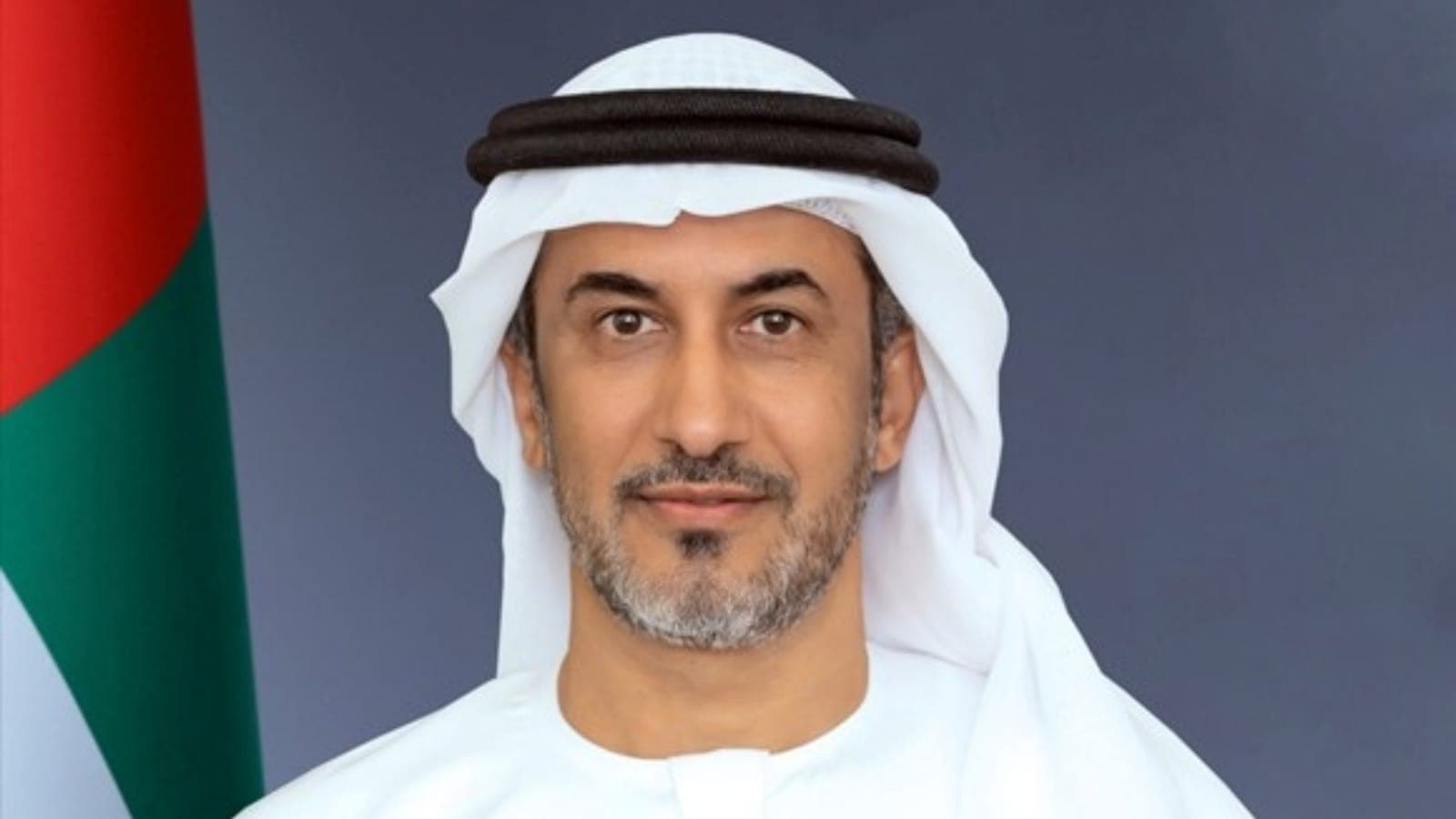
The continued closure and restricted access to the Strait of Hormuz amounts to “economic terrorism” that is also hurting India, UAE Minister of State for Foreign Affairs Saeed Bin Mubarak Al Hajeri has said, warning that the fallout is being felt far beyond the Gulf.
In an email interview, Al Hajeri said while the ceasefire between the United States and Iran after 39 days of war was a welcome step, it was insufficient to guarantee lasting peace in West Asia. Any durable resolution, he said, must confront what he described as Iran’s “full range of threats” — including its nuclear programme, ballistic missiles, drones, regional proxies, and the unconditional reopening of the Strait of Hormuz.

‘India paying the price too’
Al Hajeri said the waterway technically remains closed, with Iran allegedly restricting access, demanding prior permission for transit, and levying tolls on vessels.
“This does not just impact the UAE and its neighbors, it also impacts India,” he said, noting that India relies heavily on the corridor for crude oil, LPG and fertilizer imports.
“Every day the Strait remains closed, the cost to Indian households and businesses grows. That is not freedom of navigation, it is economic terrorism that must be addressed immediately by the international community,” he said.
‘Ceasefire cannot be the finish line’
According to the UAE minister, success cannot be measured simply by a pause in hostilities.
“The benchmark for success is not a ceasefire. It is a conclusive outcome with binding guarantees, accountability, and assurances that this pattern of aggression can never be repeated,” he said.
UAE accuses Iran of direct attacks
Speaking on the wider conflict, Al Hajeri said the UAE had made repeated diplomatic efforts to avoid war and had assured all sides that its territory and airspace would not be used to launch attacks against Iran.
He alleged that despite those assurances, Iran targeted Gulf states that had tried to preserve peace.
Since February 28, he claimed, Iran launched 537 ballistic missiles, 26 cruise missiles and 2,256 drones at the UAE alone — more than against any other country involved in the conflict.
“The UAE chose restraint, but that should not be mistaken for acceptance of what has been done to our people and our country,” he said.
Indian nationals among casualties
Al Hajeri said Iranian attacks had killed civilians on UAE soil and injured 224 others, including Indian nationals.
“These are people with children and families, hopes and ambitions. Iran has taken that away from them,” he said, expressing condolences for those killed and prayers for the injured.
He described the strikes on civilian areas, energy facilities and residential neighbourhoods as terrorism rather than military operations.
Praise for India’s support
The minister also praised India’s response during the crisis, highlighting Prime Minister Narendra Modi’s early phone call to UAE President Sheikh Mohamed bin Zayed Al Nahyan after the war began.
He said both countries remained in close touch throughout the conflict on issues including the safety of Indian nationals, energy security and efforts to restore peace.
Senior-level diplomatic engagement continued through March and April, with multiple meetings and direct communication between UAE and Indian leaders, he added.
UAE says economy remains resilient
On concerns over Dubai and Abu Dhabi’s security and business climate, Al Hajeri said the UAE had weathered previous crises and emerged stronger each time.
He said advanced air defence systems intercepted most missile and drone threats, while essential services such as healthcare, water, transport, telecommunications and food supply continued with minimal disruption.
Highlighting economic strength, he said nearly 75% of the UAE’s GDP now comes from non-oil sectors. He also pointed to sovereign wealth holdings of $2.49 trillion and the reaffirmation of the country’s AA/A-1+ credit rating with a stable outlook.
India-UAE trade goal intact
Al Hajeri said the India-UAE Comprehensive Economic Partnership Agreement continues to drive strong bilateral commerce, with total trade touching $75 billion in 2025.
He noted that leaders of both countries committed in January 2026 to doubling trade to $200 billion by 2032.
“In the UAE’s assessment, the current situation has done nothing to diminish the ability to achieve that goal,” he said.
‘Five million Indians are part of our fabric’
Seeking to reassure the Indian diaspora, Al Hajeri said the UAE considers the safety of every resident a top priority.
He noted that President Sheikh Mohamed bin Zayed had personally visited injured civilians in hospital, including an Indian national, saying: “They are all our responsibility.”
Calling the UAE a second home to more than five million Indians, he said the community has been central to the country’s growth for generations.
“Their safety and well-being remain a deeply held priority for the UAE leadership, and our commitment to their security and prosperity is unwavering,” he said.








.jpg&w=256&q=75)