Israeli Prime Minister Benjamin Netanyahu has said Israel is quietly forging new alliances with key countries in the region to counter Iran, indicating a deepening geopolitical realignment amid ongoing tensions in the Middle East.
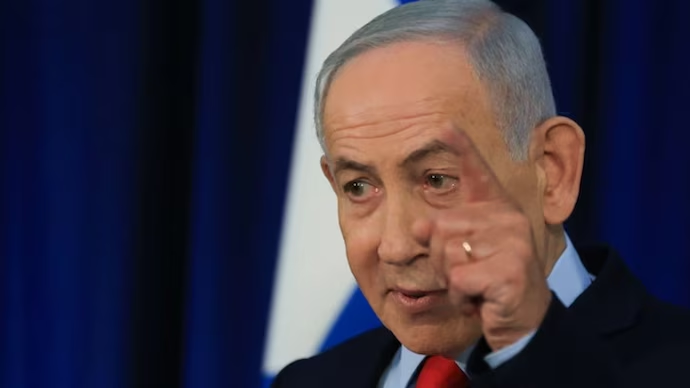
In an address on March 31, Netanyahu revealed that Israel is establishing ties with “important countries in the region,” though he stopped short of naming them. “We are creating new alliances with important countries in the region,” he said, adding that details of these “important pacts” would be disclosed in due course.

The remarks point to a widening alignment between Israel and parts of the Arab world, driven largely by shared concerns over Iran’s growing military reach and nuclear ambitions. The outreach, Netanyahu suggested, is part of a broader recalibration of regional strategy as the conflict landscape evolves.
Framing the diplomatic push alongside recent military developments, Netanyahu claimed Israel has dealt significant setbacks to what he described as “two existential threats” — Iran’s nuclear programme and its ballistic missile capabilities. He asserted that Israeli operations had pushed back Tehran’s ability to rapidly advance its weapons systems.
“We removed from upon us the immediate threat of Iran arming itself with a nuclear weapon and many ballistic missiles,” Netanyahu said, referring to earlier strikes.
He further claimed that Israel has targeted and weakened Iran’s industrial capacity to produce advanced weaponry. “We brought a complementary achievement, by smashing the industrial capability of the regime to produce these tools of destruction,” he added.
Netanyahu also argued that Iran’s regional influence has been curtailed, stating that Hezbollah no longer constitutes a “strategic threat” to Israel — a significant assertion given the group’s longstanding role as Tehran’s key proxy in the region.
In a more sweeping claim, the Israeli leader predicted eventual political change in Tehran. “Sooner or later, the Iranian regime will fall,” he said, underscoring Israel’s long-term outlook on its primary regional rival.




.jpg&w=256&q=75)





.jpg&w=256&q=75)
