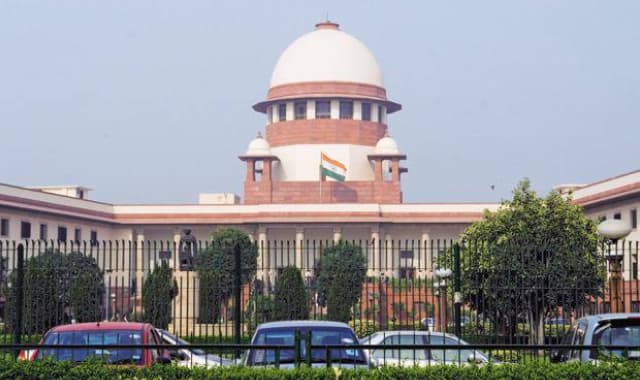
The Centre has told the Supreme Court that it wants to bring a new set of regulations by January-end in this regard and is currently working with internet companies to frame the guidelines

The Modi government reportedly wants to regulate the internet fearing its misuse which, as per the Centre, may cause “unimaginable disruption to democratic polity”.
As per a report of The Times of India, the Centre has told the Supreme Court that it wants to bring a new set of regulations by January-end in this regard.
The government is now working with internet service providers, search engines and social media platforms to frame the guidelines.
In its affidavit, the ministry of electronics and IT said keeping in view the mischief that could be caused by misuse of internet, the government “felt that the extant rules (are to be revised for effective regulation of intermediaries keeping in view the ever-growing threats to individual rights and nation’s integrity, sovereignty and security”, the report added.
The govt said that in the last few years there has been massive increase in social media due to lower internet tariffs, availability of smart devices. On one hand this has led to economic growth and societal development, but in the other, there has been an exponential rise in hate speech, fake news, public order, anti-national activities, defamatory postings and other unlawful activities using internet/social media platforms.
“There are various messages and content spread/shared on social media some of which is harmful. Some messages can incite violence. There may be messages which are against the sovereignty and integrity of the country…in such circumstances it is imperative that there is a properly framed regime to find out the persons/institutions/bodies who are the originators of such content/messages. It may be necessary to get such information from the intermediaries,” the court had said while asking the ministry to give definite timelines in respect of completing the process of notifying the rules.
The govt told the court that it had informed the Parliament to bring guidelines to make intermediaries more liable towards the content that is published and transmitted on their platforms.
The draft Information Technology Intermediaries Guidelines Amendment Rules, 2018, were then notified which subsequently received 171 comments which too were published on the ministry’s website of electronics and IT on February 4. The government had also several rounds of discussions with several stakeholders and other relevant ministries. It has now sought three months from the court to notify the final revised rules.