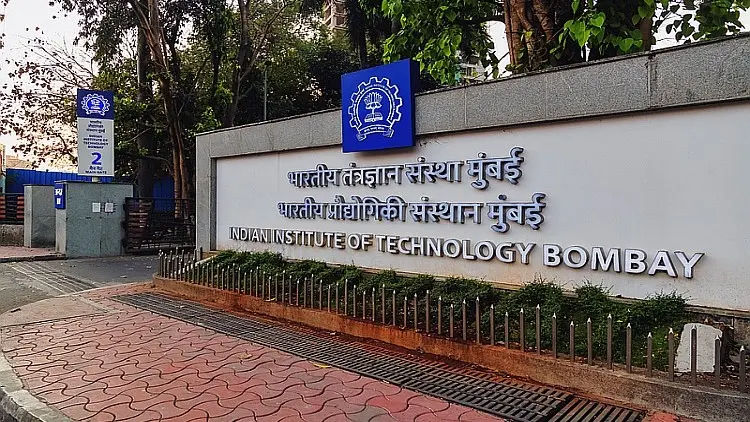
IIT Bombay has drafted an interim procedure for handling suspected cases of cheating and other forms of examination misconduct, giving students an opportunity to explain their side before disciplinary action is decided.
The changes come after the death by suicide of second-year BTech student Sahil Wakode, whose examination-related incident had triggered protests and scrutiny of the institute’s disciplinary procedures.

The institute’s Senate has put the stricter academic misconduct rules introduced in July 2026 on hold for the upcoming mid-semester examinations scheduled for Oct 10 and 11.
For these examinations, IIT Bombay will return to the milder framework approved in 2015, with the interim procedure adding clearer safeguards for students accused of using unfair means.
Under the proposed process, an invigilator who suspects a student of using unauthorized material or devices during an examination will record the incident in a prescribed form. The student will also be allowed to submit a written account explaining what happened.
The case will then be referred to the Departmental Disciplinary Action Committee (DDAC), which will determine how the matter should proceed. The faculty member who reports the suspected misconduct will not be responsible for deciding the final disciplinary outcome.
Students will also be allowed to appear before the committee and provide additional information. They will have an opportunity to appeal against the disciplinary decision.
Students allowed to continue examination
The interim procedure changes how students will be handled after suspected misconduct is detected during an examination.
The student's original answer book will be collected, while any unauthorized material or device, including a mobile phone, electronic device or written material, will be taken away. The student will then receive a fresh answer book and be permitted to continue the examination for the remaining duration.
The earlier IIT Bombay rules also included a provision allowing students to receive a fresh answer book in cases of copying. The provision came under scrutiny after questions were raised over how the procedure was applied in Wakode’s case.
Counsellors to be alerted in suspected cases
The revised procedure also introduces a student-support component into the examination process.
If an invigilator suspects a student of cheating or notices signs of stress, the institute’s Quick Response Team (QRT) of counselors will be alerted. The stated objective is to provide immediate support while minimizing disruption to the examination.
If a student leaves the examination hall after an incident involving suspected misconduct, the QRT helpline will also be alerted so that counseling support can be provided.
No physical frisking before examinations
The interim procedure removes physical frisking of students before examinations. Faculty members had raised concerns about searches resembling airport-style security checks.
Under the revised arrangement, students will not be routinely frisked before entering examination halls. They will also be permitted to bring bags into the examination building, although the bags must be left outside the examination hall.
July 2026 academic misconduct rules
IIT Bombay introduced stricter penalties for academic misconduct in July 2026. Under those provisions, possession or use of unauthorized materials or devices, including mobile phones, tablets, smartwatches and certain AI-enabled devices, could lead to an FR2 grade and a one-semester suspension.
The institute has now placed those stricter provisions on hold for the October 10 and 11 examinations and will use the earlier 2015 framework along with the interim procedure. Repeat offenses and serious violations can still result in disciplinary action.
The proposed changes seek to establish a more structured process for handling alleged examination malpractice, with greater emphasis on allowing students to present their version of events before disciplinary proceedings are finalized.
What happened to Sahil Wakode?
Wakode, a 22-year-old second-year student at IIT Bombay, died by suicide on September 18 after an examination-related incident. According to the institute, he was allegedly found using a mobile phone and ChatGPT during a mid-semester examination.
CCTV footage from the examination hall showed Wakode seated in a front-row seat before an invigilator, Suryanarayana Doolla, stopped and spoke to him. The footage showed Wakode handing over his mobile phone to the invigilator before gathering his belongings and leaving the examination hall.
The IIT Bombay Faculty Forum had expressed solidarity with Doolla, stating that the invigilator was following institutional protocol after discovering the student was in "unauthorised possession and use of a smartphone."
The incident led to protests on the IIT Bombay campus and renewed attention on the institute’s academic misconduct procedures. Wakode’s family and protesters alleged that he had faced institutional harassment and caste-based discrimination on campus and linked these concerns to his death.
Initial investigation found no concrete evidence linking the professor to the abetment-to-suicide case, according to sources. However, no final conclusion had been reached on the allegations, and investigators continued to examine the available evidence.
Review of examination disciplinary procedures
The proposed interim procedure is part of IIT Bombay’s broader review of its examination and academic misconduct framework. The changes seek to clarify the process from the point at which suspected malpractice is detected through disciplinary review and appeal.
The institute’s approach for the upcoming examinations places greater emphasis on documenting the incident, hearing the student’s explanation and separating the reporting of alleged misconduct from the final disciplinary decision.
The revised process will apply to the October mid-semester examinations while IIT Bombay reviews its longer-term approach to examination malpractice and academic misconduct.