The Cockroach Janta Party (CJP) on Thursday demanded the resignation of Chief Election Commissioner Gyanesh Kumar within 48 hours, escalating the controversy over reported differences within the Election Commission of India (ECI) over electoral-roll decisions and the ongoing Special Intensive Revision (SIR) exercise.
The demand came a day after an investigation by The Indian Express reported that Election Commissioners Sukhbir Singh Sandhu and Vivek Joshi had recorded objections on at least 14 occasions over a period of 10 months to decisions and actions connected with electoral-roll management and the Special Intensive Revision (SIR) exercise.

The Election Commission, however, has rejected the characterisation of the developments as an internal rift. In its response, the poll panel said differing views, written observations and internal checks are part of the functioning of a multi-member constitutional body and maintained that decisions taken by the Commission over the past year, including those concerning SIR, were unanimous.
The CJP’s demand therefore comes amid a wider confrontation over how decisions are being taken inside the poll panel and whether the reported objections indicate a substantive disagreement over the management of electoral rolls.
What did the CJP demand?
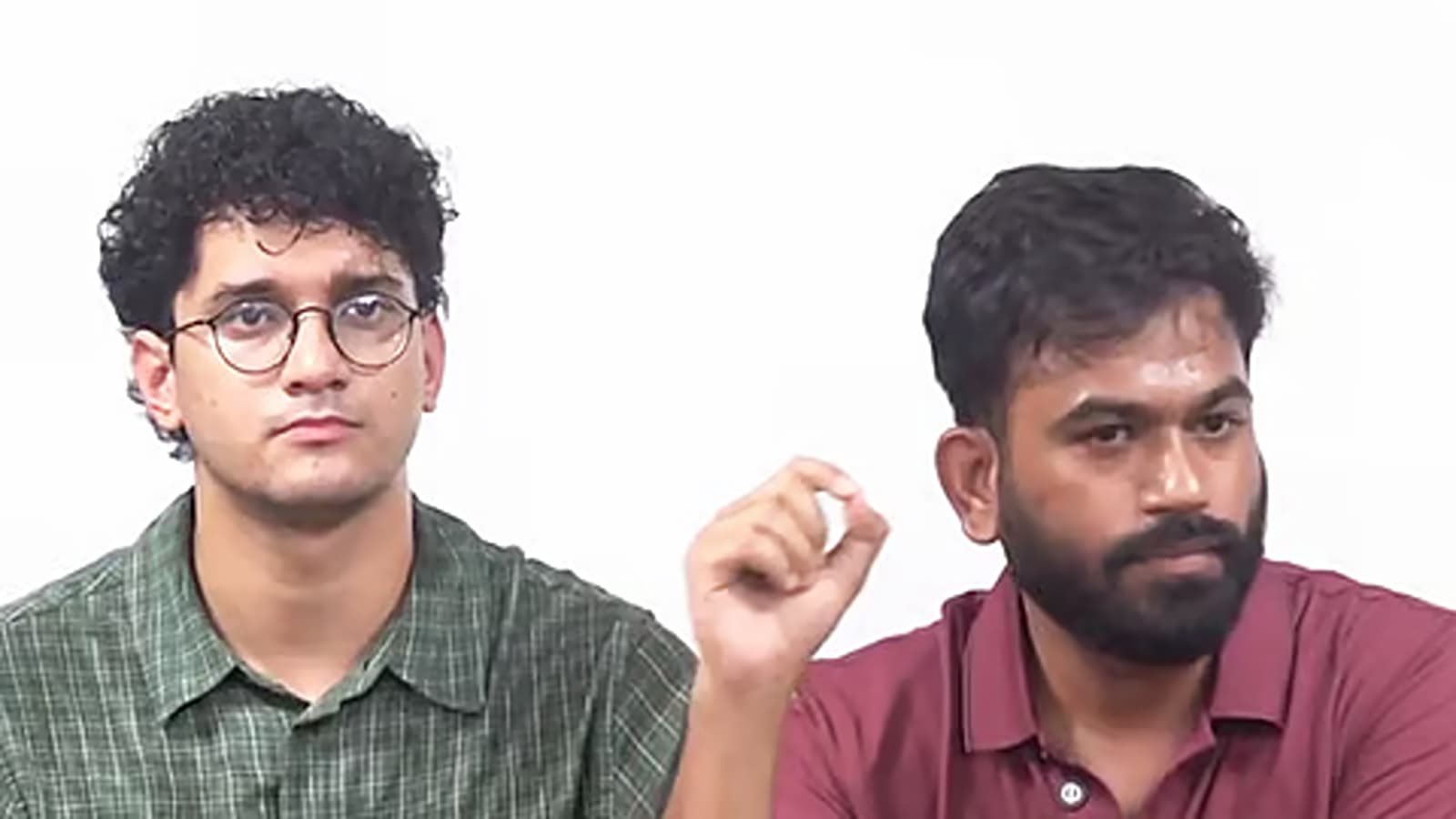
At a press conference in New Delhi on Thursday, CJP founder Abhijeet Dipke gave Kumar 48 hours to resign and warned that the organisation would begin a nationwide agitation if he failed to do so. The group also threatened protests in Delhi and referred to a possible “Jantar Mantar 2” style mobilisation.
The organisation’s demands extend beyond the CEC’s resignation. CJP co-convenor Saurav Das said the group was seeking criminal proceedings against Kumar and those whom it alleged had directed the disputed actions. It also called for a freeze on upcoming elections and a halt to the ongoing SIR exercise.
The group further demanded that the electoral rolls be rolled back to the 2025 position, that SIR-related files be placed in the custody of a Supreme Court-led committee and that the 2023 law governing the appointment of the CEC and Election Commissioners be repealed. These are demands and allegations made by the CJP and do not constitute findings by a court or any other competent authority.
What triggered the latest controversy?
The immediate trigger was a report by The Indian Express stating that Sandhu and Joshi had raised objections on at least 14 occasions over 10 months concerning decisions taken in the name of the Election Commission.
According to the report, the objections covered several aspects of electoral-roll administration, including changes involving statutory Form 6, voter additions and deletions, restoration of names, centralised control of electoral-roll databases and the handling of appeals relating to voter deletions in West Bengal. The report also referred to concerns over the addition of eligible voters in Goa.
The report is significant because the Election Commission is a three-member constitutional body comprising the CEC and two Election Commissioners. The current Commission consists of Gyanesh Kumar, Sukhbir Singh Sandhu and Vivek Joshi.
The objections, as reported, were not merely differences expressed outside the Commission. They were recorded in official communications, according to the investigation.
The Election Commission did not dispute that written observations had been made. Instead, it said such observations are part of institutional deliberation and that presenting selected internal notes without the broader decision-making context does not provide a complete picture. The Commission maintained that its final decisions and orders had the required legal sanction.
Election Commission says decisions were unanimous
The controversy has produced two competing descriptions of what happened inside the poll panel. On one side, the Indian Express investigation reported repeated objections by the two Election Commissioners to decisions relating to electoral-roll management. On the other, the Election Commission has maintained that disagreements during deliberations are normal and that the final decisions of the full Commission were unanimous.
The Commission said that technical suggestions, written observations and internal checks and balances should not be interpreted as evidence of a breakdown in the functioning of the institution. It also argued that such exchanges are part of the process through which a multi-member constitutional body arrives at decisions.
BJP leaders have also defended this interpretation. BJP national spokesperson Sambit Patra said the correspondence between the three Commissioners demonstrated that deliberations were taking place, arguing that differences within a constitutional institution were not evidence of an authoritarian system.
Opposition steps up demand for Kumar’s removal
The CJP’s ultimatum came as opposition parties intensified their demand for action against Kumar. Congress, Trinamool Congress, Samajwadi Party, Aam Aadmi Party, CPI(M), DMK and other opposition leaders have demanded Kumar’s removal and questioned the continuation of the SIR exercise. Some opposition leaders have also called for an inquiry into the Election Commission’s decision-making.
Congress president Mallikarjun Kharge has renewed the opposition’s demand for action on an earlier removal motion against Kumar. Other opposition leaders have called for his removal, while some have gone further and demanded criminal proceedings or his arrest. Such allegations and demands remain political claims and are not established judicial findings.
The controversy has also drawn reactions from outside the parliamentary Opposition. Maharashtra Navnirman Sena chief Raj Thackeray has demanded Kumar’s resignation and questioned the functioning of the Election Commission.
A removal motion is already pending
The current controversy is also significant because attempts to seek Kumar’s removal had already been made before the latest allegations of internal disagreement surfaced. According to The Indian Express, 63 Rajya Sabha members and 130 Lok Sabha members had moved a motion seeking Kumar’s removal in March. The motions were rejected by the presiding authorities of both Houses on April 6.
The Opposition subsequently submitted another notice in the Rajya Sabha on April 24 seeking Kumar’s removal, with the notice remaining pending before the Rajya Sabha Chairman. The parliamentary route for removing a Chief Election Commissioner is considerably different from an ordinary administrative removal.
Can the CEC simply be removed?
Under the Chief Election Commissioner and Other Election Commissioners (Appointment, Conditions of Service and Term of Office) Act, 2023, the CEC can resign by writing to the President.
But removal is subject to a higher constitutional protection.
Section 11 of the 2023 Act states that the Chief Election Commissioner cannot be removed except in the same manner and on the same grounds as a Supreme Court judge. Other Election Commissioners have a different protection and can be removed only on the recommendation of the CEC.
The constitutional protection is intended to safeguard the independence of the Election Commission. It means a political demand for resignation does not itself remove a serving CEC from office.
Kumar became the 26th Chief Election Commissioner on February 19, 2025. He had earlier served as an Election Commissioner from March 15, 2024. The Election Commission's official profile records his appointment and previous government service, including positions in the Ministry of Home Affairs and Ministry of Cooperation.
Supreme Court also examining the appointment system
The controversy has unfolded alongside a separate constitutional challenge concerning how Election Commissioners are appointed. On Wednesday, a two-judge Supreme Court bench differed on whether challenges to the 2023 law governing the appointment of the CEC and Election Commissioners should be considered by a larger Constitution Bench. The judges ultimately agreed that the papers should be placed before the Chief Justice of India for consideration of a larger bench.
The challenge centres on the composition of the selection committee under the 2023 law. Unlike the interim arrangement laid down by the Supreme Court in Anoop Baranwal v. Union of India, under which the Prime Minister, Leader of Opposition and Chief Justice of India were to participate in appointments until Parliament enacted a law, the 2023 legislation provides for a committee comprising the Prime Minister, the Leader of Opposition and a Union Cabinet minister nominated by the Prime Minister.
Justice Dipankar Datta has raised concerns about whether the arrangement provides sufficient institutional independence, while Justice Satish Chandra Sharma took a different view on the procedural question concerning a larger bench. Both judges agreed that the matter should move forward without unnecessary delay.
The Supreme Court proceedings do not, however, amount to a finding that Kumar has committed wrongdoing.
The larger question: what happened inside the poll panel?
The immediate dispute is no longer limited to the CJP's demand for Kumar's resignation. At its centre is a question about the functioning of a three-member constitutional body entrusted with administering elections.
The reported objections by Sandhu and Joshi concern decisions affecting electoral-roll management, while the Election Commission insists that the ultimate decisions were unanimous. The difference between those two positions is important: a recorded objection during deliberations does not necessarily mean that a final Commission decision was opposed by a majority.
Under Section 18 of the 2023 Act, the Commission is expected, as far as possible, to transact business unanimously. Where the CEC and other Election Commissioners differ, the matter is to be decided according to the majority opinion. The controversy therefore raises questions about how internal dissent is recorded, how decisions are communicated to the public and how electoral-roll decisions are reviewed when Commissioners disagree during the process.
For the CJP, the reported objections are evidence of a deeper institutional problem and grounds for Kumar's resignation. For the Election Commission and the BJP, the existence of differing views is part of normal institutional deliberation and does not establish a breakdown in the Commission's functioning.
For now, Kumar remains Chief Election Commissioner. The 48-hour deadline announced by the CJP is a political demand and has no automatic legal effect on his tenure. Any formal removal would have to follow the constitutional and statutory process governing the office. The controversy is likely to remain tied to two parallel questions: what the reported internal objections reveal about the Election Commission's decision-making process, and whether the existing legal framework provides sufficient safeguards for the independence and public credibility of India's election machinery.