When the National Steel Policy set a target of creating 300 million tonnes of steelmaking capacity by 2030, it was effectively placing steel at the centre of India's economic growth story. The logic was straightforward: a country planning to build more highways, railways, factories, renewable energy projects and urban infrastructure would also need far more steel.
Nearly a decade later, the latest production figures indicate that the sector is moving steadily towards that long-term goal.

India's steel output continues to grow
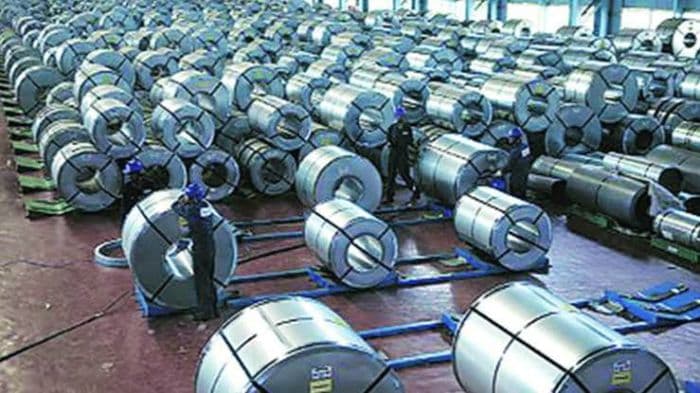
India's finished steel production rose 5.9 per cent year-on-year to 41 million tonnes during the April-June quarter of FY27, according to the Ministry of Steel. Consumption grew even faster, increasing 8.3 per cent to 41.6 million tonnes, while exports also registered strong growth during June.
The latest figures come as India works towards an ambitious target of achieving 300 million tonnes (MT) of crude steelmaking capacity by 2030 under the National Steel Policy.
Why 300 million tonnes?
The target is closely linked to India's broader economic ambitions.
Steel is a critical raw material for highways, railways, metro networks, airports, ports, power plants, affordable housing, automobiles, defence equipment and manufacturing.
As India invests heavily in infrastructure and seeks to become a global manufacturing hub, domestic steel demand is expected to rise significantly over the coming years.
The National Steel Policy 2017 projected that crude steel capacity would increase from around 142 MT at the time to 300 MT by 2030-31, while finished steel production was expected to reach 255 MT.
The policy also aims to raise per capita steel consumption to 160 kg, compared with much lower levels when the policy was launched.
How far has India progressed?
According to the latest Ministry of Steel data, India's crude steelmaking capacity has reached 221.9 million tonnes per annum as of June 2026.
India is currently the world's second-largest crude steel producer, behind China, and has steadily expanded production through investments by both public and private sector steelmakers.
Companies including SAIL, Tata Steel, JSW Steel, AM/NS India and Jindal Steel have announced capacity expansion plans in recent years to meet growing domestic demand.
Government initiatives supporting the sector
Apart from expanding capacity, the government has introduced several measures to strengthen the steel industry. These include the Production Linked Incentive (PLI) Scheme for speciality steel, which seeks to boost domestic production of value-added steel and reduce dependence on imports.
Large public investments under programmes such as PM Gati Shakti, railway expansion, highway construction and urban infrastructure have also supported steel consumption.
Challenges on the road ahead
Despite steady growth, the industry continues to face challenges such as volatile raw material prices, global trade restrictions, carbon emission targets and increasing competition from imports in certain product categories.
The transition towards low-carbon or green steel production is also expected to require significant investment as countries tighten climate regulations.
What the latest numbers indicate
The April-June figures suggest that domestic demand remains robust, supported by infrastructure spending and industrial activity. If this momentum continues alongside planned capacity additions, India will move closer to its long-term objective of building a 300 MT steel industry capable of supporting both domestic growth and export opportunities.




_1600x900.jpg&w=256&q=75)


.jpg&w=256&q=75)
.jpg&w=256&q=75)