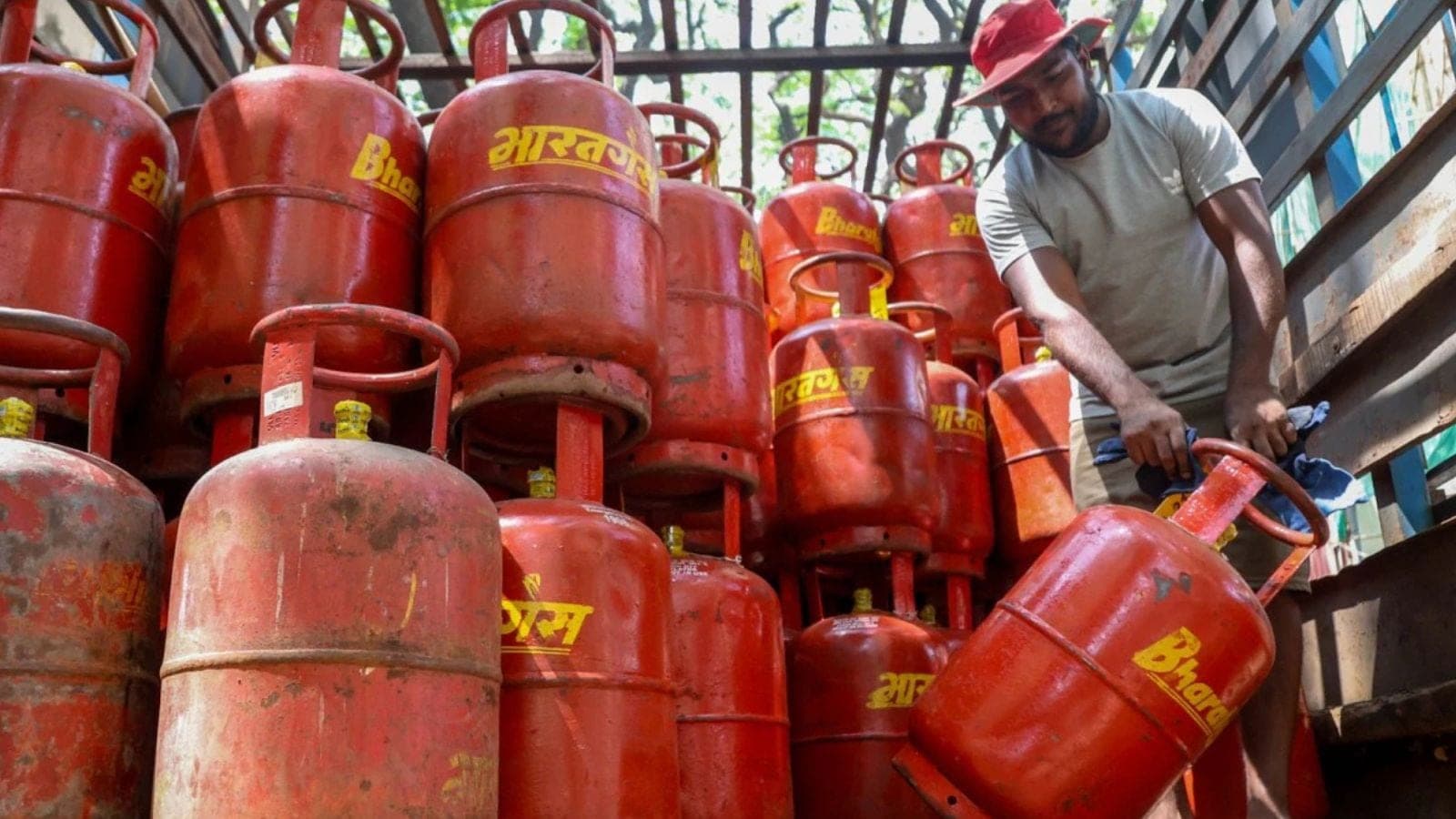
Panic-driven bookings of liquefied petroleum gas (LPG) cylinders have sharply eased across India, returning close to pre-West Asia conflict levels. However, the supply outlook remains fragile as disruptions in the Strait of Hormuz continue to choke critical imports.
According to Petroleum Ministry Joint Secretary Sujata

Sharma, daily LPG bookings fell to around 57 lakh on March 18, nearly in line with the pre-conflict average of 55.7 lakh cylinders. This marks a steep decline from the panic peak of nearly 88 lakh bookings recorded on March 13.
Despite easing demand pressure, supply concerns persist. Oil marketing companies (OMCs) are currently maintaining household LPG deliveries at around 50 lakh cylinders per day, with actual deliveries touching nearly 55 lakh on March 18. Importantly, no dry-outs have been reported across the country’s 25,000 LPG dealerships, signaling controlled distribution despite constraints.
At the peak of panic buying, daily deliveries had surged beyond 60 lakh cylinders. While household supply has stabilized, commercial and industrial consumers are bearing the brunt of the shortage, receiving only about 20% of their requirements as allocations are tightly rationed.
The disruption stems largely from the near halt in maritime traffic through the Strait of Hormuz, a critical global energy chokepoint. India relies on imports for about 60% of its LPG demand, with nearly 90% of those supplies routed through this narrow passage between Iran and Oman. As a result, roughly 55% of India’s LPG consumption is currently exposed to severe disruption.
To cushion the impact, the government has prioritized household consumption while directing refiners to ramp up domestic production. Measures include diverting propane, butane, and other petrochemical feedstocks towards LPG output. These steps have already pushed domestic LPG production up by 40% compared to pre-conflict levels, with further gains expected.
Authorities have also tightened booking norms to curb hoarding, increasing the refill waiting period from 21 days to 25 days in urban areas and up to 45 days in rural regions.
For commercial users such as restaurants, the situation remains critical. The government has advised switching to alternative fuels including kerosene, fuel oil, biomass, and even coal to offset LPG shortages.
In parallel, the Centre is accelerating a shift towards piped natural gas (PNG) to ease pressure on LPG supplies. Over the past two weeks, around 1.25 lakh new gas connections—including domestic and commercial users—have been issued, while approximately 5,600 LPG consumers have already transitioned to PNG.
Although natural gas imports have also been affected by the Hormuz disruption, the impact is less severe. India imports roughly 50% of its natural gas needs, with 55–60% of those volumes passing through the same route.
To boost PNG adoption, city gas distribution companies are offering incentives such as free gas volumes and waived connection charges. The government has also urged states to fast-track infrastructure approvals and reduce levies to expand pipeline access.
Regulator PNGRB has directed gas companies to scale up outreach and expedite connections, noting that nearly 60 lakh households are already within reach of PNG networks. However, the scale gap remains significant—while India has about 33.3 crore LPG connections, PNG coverage stands at just 1.5 crore, constrained by the need for pipeline infrastructure.
As panic eases, the focus now shifts to managing a prolonged supply squeeze—one that continues to test India’s energy resilience amid global geopolitical turmoil.