


Medforth CEO Dr. Gaurov Dayal discusses how medical schools must rethink clinical judgment, AI literacy, and physician accountability as machine learning enters healthcare.
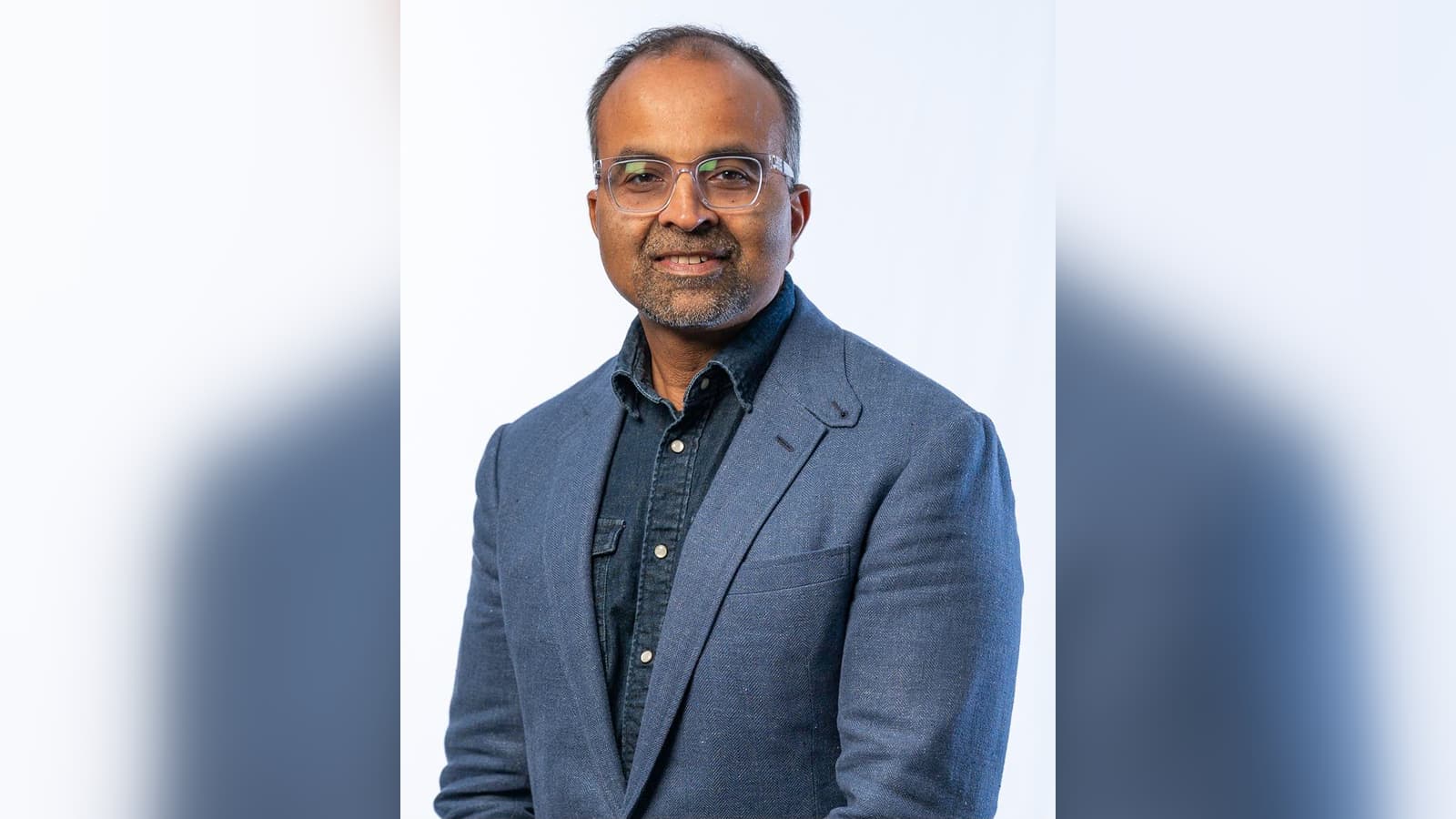
Dr. Gaurov Dayal, CEO of Medforth Global Healthcare Education, discussing AI in medical training
As artificial intelligence moves from experimentation into everyday clinical practice, medical education is being forced to reconsider what it means to think, decide and remain accountable as a doctor. Dr. Gaurov Dayal, Chief Executive Officer, Medforth Global Healthcare Education, argues that the answer is not to teach physicians to rely more heavily on machines, but to strengthen the judgment required to question them. In this conversation with Education Post’s Prabhav Anand, he examines how medical training must evolve around AI literacy, clinical reasoning, assessment, governance and patient safety. He also discusses the risks of algorithmic bias, the limits of regulatory approval and why physicians must remain responsible for decisions shaped by AI.
1. As AI becomes part of everyday clinical practice, how should medical education redefine what it means to “think like a doctor”?

Traditionally, medical education has placed significant emphasis on building a strong fund of medical knowledge and recognising clinical patterns, with physicians spending years learning, retaining and applying this knowledge in practice. That foundation still matters. A physician cannot outsource their knowledge to a machine and call that clinical judgment.
But this is no longer a future scenario. Data from the American Medical Association’s Augmented Intelligence Research study showed that physician use of AI increased from 38% in 2023 to 66% in 2024, with subsequent surveys indicating that the rate has crossed 80%. When AI can provide a differential diagnosis or identify a drug interaction within seconds, physicians must focus on asking the right clinical questions, assessing information in the context of the individual patient, identifying what does not fit, and remaining accountable for the final decision.
Medical education should therefore give students opportunities to think aloud, justify diagnoses and critically assess AI-generated suggestions. Thinking like a doctor today is less about being the fastest source of information and more about critically interpreting information and applying it appropriately to the individual patient.
2. AI can identify patterns and generate clinical recommendations, but how should future physicians learn to question, validate and interpret its outputs?
Students should be taught to approach AI outputs with the same critical thinking they apply to other forms of clinical information. They need to understand how a model was trained, which populations its data represent, and where it is likely to fail.
A tool trained predominantly on one demographic, for example, may underperform when applied to another. A physician who does not understand that limitation is exposed to the risk of accepting an inaccurate recommendation. This is particularly important for physicians working across diverse countries and communities, where disease prevalence, available resources, clinical protocols and patient characteristics can vary considerably.
I encourage students to treat an AI recommendation much as they would a second opinion from a colleague they do not know well: take it seriously, examine the reasoning behind it, but never allow it to substitute for their own clinical judgment.
3. Where should medical schools draw the line between using AI as a decision-support tool and preserving the physician’s judgement and accountability?
The line should be drawn around accountability, not convenience. AI can support a decision; it cannot own one. A physician’s name goes on the chart, and their professional responsibility remains with them. That accountability cannot be delegated to software, regardless of how sophisticated it is.
An analysis of FDA-authorised AI and machine-learning-enabled devices found that, among a large cohort of cleared devices, only a small fraction cited a randomised clinical trial, and fewer still reported actual patient health outcomes as part of their clearance package. Most clearances rely on a substantial-equivalence pathway rather than outcome trials.
This does not mean that such tools are inherently dangerous. It does, however, indicate that physicians should not assume that regulatory approval is equivalent to clinical proof for every patient or clinical setting. FDA clearance is also often viewed internationally as an indicator of readiness for adoption, which means that tools with limited independent validation may be used in health systems with very different capacities for evaluating them.
Medical training therefore needs to make clear that simply following an AI recommendation without independently understanding and assessing it is not an adequate substitute for clinical judgment. One practical approach is to require students to explain the reasoning behind their decisions, including when those decisions are informed by AI-generated recommendations.
4. Should digital, data and AI literacy now be treated as core competencies in medical education rather than supplementary skills? What should this look like in practice?
Digital literacy, data literacy and AI literacy should be incorporated into the core curriculum of medical education. Calling them supplementary skills suggests that they are optional, whereas the nature of medical practice has already changed significantly.
The pace and form of adoption will differ between countries and healthcare systems. Nevertheless, future physicians should understand the basic principles of data quality, algorithmic bias, patient privacy, clinical validation and responsible use. They should also recognise when a digital tool may not be appropriate because of limitations in local data, infrastructure or evidence.
AI literacy can be introduced during the preclinical years through foundational teaching about data and algorithms, followed by practical application during clinical training. The objective should not be to train students to use one particular platform, but to give them transferable skills that can be applied responsibly as technologies and healthcare environments evolve.
5. What changes are needed in clinical training and assessment to ensure students can work effectively with AI without becoming overly dependent on it?
Assessment must examine the logic behind a solution rather than simply the answer itself. If students can submit examination questions to a chatbot, an assessment risks testing everything except their own knowledge, reasoning and clinical judgment.
Medical education therefore needs greater emphasis on oral assessments and practical examinations, where students are required to articulate their reasoning and decision-making, with or without AI assistance.
Clinical training should also include exercises without AI support to ensure that students maintain core diagnostic skills for situations where technology is unavailable, connectivity fails, local systems do not support a particular tool, or they are practising in resource-limited settings.
AI should support clinical reasoning, not replace it. The final decision must remain the responsibility of the physician.
6. From an institutional leadership perspective, what governance, ethical and faculty-readiness challenges must medical schools address before scaling AI across education and clinical training?
Governance has to come before scale, not after it. The World Health Organization’s guidance on Ethics and Governance of Artificial Intelligence for Health outlines six principles that are directly relevant to medical education: protecting human autonomy, promoting wellbeing and safety, ensuring transparency and explainability, ensuring accountability, ensuring inclusiveness and equity, and promoting responsive and sustainable AI.
Before an AI tool is widely deployed in teaching or clinical training, institutions need clear policies on data privacy and patient confidentiality, particularly when student interactions with real or simulated patient data involve third-party AI platforms.
Bias in training data is also a patient-safety issue and should be treated accordingly. Institutions therefore need processes to evaluate tools before implementation rather than waiting for problems to emerge.
Faculty readiness is equally important and can often be overlooked. Educators need adequate time, resources and training to develop familiarity with new tools before being expected to integrate them into teaching and clinical training.
7. With institutions such as St. George’s University educating students from diverse countries and healthcare systems, how can medical schools build AI-ready physicians while keeping training globally relevant and patient-centred?
AI cannot simply be transferred from one country or healthcare system to another without appropriate adjustments. Students therefore need to understand that technology does not work universally.
The best way to keep medical education globally relevant is to focus on patients rather than specific technologies. Students should learn to ask why a tool was developed, whom it was tested on, what evidence supports it, and which populations it is appropriate for, regardless of where they eventually practise.
Exposure to different healthcare environments can also help students understand how the responsible use of AI needs to be adapted to different clinical, cultural and resource contexts. This is particularly important for physicians who may work across healthcare systems with significant differences in infrastructure, disease patterns and available technologies.
Ultimately, a physician trained to critically assess AI outputs across different clinical scenarios is better equipped to ensure that patient-care decisions remain grounded in individual patient needs rather than being dictated by algorithms.

CBSE Board Exams 2027: When Will the Date Sheet Be Released and What Are the Exam Rules?

AI should support clinical reasoning, not replace the physician’s judgment: Dr Gaurov Dayal

NEET UG 2026 Stray Vacancy Round Explained: Who Is Eligible and How Does Counselling Work?
Global education is shifting from simply going abroad to creating more flexible routes to opportunity

IIT Bombay invites applications for 30 counsellor posts to expand student mental health support
Global education is shifting from simply going abroad to creating more flexible routes to opportunity

Delhi Police files FIR against Congress MP Bimol Akoijam over JNU sexual harassment allegations

Utkal University tightens security after late-night explosions ahead of student polls

IET India Scholarship Award 2026: DTU’s Kush Garg wins top honor for AI device for neurodivergent children

Erasmus Days 2026 celebrates international learning and skills for the future

CBSE Board Exams 2027: When Will the Date Sheet Be Released and What Are the Exam Rules?
AI should support clinical reasoning, not replace the physician’s judgment: Dr Gaurov Dayal
NEET UG 2026 Stray Vacancy Round Explained: Who Is Eligible and How Does Counselling Work?
Global education is shifting from simply going abroad to creating more flexible routes to opportunity
IIT Bombay invites applications for 30 counsellor posts to expand student mental health support
Global education is shifting from simply going abroad to creating more flexible routes to opportunity
Delhi Police files FIR against Congress MP Bimol Akoijam over JNU sexual harassment allegations
Utkal University tightens security after late-night explosions ahead of student polls
IET India Scholarship Award 2026: DTU’s Kush Garg wins top honor for AI device for neurodivergent children
Erasmus Days 2026 celebrates international learning and skills for the future
Copyright© educationpost.in 2026 All Rights Reserved.