


Bribery scandals, a disputed internal opinion poll and calls for greater transparency have intensified scrutiny of the selection process as the university seeks governance reforms and renewed public confidence.
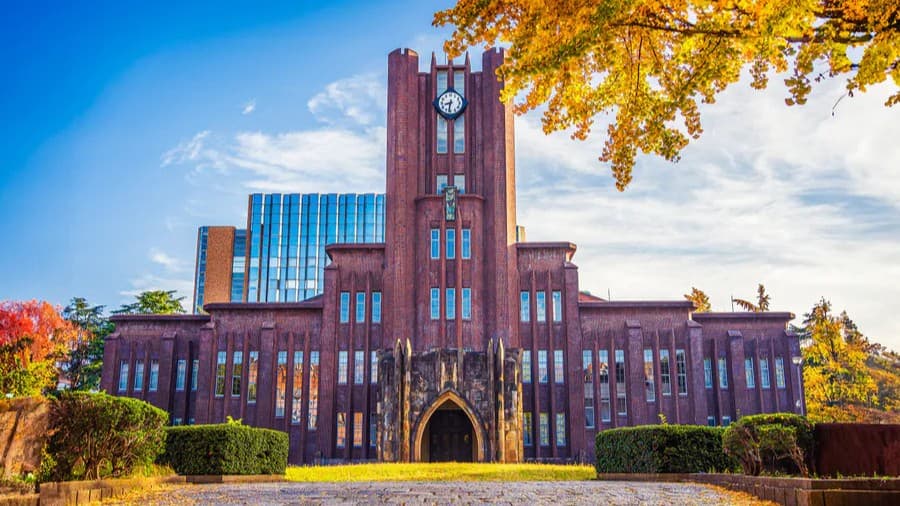
The University of Tokyo has appointed Prof. Yuko Fujigaki as its next president, making her the first woman to lead the prestigious Japanese institution. The appointment comes as the university approaches its 150th anniversary in 2027 and faces pressure to rebuild public trust.
Fujigaki’s selection has sparked debate over university governance, the appointment process and gender representation in Japan’s academic leadership.

The controversy follows bribery scandals involving university faculty members and an internal investigation that identified multiple violations of the institution’s ethics rules.
An associate professor at the University of Tokyo Hospital was arrested on suspicion of bribery in November 2025. A medical professor was arrested in a separate bribery case in January 2026.
In his January apology, outgoing President Teruo Fujii referred to “repeated arrests of faculty members” and acknowledged weaknesses in financial oversight and the university’s organizational culture.
Against this backdrop, the university selected Fujigaki, with candidates’ proposals for governance reform reportedly playing an important role in the decision, according to The Japan Times.
However, the announcement triggered criticism online on the same evening. By the following day, politicians and university faculty members were questioning how the selection committee had weighed the internal vote.
Some critics suggested that Fujigaki had received preferential treatment because she is a woman, describing the appointment as a “women’s quota” decision.
The debate has raised questions about how universities should explain leadership selections, particularly when the chosen candidate does not receive the highest number of votes in an internal opinion poll. It has also highlighted the risks of attributing a woman’s appointment to gender without examining her qualifications and proposed reforms.
University of Tokyo faculty member Yoichi Ochiai, who participated in the poll, questioned the process on X, asking: “What was the point of making time to vote?” He also congratulated Fujigaki on her appointment.
Former lawmaker Shiori Yamao criticized what she described as the university’s vague explanation, saying the selection appeared to involve “preferential treatment for women.” She warned against creating a “quota president” label and called for a more detailed account of how the decision was reached.
The internal opinion poll showed that Takao Someya received 1,107 votes, accounting for 51% of ballots cast, while Fujigaki received 553. However, the poll was not a binding election in which the candidate with the most votes automatically became president.
After approximately eight hours of deliberation, the university’s 16-member selection committee chose Fujigaki. At a news conference the following day, committee chair Hiroko Kuniya said the final decision had been supported by “a large majority.”
The internal poll forms only one part of the selection process. The committee also considers interviews, candidates’ statements and other criteria before reaching a decision.
While the committee’s majority support explains the outcome procedurally, the reasons behind its judgment remain important to public confidence.
Previous university appointments raise questions about internal polls
The University of Tokyo is not the first national university in Japan to select a president who did not finish first in an internal opinion poll.
In 2025, Niigata University appointed Toshiyuki Someya after he received 420 votes, compared with 882 for the leading candidate, a difference of approximately 2.1 to 1.
Kyoto University also selected Yasuto Tachikawa this year, despite his placing third in the poll with 299 votes against 478 for the leading candidate.
Kyoto University’s selection committee unanimously chose Tachikawa, citing his ability to implement institutional reform. However, the decision also drew criticism from within the university.
In both cases, the selected candidates were men. These precedents do not establish whether any particular appointment was justified, but they demonstrate that a large gap in an internal poll does not, on its own, prove that gender influenced the decision.
The role of internal opinion polls has long been debated across Japan’s national universities. Some institutions have discontinued them, while the University of Tokyo continues to use its poll as one component of the selection process.
The central issue is how the results are considered and how the final decision is explained to the university community.
Education Minister Yoshihiro Seki addressed the controversy on September 29, saying the selection committee needed to explain to the university community “why it made that decision.” He emphasized the importance of accountability for both the process and the reasoning behind the appointment.
Governance reform and restoring public trust
The university’s published explanation connected Fujigaki’s experience in science communication with the task of rebuilding trust in academia. At a news conference, Kuniya said gender had not been discussed during the selection process.
She described candidates’ governance reform plans as “a big factor” in the decision.
Fujigaki specializes in science and technology studies, a field that examines the relationship between science, technology and society. During her tenure as an executive vice president, she was responsible for research ethics and institutional evaluation.
That experience may be relevant as the university works to address concerns about its governance.
Half of the University of Tokyo’s selection committee members come from outside the institution. External participation can introduce perspectives that challenge established assumptions, although reform also depends on support from the university’s own faculty, staff and leadership.
Rebuilding public confidence will therefore require more than selecting a new president. The institution must demonstrate that it can address internal weaknesses, improve oversight and establish a governance structure capable of earning trust both within the university and beyond it.
Fujigaki will also face wider institutional responsibilities as the University of Tokyo remains under review for Japan’s Universities for International Research Excellence program. Tohoku University was the first institution designated under the initiative, followed by the Institute of Science Tokyo and Kyoto University.
Japan’s education ministry has called for clearer resource allocation, internal agreement and shared responsibility between the University of Tokyo’s central leadership and its individual schools.
These requirements underline that institutional reform depends on coordinated action rather than instructions from the president alone.
Universities face wider challenges in the AI era
The broader questions surrounding university leadership also extend to the role of higher education in a society shaped by rapid technological change and demographic decline.
In July, a keynote address at the 43rd Amagi Presidents’ Conference, hosted by IBM Japan, examined the future of universities and their responsibilities in an AI-driven society. The long-running forum brings presidents of national, public and private universities together in person to discuss challenges facing higher education.
Discussions at this year’s conference went beyond the introduction of generative AI in classrooms and research. Participants considered what university education should offer as technology advances and populations decline, including the kinds of people universities should help students become.
The keynote explored how science, technology and society can be developed together, while recognizing tensions that emerge when scientific and technological ambitions meet differing values, interests and expectations.
Navigating these challenges requires technical knowledge alongside ethics, dialogue, collaboration and sustained efforts to build trust.
As artificial intelligence makes information and knowledge more accessible, students can increasingly use digital tools to explain, translate, synthesize and generate content independently. This development makes universities’ social and ethical responsibilities more important, rather than less relevant.
Universities provide opportunities for students to engage with different disciplines, perspectives and lived experiences. They create spaces for debate, collaboration and shared problem-solving, helping students consider not only what technology makes possible but also what society should pursue.
These experiences can help students develop the judgment and collaborative skills needed to address complex social challenges.
One university president used the Japanese word “shuraba” to describe difficult, sometimes messy situations in which students must struggle, negotiate, collaborate, make mistakes and grow.
Such experiences cannot be outsourced to artificial intelligence. In a period marked by misinformation, social fragmentation and technological change, universities must help students develop ethical responsibility and learn to work with people whose views differ from their own.
The same expectations apply to university leaders. Fujigaki said at her news conference that she wanted to bring her experience in science communication to university governance, an approach that could help the institution address internal concerns and communicate its decisions more effectively.
Gender representation in Japan’s academic leadership
Fujigaki’s appointment has also drawn attention to the limited representation of women in Japan’s senior academic leadership. The country ranked 117th among 145 countries in the World Economic Forum’s 2026 Global Gender Gap Index.
The gender imbalance was also evident at the Amagi Presidents’ Conference. Seven of the 41 university presidents listed as participants were women, representing approximately 17% of the group.
A May 2025 survey by the Japan Association of National Universities found that women accounted for 20.7% of faculty members at national universities. However, only four of the 85 university presidents were women, representing 4.7%.
The figures highlight the gap between women’s participation in academia and their representation in its most senior leadership positions.
These disparities form part of the broader context surrounding Fujigaki’s selection. They do not, by themselves, determine whether the university’s decision was justified, but they show why assumptions about women’s appointments deserve careful scrutiny.
The debate over Fujigaki’s appointment presents the University of Tokyo with an opportunity to explain its governance process, demonstrate accountability and focus on the reforms needed to restore public confidence.
A fuller explanation of the committee’s decision can address legitimate questions without reducing the appointment to a debate about gender.
As Japan’s universities confront institutional misconduct, technological disruption and changing expectations of higher education, leadership will require both sound governance and the ability to build trust.
Fujigaki’s presidency offers an opportunity to examine not only how university leaders are chosen but also the standards by which their work should be judged.

Planning to study in Japan? Key changes to language certificates, tuition fees and student visas

University of Tokyo appoints first woman president: Why Yuko Fujigaki’s selection has sparked debate

Germany’s Student of the Year 2027: Nominations open for €5,000 award

UP Scholarship 2026-27: Renewal Deadline October 15, Fresh Applications Open Till October 31; Check Eligibility
China prosecutes former Central South University president Zhang Yaoxue on bribery charges
Planning to study in Japan? Key changes to language certificates, tuition fees and student visas
China prosecutes former Central South University president Zhang Yaoxue on bribery charges

ICFAI Hyderabad, Sheffield Hallam University sign MoU to strengthen research and academic collaboration

Hindu College protest puts governance, financial transparency and Delhi University's oversight under scrutiny

Ambedkar University Delhi protest: Attendance rules, campus restrictions and suspensions deepen standoff

Planning to study in Japan? Key changes to language certificates, tuition fees and student visas
University of Tokyo appoints first woman president: Why Yuko Fujigaki’s selection has sparked debate
Germany’s Student of the Year 2027: Nominations open for €5,000 award
UP Scholarship 2026-27: Renewal Deadline October 15, Fresh Applications Open Till October 31; Check Eligibility
China prosecutes former Central South University president Zhang Yaoxue on bribery charges
Planning to study in Japan? Key changes to language certificates, tuition fees and student visas
China prosecutes former Central South University president Zhang Yaoxue on bribery charges
ICFAI Hyderabad, Sheffield Hallam University sign MoU to strengthen research and academic collaboration
Hindu College protest puts governance, financial transparency and Delhi University's oversight under scrutiny
Ambedkar University Delhi protest: Attendance rules, campus restrictions and suspensions deepen standoff
Copyright© educationpost.in 2026 All Rights Reserved.