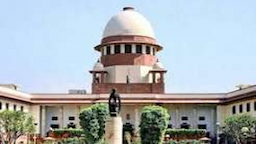
The Supreme Court has directed all states and Union Territories to implement stricter solid waste management measures at tourist destinations, beaches and pilgrim centres across the country under the Solid Waste Management (SWM) Rules, 2026.
A bench of Justices Pankaj Mithal and SVN Bhatti instructed chief secretaries to identify key tourist-heavy and pilgrimage locations and establish special mechanisms for enforcing the new waste management rules, which came into force on April 1, 2026.

The court observed that poor waste management at prominent public destinations damages both the environment and India’s international image, particularly at locations frequented by foreign tourists.
It stressed the need to keep such places “spic and span” while emphasising environmental protection for future generations.
As part of the directions, the Supreme Court asked the Union environment ministry to issue a notification under the Environment Protection Act, 1986, allowing district collectors to exercise enforcement powers for one year.
Collectors have been directed to set up special monitoring cells involving relevant officials to supervise implementation of the SWM Rules locally.
The court also directed district authorities to conduct virtual inspections of dumping sites and submit fortnightly compliance reports to designated state departments.
State governments were further instructed to reward urban and rural local bodies showing better compliance while imposing penalties on bodies failing to follow the rules.
The SWM Rules, 2026, notified earlier this year, replaced the 2016 framework and introduced stricter segregation and accountability provisions.
The rules mandate four-way waste segregation at source — including wet, dry, sanitary and special-care waste — and expand obligations for bulk waste generators such as residential societies, hotels, malls and institutions.
The apex court also asked the Centre to explore the use of Corporate Social Responsibility (CSR) funds for establishing compressed biogas plants and other waste-to-energy technologies.
It additionally directed ministries and departments to address manpower and budget constraints highlighted by states and Union Territories in compliance reports.
The order came during the hearing of an appeal filed by the Bhopal Municipal Corporation against a National Green Tribunal order related to environmental clearances under earlier waste management rules. The matter is scheduled to be heard again on May 25.



.jpg&w=3840&q=75)