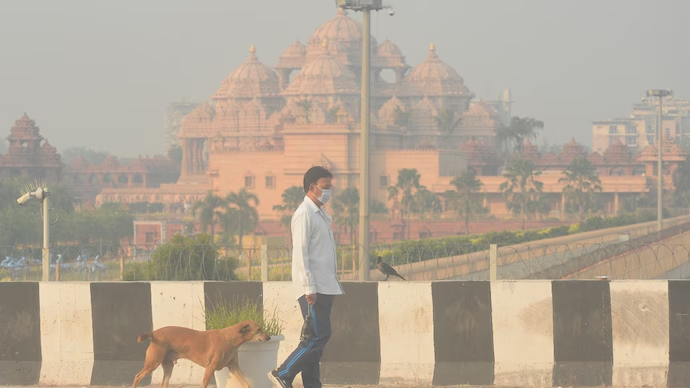
Delhi’s air quality plunged dangerously a day before Diwali, with several areas recording some of the highest pollution levels of the season. Akshardham topped the charts with an Air Quality Index (AQI) of 426, classified as ‘severe,’ while Anand Vihar followed closely at 418, according to the Central Pollution Control Board (CPCB). Barapulla recorded an AQI of 290, falling in the ‘poor’ category.
The national capital has now endured six consecutive days of very poor air, with stagnant weather conditions offering little relief. On October 18, the city’s average AQI stood at 268 (‘poor’), but nine out of 38 monitoring stations had already tipped into the ‘very poor’ range. Anand Vihar (389), Wazirpur (351), Jahangirpuri (310), and Dwarka (310) were among the worst-hit.

Vehicular emissions, Delhi’s primary source of pollution, accounted for 15.6% of total emissions on October 18, the Decision Support System reported. Meanwhile, the National Capital Region also grappled with deteriorating air: Ghaziabad reached a ‘very poor’ AQI of 324, while Noida (298) and Gurugram (258) remained in the ‘poor’ bracket.
Authorities have deployed water sprinklers at landmarks such as India Gate, where the AQI measured 269 on October 19 morning, in a bid to curb pollution. The Air Quality Early Warning System predicts similar hazardous conditions over the coming days, raising concerns as Diwali celebrations, known for firecrackers, approach.
Weather patterns offer little hope for immediate relief. Delhi recorded a maximum temperature of 33.5°C on Saturday, slightly above normal, and the minimum at 19.6°C, with clear skies expected on October 19, according to the India Meteorological Department (IMD).
As pollution edges into the ‘severe’ zone in pockets across the city, authorities are expected to intensify mitigation measures to protect residents’ health during the festive season.