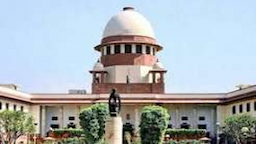
A bench comprising Chief Justice D Y Chandrachud and Justices JB Pardiwala and Manoj Misra said that such issue falls under the policy making domain of the executive and requires wide consultations with various stake-holders.

.jpg&w=3840&q=75)
The Supreme Court on Oct 18 dismissed a PIL seeking a direction to the central government to set up an autonomous body to monitor and filter content and regulate videos on over-the-top (OTT) and other platforms in India, saying these are policy matters.
A bench comprising Chief Justice D Y Chandrachud and Justices JB Pardiwala and Manoj Misra said that such issue falls under the policy making domain of the executive and requires wide consultations with various stake-holders.

"This is the problem of PILs. They are all on policy (matters) now and we miss out genuine PILs," the CJI said.
Lawyer Shashank Shekhar Jha, who had filed the PIL, said he be permitted to withdraw and approach the union ministry concerned with the grievances.
"No. Dismissed," the CJI said.
The PIL also referred to the Netflix series "IC 814: The Kandahar Hijack" to highlight the need for such a regulatory mechanism as the OTT platform claimed it was based on real-life incidents.
It said there exists a statutory film certification body — Central Board of Film Certification (CBFC) — tasked with regulating public exhibition of films under the Cinematograph Act.
The cinematograph law outlines a strict certification process for commercial films shown in public venues, it said.
"However, no such body is available to monitor/regulate the OTT contents and they are only bound by the self-regulations which are not compiled properly and the controversial contents are shown to the public at large without any checks and balances," the PIL said.
Over 40 OTT and video streaming platforms are providing “paid, ad-inclusive, and free content” to citizens and abuse the right to expression granted in Article 19, it said
(PTI)

India’s Blue Economy Push Seeks to Balance Growth and Ocean Conservation

Supreme Court Seeks Panel to Curb Unethical Pharma Marketing Practices

NMC Tightens Rules on Doctors’ Digital Advertising and AI Use

Anthropic Launches Claude Haiku 5.5 as Its Fastest and Cheapest AI Model

Karnataka HC Replaces ‘Visitation’ with ‘Parenting Time’ in Child Custody Cases

Canadian author Anne Carson wins 2026 Nobel Prize in Literature for reshaping contemporary literary forms

AMU students’ protest enters third week as union election demand widens

DPDP Act Explained: What is India’s Digital Personal Data Protection Law and Why is it in the News?

IIT Bombay puts stricter cheating rules on hold, drafts new procedure for exam misconduct

Gujarat launches PARAKH Cell to shift school assessments toward competency-based learning

India’s Blue Economy Push Seeks to Balance Growth and Ocean Conservation

Supreme Court Seeks Panel to Curb Unethical Pharma Marketing Practices

NMC Tightens Rules on Doctors’ Digital Advertising and AI Use

Anthropic Launches Claude Haiku 5.5 as Its Fastest and Cheapest AI Model

Karnataka HC Replaces ‘Visitation’ with ‘Parenting Time’ in Child Custody Cases

Canadian author Anne Carson wins 2026 Nobel Prize in Literature for reshaping contemporary literary forms

AMU students’ protest enters third week as union election demand widens

DPDP Act Explained: What is India’s Digital Personal Data Protection Law and Why is it in the News?

IIT Bombay puts stricter cheating rules on hold, drafts new procedure for exam misconduct

Gujarat launches PARAKH Cell to shift school assessments toward competency-based learning
Copyright© educationpost.in 2024 All Rights Reserved.
Designed and Developed by @Pyndertech