


The agency alleges the Maharashtra-based accused helped distribute leaked questions and collect payments, while forensic analysis uncovered deleted WhatsApp chats and PDFs linked to the conspiracy.
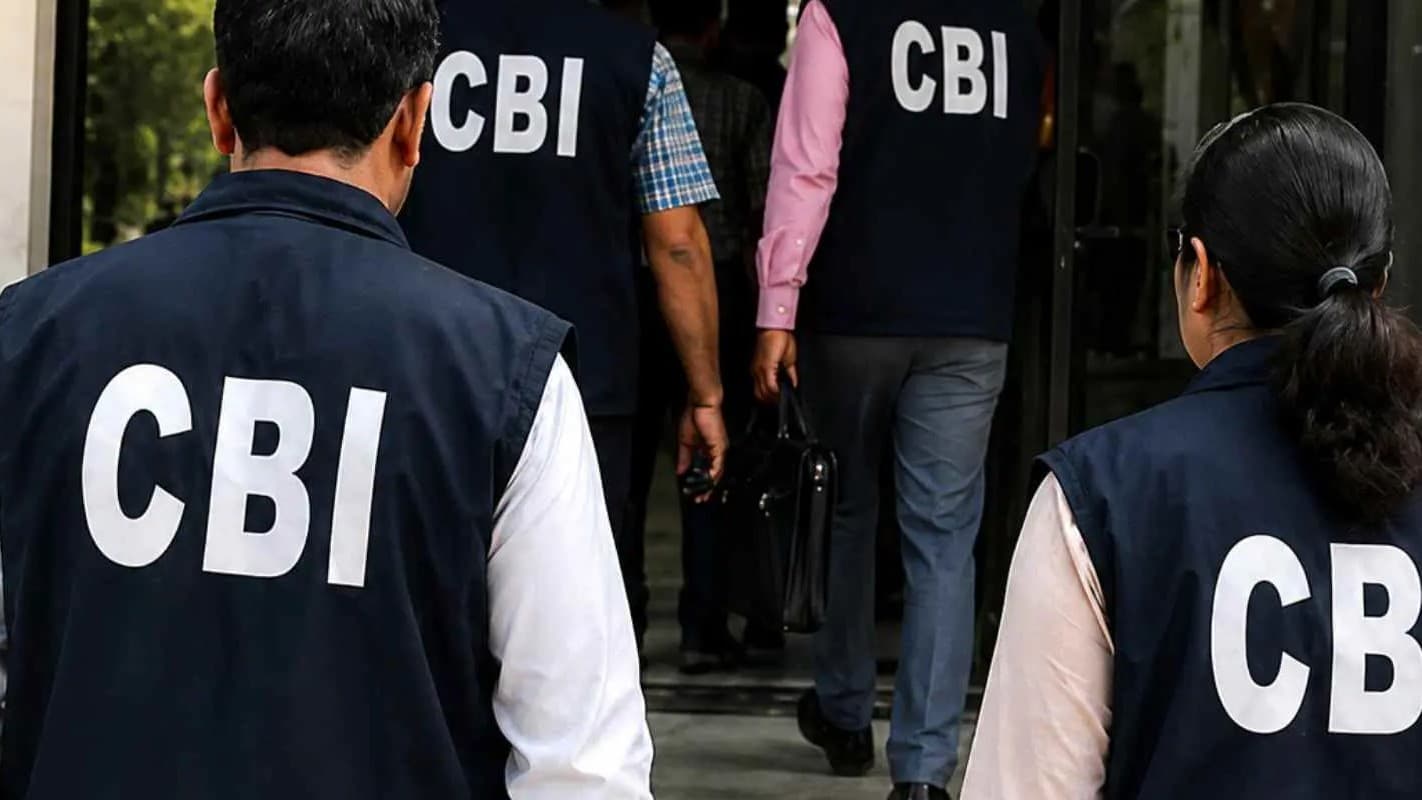
The Central Bureau of Investigation (CBI) has filed a supplementary chargesheet against the 14th accused in the NEET-UG 2026 paper leak case, bringing its investigation into the alleged examination paper leak to a new stage.
The agency submitted the report to a Delhi court on Oct 14, alleging that the accused played a key role in distributing the leaked questions to candidates.

Special Judge Ajay Gupta directed that a copy of the supplementary chargesheet be provided to the counsel for Sheshrav Bajrang Suryawanshi, also known as Raj Suryawanshi. The court scheduled further proceedings for Thursday.
Suryawanshi, a resident of Nanded in Maharashtra, was arrested on Sept 2. The CBI has alleged that he was a close associate of co-accused Shubham Khairnar and worked with him in the paper leak conspiracy.
According to the agency, Suryawanshi allegedly helped provide the leaked examination paper to candidates and collected money from their families. He is also accused of asking candidates to gather at a location in Nanded, where they were given access to the paper.
The CBI further alleged that Suryawanshi retained candidates' original educational certificates and identity cards to ensure their families paid after the examination. The agency has described both Suryawanshi and Khairnar as key participants in the alleged leak.
The latest chargesheet follows the agency's earlier report against 13 accused, which a designated fast-track court took cognizance of on Aug 12. The court handles criminal cases involving examination paper leaks and other unfair means in public examinations.
The first chargesheet was filed on July 28 and named 13 people, including three subject experts appointed by the National Testing Agency (NTA), middlemen and coaching center representatives. The CBI had kept its investigation into the possible involvement of other conspirators open while awaiting forensic and expert reports.
According to people familiar with the latest development, the supplementary chargesheet includes findings from forensic experts. An officer said the filing concludes the probe into the leak.
Arrests across Maharashtra, Rajasthan and Haryana
The CBI began arresting suspects on May 13, starting with Mangilal, Dinesh and Vikas Biwal in Rajasthan. Investigators reportedly recovered leaked question paper PDFs from their mobile phones, with the files allegedly received through Telegram on April 29.
On the same day, the agency arrested Yash Yadav in Gurugram and Khairnar in Nashik. It also arrested Dhananjay Lokhande in Pune, who allegedly attempted to destroy his mobile phone to eliminate evidence before being apprehended.
Manisha Sanjay Waghmare was arrested in Pune on May 14. In its earlier chargesheet, the CBI described her as “one of the prime conspirators in the leakage and dissemination of NEET-UG 2026 questions for monetary consideration” and said she “acted as the link between candidates and the subject experts.”
After questioning the accused, investigators arrested the alleged mastermind, P V Kulkarni, in Latur on May 15. Manisha Mandhare was arrested in Pune on May 16, followed by Shivraj Motegaonkar, the founder of a coaching center in Latur, on May 17.
The agency subsequently arrested Manisha Sanjay Havaldar in Latur on May 22. Tejas Shah in Pune and Dr Manoj Shirure in Latur were arrested on May 26, completing the series of arrests detailed in the earlier investigation.
Forensic evidence and role of subject experts
The CBI said it uncovered the alleged conspiracy through forensic imaging of mobile devices. Investigators recovered deleted WhatsApp conversations and PDF documents containing the leaked questions, which the agency cited as evidence in its investigation.
The first chargesheet named three NTA-appointed subject experts: Manisha Gurunath Mandhare, who handled Botany and Zoology; Prahlad Vithalrao Kulkarni, responsible for Chemistry; and Manisha Sanjay Havaldar, associated with Physics.
The agency had kept its investigation into the role of other alleged conspirators open while awaiting opinion reports from the Central Forensic Science Laboratory (CFSL), the Government Examiner of Questioned Documents (GEQD) and experts from Delhi University.
According to the CBI's earlier chargesheet, the NTA reused the same three subject experts at multiple stages of preparing the NEET-UG 2026 question paper. One expert was involved across all four stages, from item writing to back-translation.
The agency also alleged that the experts were allowed to access all four master question paper sets during the final stage of preparation. This gave them prolonged and continuous exposure to sensitive examination material, according to the investigation.
A CBI officer said investigators examined whether any NTA employee or other government official had participated in the leak. “A thorough investigation was conducted to ascertain whether any NTA official or other government official was involved in the leak, but no such involvement was found,” said a second officer.
The agency invoked provisions concerning criminal conspiracy, cheating, criminal breach of trust and destruction of evidence. It also cited the Prevention of Corruption Act and the Public Examinations (Prevention of Unfair Means) Act, 2024.
To support its case, the CBI relied on 360 witnesses, 422 documents and 43 material objects, according to details of the investigation.
NEET-UG cancellation and subsequent reforms
The NTA conducts the National Eligibility-cum-Entrance Test Undergraduate (NEET-UG), which is used for admission to medical colleges. The examination became the focus of a major controversy after allegations emerged that questions had been leaked before the May 3, 2026, test.
On May 12, the NTA cancelled the examination following the allegations. Reports said at least 120 questions in a guess paper, compiled by subject experts and teachers using previous trends and patterns, matched questions in the examination paper.
The alleged leak was detected about a week after the examination, triggering widespread protests and raising concerns about the integrity of the medical entrance test. The controversy also led to protests in Parliament and public demonstrations by young people under the Cockroach Janta Party (CJP) banner.
The controversy was followed by the resignation of then-Union Education Minister Dharmendra Pradhan, according to the report. A re-examination was subsequently conducted on June 21.
The government later announced changes to the NTA's functioning. The Union Education Ministry removed 50 NTA staff members on Aug 17, while the agency said it had revamped its examination team.
The NTA also reported removing 600 subject experts and bringing in new experts. It introduced a four-tier system for scrutinizing question papers as part of measures to strengthen examination security and prevent similar incidents.
NEET-UG 2026 paper leak: CBI files supplementary chargesheet against 14th accused

UK visa crackdown drives student withdrawals, putting universities at financial risk
Who holds university leaders accountable? Korea president's conviction puts institutional discipline under scrutiny
Macron says student anger is being exploited as France braces for fresh protests
Jordan and Qatar explore cooperation on higher education quality and accreditation
NEET-UG 2026 paper leak: CBI files supplementary chargesheet against 14th accused
UK visa crackdown drives student withdrawals, putting universities at financial risk
Who holds university leaders accountable? Korea president's conviction puts institutional discipline under scrutiny
Macron says student anger is being exploited as France braces for fresh protests
Turkish-Japanese Science and Technology University opens in Ankara after 13-year wait

NEET-UG 2026 paper leak: CBI files supplementary chargesheet against 14th accused
UK visa crackdown drives student withdrawals, putting universities at financial risk
Who holds university leaders accountable? Korea president's conviction puts institutional discipline under scrutiny
Macron says student anger is being exploited as France braces for fresh protests
Jordan and Qatar explore cooperation on higher education quality and accreditation
NEET-UG 2026 paper leak: CBI files supplementary chargesheet against 14th accused
UK visa crackdown drives student withdrawals, putting universities at financial risk
Who holds university leaders accountable? Korea president's conviction puts institutional discipline under scrutiny
Macron says student anger is being exploited as France braces for fresh protests
Turkish-Japanese Science and Technology University opens in Ankara after 13-year wait
Copyright© educationpost.in 2026 All Rights Reserved.