National Engineers’ Day 2026: Legacy behind India’s engineering growth, from Visvesvaraya to AI
PM Modi paid tribute to engineers and the Bharat Ratna awardee, remembering a visionary whose ideas on development, industry and infrastructure remained ahead of his time.
Pragya Kumari15 September 2026 11:40
India observes National Engineers’ Day on Sept 15 each year, with the country’s engineering community playing an expanding role across infrastructure, digital technology, defense, space, artificial intelligence, robotics and other emerging sectors.
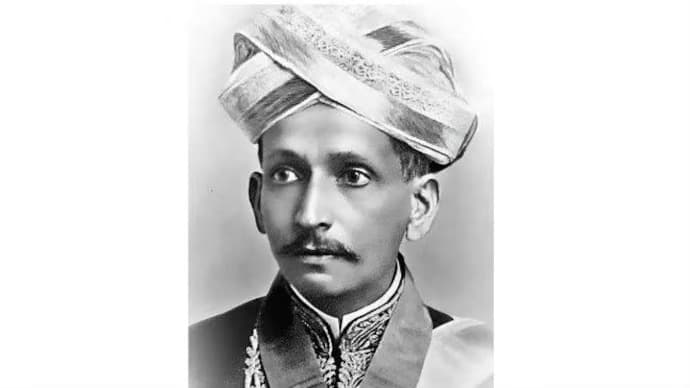
The occasion marks the birth anniversary of Sir Mokshagundam Visvesvaraya, one of India’s most celebrated engineers, economists and statesmen, whose work in irrigation, water management, infrastructure, industrial development and technical education left a lasting mark on the country.
According to the Press Information Bureau, India produces nearly 1.5 million engineering graduates every year. Engineers contribute to projects ranging from highways, bridges, metro networks, dams and power systems to advanced work in artificial intelligence, semiconductors, nuclear energy, space technology and robotics.
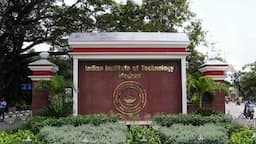
India’s engineering ecosystem includes 23 Indian Institutes of Technology, 31 National Institutes of Technology and 26 Indian Institutes of Information Technology as of 2026.
These institutions form a major part of the country's technical education and research network as India expands its focus on emerging technologies.
The country’s engineering capabilities are also closely linked to its digital public infrastructure. Platforms such as Aadhaar, UPI and DigiLocker have been developed and maintained with significant engineering input, becoming part of everyday services used by citizens.
As India pushes toward technologies such as artificial intelligence, quantum computing, semiconductor manufacturing, renewable energy and deep tech, engineers are expected to play a central role in supporting the country's long-term development goals, including the vision of Viksit Bharat by 2047.
PM Modi pays tribute to engineers, recalls Visvesvaraya’s nation-building vision
Prime Minister Narendra Modi paid tribute to Sir M Visvesvaraya on National Engineers’ Day and praised engineers for transforming ideas into practical solutions and contributing to India's development.
“Happy Engineers Day to all remarkable engineers, the people who build, innovate and provide solutions for a better tomorrow. Tributes to Sir M. Visvesvaraya, whose engineering genius and nation-building vision continue to inspire,” the Prime Minister said.
In a video message, Modi highlighted the role of engineers in turning aspirations into tangible achievements and described them as ‘Karmayogis’ working for the country's progress.
“Engineers do not merely build machines; they are the Karmayogis who transform dreams into reality. I applaud and commend every engineer of India. India has been home to many such engineers who turned the unimaginable into the imaginable and presented feats that are hailed as marvels in the world of engineering,” he said.
Recalling Visvesvaraya’s contribution to India's engineering heritage, Modi said his work continues to inspire engineers across generations.
“In our proud heritage of great engineers, we were also blessed with a priceless gem whose works continue to astonish people even today -- and that was Bharat Ratna Dr M. Visvesvaraya. In his honour and memory, September 15 is celebrated as Engineers' Day. Following in his footsteps, the engineers of our nation have carved a distinct identity for themselves across the entire world. On this occasion, I respectfully salute all engineers and bow to their creative power of nation-building,” PM Modi added.
Why is Engineers’ Day celebrated on Sept 15?
National Engineers’ Day is observed on Sept 15 because it is the birth anniversary of Visvesvaraya, who was born on Sept 15, 1861, in Muddenahalli village in present-day Karnataka.
The Government of India began observing the day as Engineers’ Day in 1968 to recognize his contribution to engineering and nation-building.
The occasion is marked by schools, colleges, engineering institutes, professional organizations and technology companies through technical competitions, seminars, quizzes, exhibitions, project presentations, symposiums and award ceremonies.
Visvesvaraya’s journey from civil engineer to Diwan of Mysore
Visvesvaraya completed his Bachelor of Arts from the University of Madras before pursuing civil engineering at the College of Science in Pune. He subsequently held several important engineering and administrative positions and became Chief Engineer of Mysore State in November 1909.
He was appointed Diwan of Mysore in 1912 and served in the position until 1918. During his tenure, he was associated with infrastructure development, industrialization, education and economic initiatives that contributed to the modernization of the princely state.
His work in Mysore earned him the reputation of being the “Father of Modern Mysore.” His approach to development extended beyond individual engineering projects, with an emphasis on industrial capacity, technical education and institutions that could support long-term economic growth.
Visvesvaraya’s contribution to water management and flood control
Water management and irrigation were among the most important areas of Visvesvaraya’s engineering work.
He played a crucial role in the planning and construction of the Krishna Raja Sagara, or KRS, Dam in Karnataka. The project created a major reservoir and helped provide water for irrigation and agriculture, transforming the surrounding region.
He also developed and patented an automatic system of sluice gates designed to improve water storage and regulation. The system was first installed at the Khadakwasla Reservoir near Pune and was later used at other projects, including the Tigra Dam in Gwalior.
Visvesvaraya’s expertise in water management became particularly significant after the devastating Musi River floods in Hyderabad in 1908. He was involved in developing flood protection measures for the city, including the reservoirs that became Osman Sagar and Himayat Sagar.
The reservoirs were designed to help control flooding while also strengthening the city's water supply.
He also developed measures to protect Visakhapatnam Port from sea erosion and contributed technical expertise to infrastructure projects in other parts of the country. His work included involvement in the planning of the Mokama Bridge over the Ganges in Bihar and the road between Tirupati and Tirumala.
Visvesvaraya also served as Chief Engineer for the Laxmi Talav Dam in southwestern Maharashtra and was involved in several other irrigation and public works projects.
Engineering, industrialization and institution building
Visvesvaraya viewed engineering as a tool for broader economic and social development. During his association with the Government of Mysore, he supported the establishment and growth of several industrial, agricultural and educational institutions.
His work was associated with institutions and enterprises including the Mysore Soap Factory, Mysore Iron and Steel Works in Bhadravathi, the State Bank of Mysore, the Parasitoid Laboratory and the Apex Chamber of Commerce.
He also supported agricultural development and the expansion of technical education. The Government Engineering College in Bengaluru, which he helped establish, was later renamed the University Visvesvaraya College of Engineering in his honor.
His legacy can also be seen in institutions named after him, including Visvesvaraya National Institute of Technology in Nagpur, Visvesvaraya Technological University in Belagavi and Sir M Visvesvaraya Institute of Technology in Bengaluru.
His contribution to technical education demonstrated his belief that infrastructure and industrial development required a strong pool of technically trained professionals.
Books, awards and recognition
Visvesvaraya also wrote about India's economic and industrial development. His books included “Planned Economy for India,” which examined industrialization and infrastructure, “Reconstructing India,” which focused on education and governance, and “Memoirs of My Working Life.”
He was knighted as a Knight Commander of the Order of the Indian Empire in 1915 in recognition of his public service.
He received honorary degrees from eight Indian universities, a fellowship from the Indian Institute of Science in Bengaluru and honorary membership of the London Institution of Civil Engineers.
In 1955, the Government of India conferred the Bharat Ratna on Visvesvaraya in recognition of his contributions to engineering, public works and society. India Post later issued a commemorative postage stamp in his honor in 1960 to mark his 100th birth anniversary.
From Visvesvaraya’s dams and irrigation systems to AI and deep tech
The engineering landscape that Visvesvaraya helped shape has expanded dramatically, moving from large-scale irrigation, dams and public infrastructure to digital systems and frontier technologies.
Engineers today work across artificial intelligence, robotics, semiconductor design, quantum technologies, renewable energy, space exploration, defense and advanced manufacturing. Their responsibilities increasingly combine traditional engineering principles with computing, data science and interdisciplinary research.
For India, this transition is taking place alongside a broader push to strengthen domestic technological capabilities and build an innovation-driven economy.
The growth of engineering education, increasing participation of women in premier institutes and expansion into emerging technologies are reshaping the profession.
National Engineers’ Day consequently serves as both a tribute to Visvesvaraya and a recognition of the engineers working on the country's present and future challenges.
Visvesvaraya’s career remains a prominent example of how engineering can extend beyond technical design to influence infrastructure, industry, education, governance and economic development.
His legacy continues to be reflected in the institutions, projects and engineering workforce that contribute to India's development more than six decades after his death.