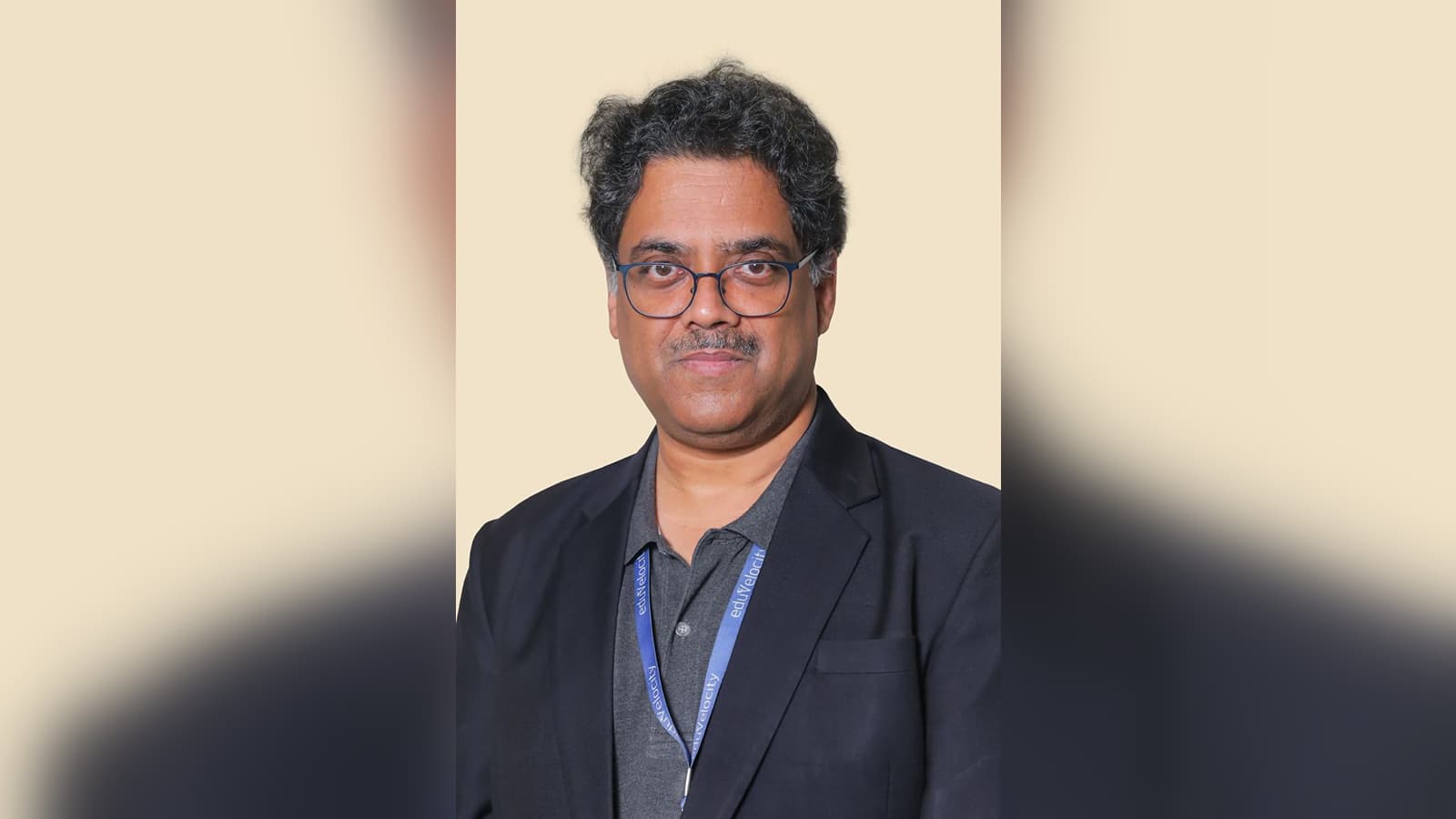
As higher education choices become increasingly shaped by affordability, employability and long-term outcomes, Vinu Warrier, Managing Partner & Founder, EduVelocity Global, argues that students must look beyond rankings and traditional destinations to find the right fit. In this interview with Education Post’s Prabhav Anand, Warrier examines how academic programmes, extracurricular experiences, financial accessibility and industry exposure should influence student decisions. He calls for a more holistic approach to financing global education and urges students to view overseas study as an education decision rather than an immigration purchase. He also discusses emerging destinations, changing visa policies, soft skills and the need for institutions to strengthen academic quality and student experience.
1. Indian students are increasingly looking beyond university rankings when choosing where to study. What should “best-fit” mean in today’s higher education landscape, and how can students assess it objectively?

Students should focus not only on the university brand or its ranking, but also on the programme and its overall fit with their academic and career goals. The first step is to gather accurate and updated information that is relevant to the decision-making process. Even today, most students’ parents continue to rely on individual, word-of-mouth advice from extended family members, school authorities and others, which may not always provide a complete picture.
Students should begin by defining both their short-term and long-term goals and assessing whether a particular programme aligns with where they see themselves in the next five to ten years, as well as with the specific industry and role they aspire to enter. They should identify the skills and knowledge required for their desired career and ensure that the programme provides a strong foundation in these areas. A careful review of the curriculum is equally important to determine whether it covers the essential subjects and skills relevant to their chosen career path.
At the same time, students should consider the programme’s ranking, as higher-ranked programmes often offer better resources, networking opportunities and job placements. They should also assess the potential return on investment by looking at the programme’s long-term viability, future salary prospects and career opportunities. The availability of internships, co-op programmes and industry connections should be evaluated as these can provide practical experience and strengthen employability. And finally, students should research the student-to-faculty ratio, as lower ratios often indicate more personalised attention and better access to faculty.
2. You have often emphasised the importance of profile building beyond academics. How can schools and colleges better integrate extracurricular activities, life skills and experiential learning into students’ higher education journeys?
Schools and universities should provide students with opportunities to balance academic pressure through meaningful extracurricular engagement. Being involved in activities beyond academics gives students mental space to rejuvenate and return to their studies with a better perspective and heightened creative abilities. Such involvement also helps students develop a range of skills. Beyond adding valuable experiences to their CVs, extracurricular activities can elevate mood, build healthy and long-lasting interpersonal relationships, enhance problem-solving and decision-making abilities, and teach students how to work collaboratively with others.
Active participation in extracurricular activities also helps students build their identity and encourages exploration beyond their academic interests. For instance, a student enrolled in an engineering programme might find solace in dramatics and pursue it as a side hobby or eventually find ways to merge it with their career. Such experiences allow students to become more self-aware while exploring interests that may not emerge within the boundaries of their academic programme.
Engaging in diverse activities also allows students to express a broader range of interests while demonstrating versatility and adaptability. Rather than showcasing a singular interest, participation in activities such as debates and public speaking, sports, clubs, volunteering, research work and internships enables students to make the most of the interdisciplinary nature of college life—something that can be well appreciated by employers in the future.
Community service, meanwhile, provides young adults with an opportunity to develop important social and emotional skills such as empathy, compassion and gratitude, while understanding the value of giving back. Such involvement enhances sensitivity towards existing challenges in society and encourages students to take proactive measures to address them. It also exposes them to and makes them more aware of global challenges that require immediate attention from society at large.
Extracurricular involvement further helps students develop time-management skills and learn to balance multiple commitments. Employers value an individual’s ability to multitask and excel across different responsibilities. By demonstrating interests beyond academics, students reflect not only passion and commitment but also their ability to manage academic and non-academic activities effectively. This prepares them for the demands of the professional world, where they will need to prioritise multiple important tasks.
Finally, extracurricular activities can provide valuable networking opportunities. Students get the chance to showcase their skills and interests in structured settings, including competitions, while building meaningful social connections and professional networks. These connections can provide a head start to their professional journey—for instance, by helping them secure funding for a business idea, receive a recommendation to a best-fit employer, or obtain a letter of recommendation for employment or higher education.
3. Your recent observations suggest that Indian students are becoming more outcome-oriented in choosing overseas destinations. How are employability, industry exposure and long-term career prospects reshaping these choices?
Choosing the best-fit higher education option ultimately comes down to two fundamental considerations: what it costs the student and how well it fits their academic and career goals. Whether that opportunity is 7,000 miles away or right in the student’s backyard is less relevant than ensuring that they begin by exploring all the high-quality options available to them for which they are qualified and competitive. Students should then conduct a rigorous analysis of the pros and cons of these options before narrowing down their choices.
Before selecting an overseas destination, students should first consider their programme interests based on their aptitudes, career aspirations and academic goals. They should identify universities that offer highly ranked programmes in their chosen fields and also consider whether those programmes are delivered in English. Another important consideration is where they see themselves graduating in the top five per cent of the class, depending on the university or country they choose.
Affordability is another critical factor. Students should assess where they can access a higher-quality education opportunity at a lower overall cost. This includes considering the availability of scholarships, as well as opportunities to work off campus and generate income towards living expenses. The long-term viability of the chosen option should also be assessed in relation to the student’s specific interests, whether that involves pursuing higher education or seeking employment opportunities.
Finally, students should consider whether the country itself is a good fit for them and examine its long-term viability. However, considerations such as permanent residency or green-card equivalents are generally more relevant to master’s applicants than to undergraduate applicants.
4. With international education becoming more expensive, financial accessibility remains a major concern. What policy or financing reforms are needed to ensure that global higher education is not limited to students from affluent families?
Just like the US has FAFSA, all these other countries have a federally mandated ability to structure student loans, both for undergraduate as well as for postgraduate applicants. And there is an urgent need that this be, and it shouldn't be dependent only on for below a certain slab. It should be structured in such a way that the difference between what the family is able to afford versus the cost of education should be considered.
So there is no reason why we should only have a subsidized cost for government colleges like IIT. And that too only for Indian citizens. All it requires is a public-private partnership between federal government, as in central government, and banks, for example where the government has mandated that the banks need to give loans on this basis, etc., etc. So obviously, there's a need for that.
Number two, the government can have a huge role in ensuring that, as a policy, more and more third-party loans are available. Give some as grants, just like FAFSA does; give some as work-study programs, etc. But the government has to get involved in structuring financial accessibility through a very distinctively different approach. In other words, that approach has to be: what is the difference in cost between the education a student is aspiring to and the student and family's ability to pay? So you have to come up with a holistic lending policy that includes banks and other financial lenders, private sector as well as central government policy.
The third step, government is already doing a good job. There are more and more IBCs coming into India. Now, here, the mandate should be that all IBCs are not charging the same cost that they would charge because there should be a cost differential. And I think, so regulation policies that regulate these IBCs, which are already in place, I think, are important.
The fourth is redefining what is actual affluence, which is that's also related to the first point, because here it's saying affluent families.
Then, the other part of it is what we've already said before, which is that make sure you're choosing the right fit, affordability, etc., etc. So having an informed application is as important for financial accessibility.
5. Visa policies and post-study work rules are changing across major destinations. How should Indian students and counsellors evaluate these policy shifts while making long-term education decisions?
They should evaluate these policy shifts as short-term shifts, particularly when they're making long-term decisions. In other words, these are reactions by traditional destinations such as US and Canada, particularly, or UK and Australia, by traditional destinations.
Number one, look at it as an education purchase, not as an immigration purchase. That is the first step. Second step: if you're looking at an education purchase and you're going to a great program in your field, you should not be thinking of employment or staying on a visa only in that country; you should be thinking of other countries as well. Look at new and emerging destinations, be it Japan, South Korea, or even Malaysia. Even in Western Europe, for eg., the number of Indian students in Germany has increased at least fourfold. France is going big on Indian students, so it's a combination of things how you should address.
Especially if you're making long-term decisions, looking ahead at what major changes, obviously the number of international choices in India first step are going up, the number of 2+2 programs are going up. Going to Leeds or Birmingham is still a different experience than doing it at their Gurgaon campus, or going to Southampton University is still different. The one big change is the Indian student will have many more private choices both at home, as well as many more non-traditional destination choices overseas. So the number of choices for Indian students is going to go up dramatically in the next five years.
The ability of academically elite universities in India which are public universities, such as the IITs, NITs, or whatever, right, any public—the PGIs, JIPMERs—so the ability of select private—select public universities in India which give you admission through 0.02% through competitive entrance exams, etc., their ability to get their best students will continue to decline. Their ability to get job offers of the high standards that they set for themselves at the end of the program will continue to decline.
Similarly, discounting and pricing is going to play a much increasingly larger role in how students make the decision whether they want to go to a public, private in India, international private in India, or abroad.
6. You have highlighted communication and collaboration as essential skills for success beyond college. Are Indian higher education institutions doing enough to develop these skills alongside technical and academic capabilities?
Communication and collaboration are no longer optional skills but critical competencies that colleges emphasise to prepare students for the real world. Many of today’s top bachelor’s programmes incorporate soft skills training alongside technical instruction, recognising that students who are well-versed in these areas are more versatile and better equipped to face the challenges of an ever-evolving job market. With companies placing increased importance on a candidate’s ability to work in teams, solve conflicts, and build professional relationships, soft skills have become just as valuable as academic credentials.
What makes college different from school is the shift in how success is measured. In school, grades often reflect individual effort, but college introduces a more complex dynamic where group projects, presentations, discussions, and collaborative tasks are integral to academic success. These activities mimic the dynamics of a real-world workplace, where working in teams, exchanging ideas, and contributing to collective goals are essential. For instance, group projects not only test a student’s knowledge but also their ability to listen to others, articulate ideas clearly, resolve disagreements, and negotiate solutions. This shift in focus highlights why communication and collaboration are essential to thriving in a college environment.
7. Looking ahead, what major changes do you expect in India’s higher education and international education ecosystem over the next five years, and what should institutions do now to prepare students for them?
Firstly, they should focus on academic quality. Secondly, they should ensure that they're able to have a very clear sense of who are their cross-application competitors, in other words, if I'm applying to Plaksha in India, what are the other five universities in India I'd be applying to? And thirdly, they need to pump up massively both the quality of the experience they offer the student on campus as well as the quality of academic education. Integrate more hands-on experiences, integrate more diverse experiences, and integrate more global experiences.
I think the benefits that universities offer have to be categorized thoroughly in terms of academic quality, student-faculty ratio, the actual environment, classroom environment, international and diverse experiences, hands-on experiences, internships, the hostel experience, student life experience.