


Srinesh V, Founder of Student Education Diagnostics (SED), explains how neuroscience-led diagnostics, data-driven insights, and early intervention can transform learning outcomes, align Indian education with global standards, and enable truly personalised education ecosystems.
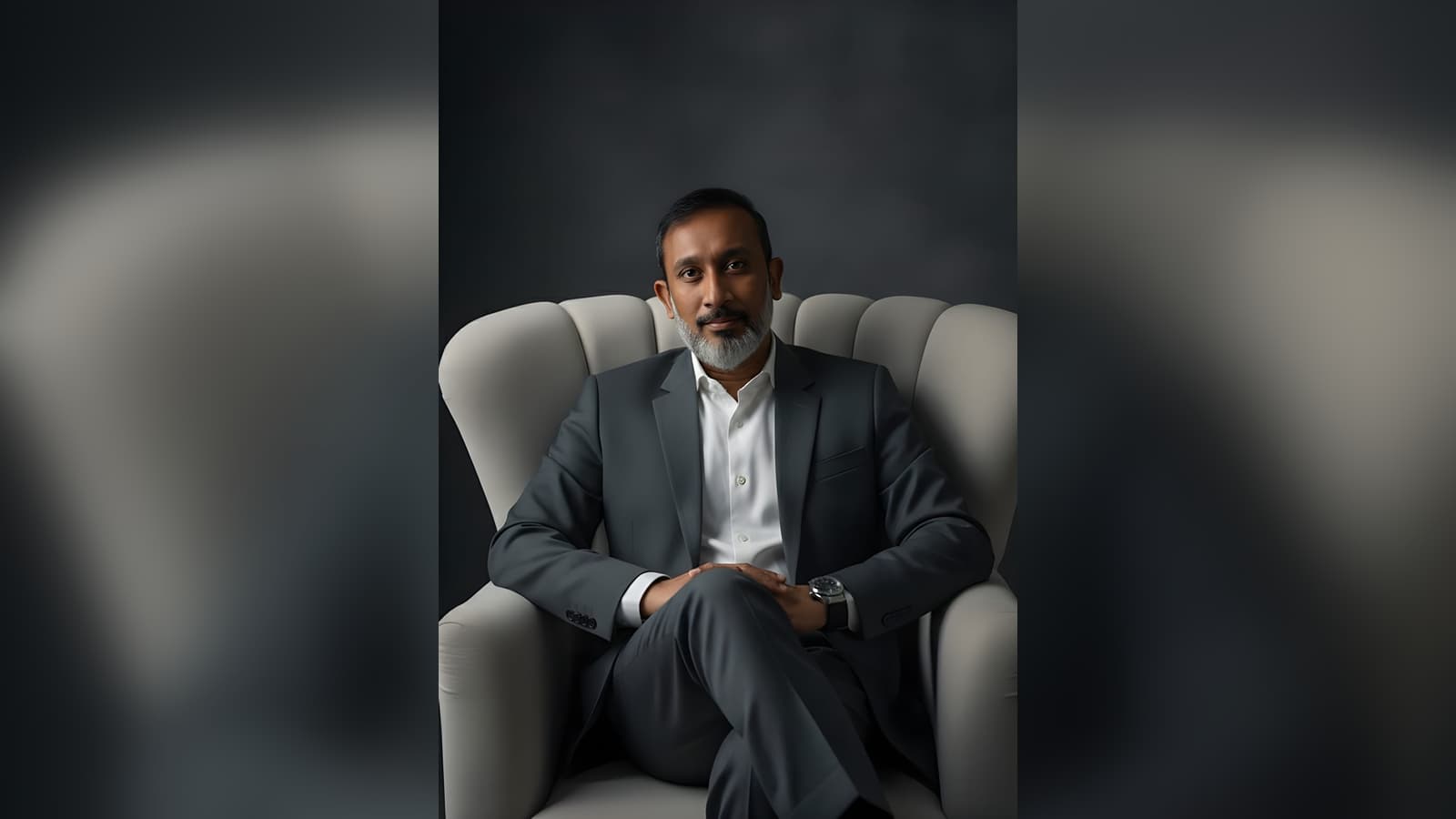
Srinesh V, Founder, Student Education Diagnostics
In an era where education systems are increasingly being called upon to move beyond marks and memorisation, the conversation around how students truly learn has become more important than ever. In this insightful interaction, Srinesh V, Founder of Student Education Diagnostics (SED), shares his vision of bringing neuroscience-based learning diagnostics to India and explains how understanding a student’s cognitive and emotional learning patterns can transform educational outcomes. He discusses the gaps in traditional assessment methods, the role of technology and data analytics in personalised learning, and how early diagnostic insights can reshape a child’s academic journey. In this conversation with Education Post’s Prabhav Anand, he outlines how SED aims to make learning more responsive, human-centred, and globally relevant.
Q1. What inspired you to introduce the Student Education Diagnostics program in India, and what gap in the current education system does it aim to address?

India produces some of the world's most hardworking students. Yet research consistently shows that more than 80% of students from primary school through Class 12, score below 80%. That consistency points to something systemic.
The gap we identified is not academic. It is diagnostic. Our system measures scores, but invests very little in understanding how they learn. A child who is disengaged, anxious, or underperforming is rarely lacking in intelligence. More often, they are learning in an environment that does not match how their brain processes information. Nobody has named that gap for them; that silence compounds over the years.
That is what brought SED to India. We wanted to bring a model that looks at the child first. Their cognitive patterns, emotional relationship with learning, and their natural strengths are analysed using our platform before drawing any conclusions about their academic potential.
Q2. How does neuroscience-based learning diagnostics differ from the traditional methods used by schools to assess student performance?
Traditional assessments are outcome-oriented. They measure what a student has produced. It tells you nothing about how they got there, why they struggled, or what would help them improve.
Neuroscience-based diagnostics work differently. We use brain-based screeners to examine how a student processes information.
We also assess beyond the student. Our 360-degree model draws inputs from the child, the parent, and the teacher. This triangulated view reveals patterns that no single examination ever could, whether a challenge is rooted in the student's learning style, the teaching approach, or the home environment. Such an approach makes meaningful intervention possible.
Q3. In practical terms, how will this platform help teachers and schools better understand the learning strengths and challenges of each student?
When we work with a school, the first shift we create is informational. Teachers receive a cognitive and emotional profile for each student. It is not a ranking, but a map. They understand which students are visual processors, which ones need more consolidation time, and which ones are disengaging because of anxiety rather than disinterest.
Our sessions run once or twice a week, 20 minutes each. They are non-academic and non-intrusive, designed to integrate into existing school schedules without disruption. Because we are not delivering subject instruction but building student self-awareness, the sessions are received positively. It is designed to make students feel heard, which is an experience many rarely have in a conventional classroom.
For schools, the value extends beyond individual students. When an entire school ecosystem is assessed, institutional patterns emerge. We identify if challenges stem from pedagogical approaches, parental involvement, or structural factors. That data allows schools to design interventions that improve the entire learning environment, not just individual cases.
Q4. The program mentions alignment with global frameworks like SAT and ACT. How will this benefit Indian students aiming for international opportunities?
The SAT and ACT are not merely entrance examinations. They represent a fundamentally different approach to measuring student capability. They assess reasoning, application, and cognitive flexibility rather than content retention. Indian students who encounter this style of thinking for the first time at 16 or 17 are at a significant disadvantage. It may not be because they are less capable, but because they have been prepared for a different kind of test entirely.
Our programme introduces students to this mode of thinking early. Applied scientific thinking, global communication, creative intelligence, and leadership development. The four pillars of our VYBE curriculum are designed to build the cognitive habits that international frameworks reward.
Beyond examinations, students completing the programme gain access to international competition pathways, including the NASA Space Apps Challenge, UNESCO STEM Quest, the MIT Solve Youth Challenge, and the International Math Olympiad. These platforms expose Indian students to global peer benchmarks and build the kind of profile that universities abroad recognise and value. Certifications are aligned with US academic standards, giving students a credible, internationally legible record of their development.
Q5. The University Grants Commission has already introduced several policies supporting e-learning and digital education in India. How do you see your program integrating with or complementing the existing frameworks within India's education system?
The regulatory environment for digital education in India has developed considerably. We support the UGC's push toward e-learning, blended learning, and digital accessibility, which reflects a broader realization that education cannot be limited to a single delivery model in the future.
Our programme is designed to be complementary rather than competitive with existing frameworks. We do not replace curriculum delivery or academic instruction. We sit alongside it — providing the diagnostic layer that helps students, teachers, and parents understand how learning is actually happening, independent of the platform or format through which content is delivered.
As India's digital education infrastructure expands, the need for personalised learning intelligence will only grow. A student accessing coursework through an e-learning platform faces the same cognitive and emotional variables as one sitting in a physical classroom. Understanding how that student processes information, where their confidence gaps lie, and how their learning style interacts with digital instruction is, if anything, more critical in a remote or hybrid environment.
Our hybrid delivery model — available both online and in partnership with schools — positions us naturally within the digital education ecosystem that the UGC and broader policy frameworks are building. The goal is the same: learning that is accessible, effective, and responsive to the needs of every student.
Q6. What role do technology and data analytics play in providing a 360-degree understanding of a student's learning journey?
Technology is the infrastructure, but the insight is what matters. Our platform uses brain-based screeners to generate data across three dimensions simultaneously: the student, the parent, and the teacher. This is not survey data or self-reported feedback. It is structured diagnostic input that, when analysed together, reveals the full architecture of a child's learning environment.
We can find trends with data analytics that would be impossible for a single observer to see. It's possible that a kid who doesn't seem interested in class is processing material differently at home. Anxiety in the classroom may go unnoticed by a parent who thinks their child is doing well. The image that results from mapping these three data streams together is more precise and useful than anything that can be obtained from a conventional assessment.
Before-and-after assessments track measurable progress throughout the programme, giving parents, teachers, and schools clear, visible evidence of growth across cognitive, emotional, and behavioural dimensions. Progress is no longer a matter of interpretation. It is documented.
Q7. How can early identification of learning gaps change the long-term academic and personal development of students?
The consequences of unidentified learning gaps are not academic alone. They are deeply personal. Academic anxiety doesn’t suddenly appear in high school. It often starts much earlier, sometimes as early as Class 1, and builds quietly over time.
A child who begins to see themselves as “not good enough” can carry that belief for years. What starts as a small learning gap doesn’t stay small. It turns into hesitation. Then self-doubt. And eventually, a story the child begins to believe about who they are.
When a child understands how they learn—and the adults around them do too—the approach shifts. It stops being about fixing what’s “wrong” and starts focusing on what works. The child isn’t failing. They’re just being taught in a way that doesn’t suit them yet. That shift in perspective can be powerful.
The aim isn’t perfection. It never was.
Progress matters more. Real progress. The kind that moves a student from 40% to 50% and actually means something. Because behind that shift is more than marks—it shows better awareness, stronger engagement, and a growing sense of responsibility.
Those are the things that last.
Q8. What challenges do you anticipate while implementing such a neuroscience-based education model in India?
Navigating deeply ingrained expectations is necessary for any significant change in education. This also applies to India. The biggest obstacle is cultural: how parents, schools, and students define success has been shaped by decades of outcome-oriented thinking. It takes time and a true change in perspective to implement a model that assesses emotional and cognitive development in addition to academic achievement.
Awareness is a related challenge. Neuroscience-based learning is a relatively new lens in the Indian education conversation. Building familiarity, among school leadership, teachers, and parents, requires consistent, patient communication about what the model does and, equally, what it does not do. We are not replacing academic instruction. We are complementing it.
Operational integration is the third consideration. Schools are stretched institutions. Regardless of its merits, any program that increases its workload will encounter opposition. With brief sessions, little administrative work, and easy scheduling, our model is purposefully made to be non-intrusive. However, gaining that trust is a process rather than an event, school by school.
Q9. Looking ahead, how do you see initiatives like Student Education Diagnostics shaping the future of education over the next decade?
The direction is already set. India's own policy framework has confirmed it. NEP 2020 and NCF 2023 have collectively mandated a shift toward competency-based, outcome-focused, holistically assessed education. The question is no longer whether this transition will happen, but how effectively it will be implemented at scale.
Over the next decade, we believe the most significant shift will be the normalisation of personalised learning. The idea that every child learns differently and that education systems have a responsibility to respond to that difference will move from progressive thinking to standard practice. Diagnostic tools, cognitive mapping, and data-informed teaching will become as routine as the lesson plan.
SED's vision is to be part of that infrastructure. We want to build a world where no child sits in a classroom feeling invisible or where learning gaps are identified early, addressed specifically, and never allowed to become identity.
Our presence across the US, India, Vietnam, and Georgia reflects our belief that this is not a local problem requiring a local solution. It is a global challenge, and the response must be equally ambitious.
The students who go through programmes like ours today will enter the workforce and eventually positions of leadership, with fundamentally different cognitive tools. A student’s ability to think clearly, communicate globally, solve problems creatively, and lead with self-awareness is the future we are building towards.
Madurai Kamaraj University seeks grants for college struggling to pay salaries amid ₹2 crore annual deficit

IISc Study Challenges Chandrasekhar Limit, Finds White Dwarfs Could Grow Far Beyond Expected Mass

Surat medical college ragging case: Two senior doctors arrested after PG student’s death

IIIT Ranchi student death: NHRC to examine allegations of administrative negligence and delayed medical aid
.jpg&w=256&q=75)
Karnataka introduces 7.5% sub-quota for rural government school students in professional course admissions
Madurai Kamaraj University seeks grants for college struggling to pay salaries amid ₹2 crore annual deficit
IISc Study Challenges Chandrasekhar Limit, Finds White Dwarfs Could Grow Far Beyond Expected Mass
Surat medical college ragging case: Two senior doctors arrested after PG student’s death
IIIT Ranchi student death: NHRC to examine allegations of administrative negligence and delayed medical aid
Karnataka introduces 7.5% sub-quota for rural government school students in professional course admissions

Madurai Kamaraj University seeks grants for college struggling to pay salaries amid ₹2 crore annual deficit
IISc Study Challenges Chandrasekhar Limit, Finds White Dwarfs Could Grow Far Beyond Expected Mass
Surat medical college ragging case: Two senior doctors arrested after PG student’s death
IIIT Ranchi student death: NHRC to examine allegations of administrative negligence and delayed medical aid
Karnataka introduces 7.5% sub-quota for rural government school students in professional course admissions
Madurai Kamaraj University seeks grants for college struggling to pay salaries amid ₹2 crore annual deficit
IISc Study Challenges Chandrasekhar Limit, Finds White Dwarfs Could Grow Far Beyond Expected Mass
Surat medical college ragging case: Two senior doctors arrested after PG student’s death
IIIT Ranchi student death: NHRC to examine allegations of administrative negligence and delayed medical aid
Karnataka introduces 7.5% sub-quota for rural government school students in professional course admissions
Copyright© educationpost.in 2026 All Rights Reserved.