


In this insightful conversation with Education Post, Ramya Venkataraman discusses teacher aspirations, AI in education, global opportunities, and the future of teaching in India.
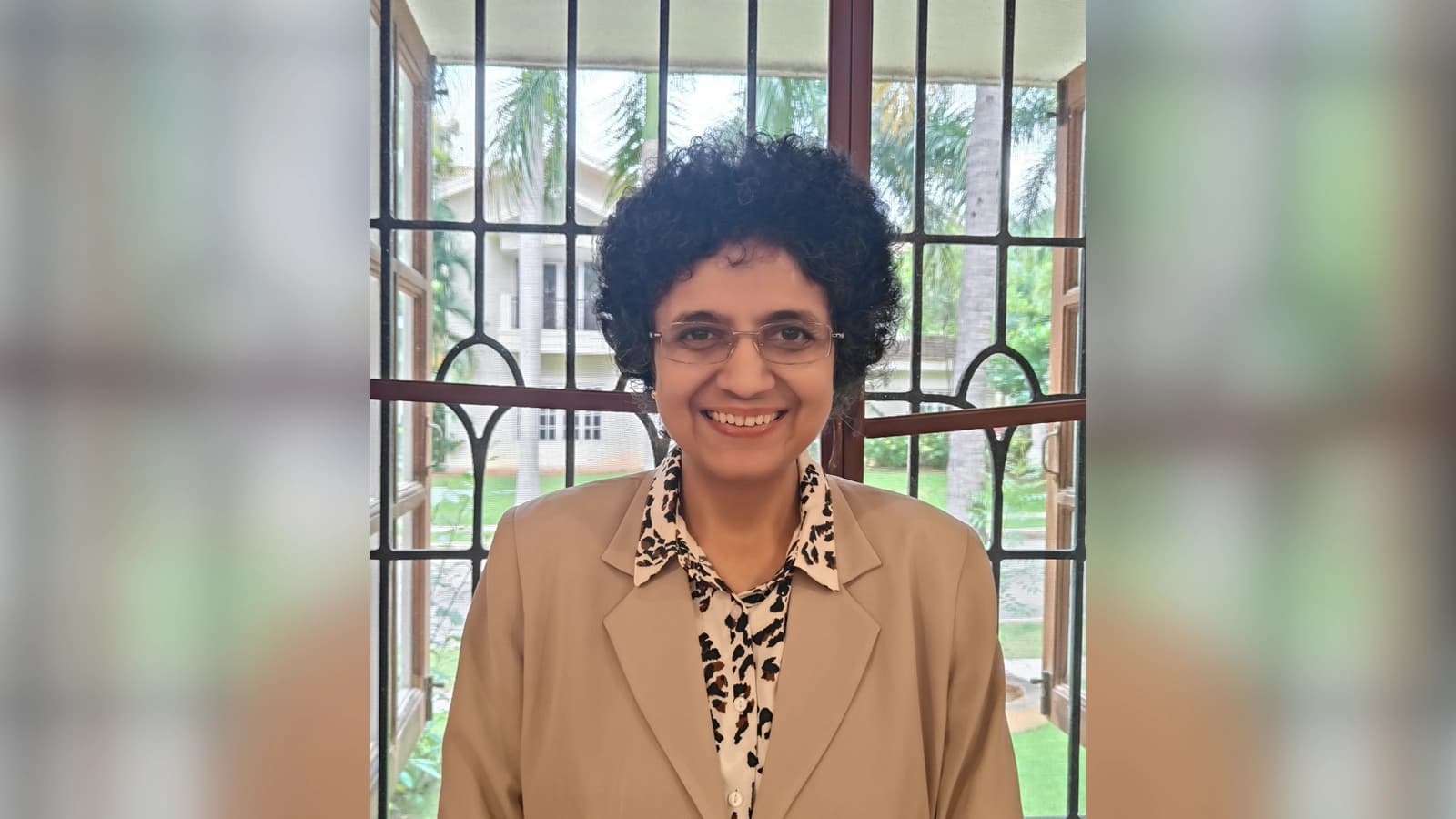
Ramya Venkataraman, Founder and CEO, Centre for Teacher Accreditation (CENTA) Pvt. Ltd
As conversations around the future of education increasingly shift toward technology, policy reforms, and global opportunities, one critical question continues to stand out: Are teachers receiving the recognition, growth, and support they truly deserve? In an insightful conversation with Education Post, Ramya Venkataraman reflected on how teaching can evolve into a more aspirational and respected profession in India and beyond.
Speaking about the vision behind the Centre for Teacher Accreditation (CENTA), she explained that the organisation was built around the idea of creating meaningful career pathways for educators. “What is in it for the teacher?” she said, recalling the question that shaped CENTA’s journey. From teacher certification and professional development to AI-driven assessments and global mobility, Venkataraman discussed the changing role of educators in a rapidly transforming learning ecosystem. She also stressed that while technology is reshaping classrooms, “the teacher remains central to the education process,” highlighting the need for empathy, creativity, and human connection alongside competency-based growth.
1. CENTA was founded with the vision of transforming teaching into a more aspirational and respected profession. What gap in the education ecosystem did you identify when you started the organization, and how has that original mission evolved over the years?
In my experience in education, I observed that as a society, we constantly push teachers to improve, be it through training, new pedagogies, or technology. But we rarely address the fundamental question: what is in it for the teacher? How do their careers grow, and how do the financial rewards for them improve in the process? This was the original problem I wanted to solve when I founded CENTA: to create career pathways that could make teaching aspirational, both for current and for aspiring teachers.
Our understanding of the problem also evolved when we discovered that focusing on the career paths was necessary but not sufficient; other interlinked problems had to be dealt with. For example, when training takes place for teachers, it does not connect very well to competencies or translate to everyday classroom use.
Another thing we saw was that teachers often felt quite lonely in their profession. Being the only adult in the class (though there may be peers in the school), the sense of being part of a larger professional community is often missing. So, the community became another key need.
We also realised that when we talk about career paths, we sometimes tend to think of them very narrowly – promotions, salary increases, etc. But teachers valued career paths in a broader sense: social recognition, respect in their immediate community, and opportunities to learn and grow in unique ways, including international exposure. So we also started looking at career pathways and aspirations more holistically.
And finally, while we always knew this, the thought process further strengthened that this model has to work for multiple stakeholders together, whether they are schools, employers, or parents, making choices about schools or the broader ecosystem.
2. From teacher certification and professional development to recruitment and global opportunities, your organisation today operates across multiple areas. Which of these interventions has created the most measurable impact so far, and what does success look like for you in 2026?
As we evolved, we realised that we need to solve many interconnected challenges to make teaching an aspirational profession. So, rather than operating in multiple areas, our model has become more end-to-end in addressing the multiple parts of making teaching aspirational, ranging from certification to upskilling to a variety of career growth options to the community.
The greatest impact is thus seen when a teacher embraces this ecosystem in its entirety - becoming certified, learning continuously, implementing learnings in his/ her classrooms, and benefiting from multiple career opportunities and recognition.
Having said that, if I had to still pick one area of our work that has contributed the maximum impact in the last 10 years, I would pick certification. As our oldest offering, it has naturally evolved the most. It operates with a very high volume of data, which is what makes a Certification reliable. Also, while the Certification has always been technology-driven, with artificial intelligence, it is becoming even more scalable, robust and cost-effective, especially in practical certifications. Its biggest impact is its recognition and usage among multiple stakeholders, with both public and private organizations using it for promoting, rewarding, and hiring purposes. It has also contributed directly to shaping the National Professional Standards for Teachers under NEP 2020, enabling a broader national framework.
To us, 2026 is about career opportunities for teachers becoming both deeper and broader, i.e. more and more teachers are getting access to a wider range of opportunities. For example, for us, global mobility is yet another career development opportunity for teachers, and so are supplemental course offerings by teachers for students, wherein we are trying to make connections between teachers with such courses, on one hand and schools and students, on the other. Overall, the goal is to create a richer and more dynamic ecosystem of career pathways for educators.
3. You moved from a successful corporate career into building an education-focused institution. What personally motivated that transition and looking back, what achievement through CENTA gives you the greatest sense of pride today?
I’ve actually been passionate about education since my school days, although at that time I didn’t really know what it meant to build a career in this space. So, I followed a more typical career path and spent about 10 years at McKinsey, working across sectors like telecom, infrastructure, and power equipment.
Then I got the opportunity to build McKinsey’s education practice, which was really my first big transition into the sector. At that point, I strongly felt that I had already spent 10 years in my career and shouldn’t postpone this interest any further. I was fortunate that such an opportunity came within my organisation, and the people I worked with were very supportive.
For me, it seemed that instead of pushing teachers to improve, we needed to be focusing on teaching as a profession and a career. I’ve also always had an entrepreneurial inclination. Hence, when this clarity dawned upon me, I thought it would be the best time to create something that addressed this issue. That’s where CENTA originated. What gives me the greatest sense of pride today is really the testimonials we receive from teachers. We hear every day about how this has been life-changing for them.
For example, a teacher from Bihar recently told us that in 24 years of his career, he had been looking for a certain sense of satisfaction that he hadn’t fully found and being part of the CENTA community gave him that. And this is just one example. We hear similar stories from teachers across very different contexts, urban, rural, different socio-economic backgrounds, and increasingly from outside India as well. That, more than anything else, is what feels most meaningful.
4. In one of your earlier interviews, you raised the question: “What is in it for the teacher?” If we ask the same question now, do you believe teachers in India are finally seeing better recognition, growth pathways, and rewards—or is the system still lagging behind?
I definitely think that teachers in India are seeing more recognition, rewards, and career growth today and CENTA, of course, is only one of the many contributors to this. One of the biggest contributors, in fact, has been from the Government of India, through NEP 2020, which clearly recognises the importance of merit-based and competency-based career pathways for teachers. The National Professional Standards for Teachers takes that further towards implementation, and CENTA has been closely involved in that process.
With this kind of policy impetus, several state governments have also started moving in this direction. For example, Andhra Pradesh had initiated work around merit-based selection and recognition even before NEP.
On the private side, many schools are increasingly recognising and rewarding their great teachers, sometimes through external platforms like CENTA, which by far, is the largest such platform and other similar platforms, and sometimes internally.
Having said that, yes, we still have a long way to go. We have 11-12 million teachers in India, and creating career pathways that align with each of their aspirations is not an easy job, as there are boundary constraints, and within those boundary constraints, how do we identify and cater to the aspirations of each of our 11 or 12 million teachers? Yes, it's still a long way to go, but I think the journey has begun, and we are clearly seeing change.
5. Your organization has championed teacher assessments and credentials, but many educators argue that great teaching is also about empathy, creativity, and human connection. How do you ensure these qualities are not overlooked in the push for standardization?
First, I would like to clarify that standards do not mean standardization and at CENTA we do not advocate for standardization in teaching. The idea of standards is that all teachers need to achieve certain competencies to a minimum expected level, whether it is lesson planning, student assessment, classroom management, use of technology, etc. But beyond that, each teacher can have a very different profile. One teacher might be excellent at designing highly engaging lessons, while another might be exceptional in communication and building connections in the classroom. Even in our assessments, we focus on how teachers respond to specific classroom situations, rather than expecting one fixed approach.
Coming to aspects like empathy and human connection, these are absolutely central to teaching. It is true that they are not easy to assess at scale. We do try to capture some of this through our multiple choice assessments, by making them practice-based and scenario-based, though there are limitations..
But with AI, we are now seeing new possibilities. Teachers can respond through video or free text on various given situations, and AI can help evaluate these responses in a cost-effective, scalable and reasonably reliable way. We’ve already piloted this successfully in CENTA international TPO, our flagship annual competition for teachers, and are now taking it forward in our broader assessments.
6. You have spoken earlier about global opportunities for Indian teachers. At a time when many countries face teacher shortages, how can India position its educators internationally without creating talent gaps in domestic classrooms?
I don’t think global opportunities will create a gap in domestic classrooms. The percentage of teachers who will move abroad is extremely small compared to the total number of teachers in the country. In fact, it can have the opposite effect. It creates aspiration for the profession, which in turn attracts a much larger pool of high-performing graduates into teaching. We’ve seen something similar in other sectors, like in software engineering in the 1990s, where global opportunities helped make the profession aspirational, and the domestic ecosystem actually grew stronger alongside it.
For instance, in my recent meeting with the Union Minister of Education, Shri Dharmendra Pradhan, he shared the vision that today we have more than 1 crore teachers in the country, and we should be aspiring to bring the next 1 crore in for the world. And therefore, make this a real job creation opportunity for youth in the country, which is another very interesting perspective around this. And how can India position itself? India will really need to ensure that its teachers build competencies that are relevant for its own education system of the future, as well as globally.
So, competencies which are related to ensuring conceptual learning, building life skills in students, the use of technology, empathy and cultural sensitivity. So, we will need to build the right set of competencies in our teachers. And of course, coming back to the original theme, to reward and recognise teachers who build those competencies, therefore creating a virtuous cycle.
At the same time, there are logistical aspects that need to be addressed, such as alignment of regulations, mapping competencies across different systems, and enabling smoother mobility pathways. This is where partnerships become very important. Overall, these elements- competency-building, recognition, and enabling infrastructure, need to come together to create a strong and sustainable pathway for global opportunities.
7. With AI, edtech and changing learner expectations reshaping education, what role do you see your organization playing over the next five years—and how do you think the definition of a “great teacher” itself is changing?
The role of a teacher, like many other professions, is indeed changing.
With AI and related technologies, it is becoming essential for teachers to be able to use these tools effectively. For example, a teacher does not need to spend a lot of time creating a lesson plan, but can use AI to create it in seconds. At the same time, the teacher needs to have the competency to evaluate the plan created by AI and figure out how it needs to be modified for their own situation and then to be able to prompt AI appropriately to create lesson plans that work in their own situations. The same goes for student assessment, creating activities, worksheets, etc., for students.
Plus, along with this, the learner profile is also changing. Knowledge is becoming freely available, more and more available, but at the same time, there is also a lot of misinformation, with a feeling of knowing something, without a strong basis. So, students may come into the classroom with partial or incorrect knowledge, or strongly formed but not fully informed perspectives.
So being able to bridge this, where you are building on what your learners already know and taking them to the next level and leveraging the learner's entire life rather than only the classroom. That has become the expectation from a teacher. And yes, teaching competency standards like CENTA standards, for example, need to be continuously updated, which we do to reflect this kind of change.
In terms of CENTA’s role over the next five years, we see two broad priorities. One is to continuously help teachers adapt to this changing environment by building the right skills, providing the right tools, certifying them on relevant competencies, and aligning all of this with meaningful career growth. The second is to keep bringing the narrative back to the teacher. No matter how much technology evolves, including AI, the teacher remains central to the education process. Ensuring that this remains at the core of the conversation is something we see as a very important part of our role going forward.
Madurai Kamaraj University seeks grants for college struggling to pay salaries amid ₹2 crore annual deficit
IISc Study Challenges Chandrasekhar Limit, Finds White Dwarfs Could Grow Far Beyond Expected Mass

Surat medical college ragging case: Two senior doctors arrested after PG student’s death

IIIT Ranchi student death: NHRC to examine allegations of administrative negligence and delayed medical aid
.jpg&w=256&q=75)
Karnataka introduces 7.5% sub-quota for rural government school students in professional course admissions
Madurai Kamaraj University seeks grants for college struggling to pay salaries amid ₹2 crore annual deficit
IISc Study Challenges Chandrasekhar Limit, Finds White Dwarfs Could Grow Far Beyond Expected Mass
Surat medical college ragging case: Two senior doctors arrested after PG student’s death
IIIT Ranchi student death: NHRC to examine allegations of administrative negligence and delayed medical aid
Karnataka introduces 7.5% sub-quota for rural government school students in professional course admissions

Madurai Kamaraj University seeks grants for college struggling to pay salaries amid ₹2 crore annual deficit
IISc Study Challenges Chandrasekhar Limit, Finds White Dwarfs Could Grow Far Beyond Expected Mass
Surat medical college ragging case: Two senior doctors arrested after PG student’s death
IIIT Ranchi student death: NHRC to examine allegations of administrative negligence and delayed medical aid
Karnataka introduces 7.5% sub-quota for rural government school students in professional course admissions
Madurai Kamaraj University seeks grants for college struggling to pay salaries amid ₹2 crore annual deficit
IISc Study Challenges Chandrasekhar Limit, Finds White Dwarfs Could Grow Far Beyond Expected Mass
Surat medical college ragging case: Two senior doctors arrested after PG student’s death
IIIT Ranchi student death: NHRC to examine allegations of administrative negligence and delayed medical aid
Karnataka introduces 7.5% sub-quota for rural government school students in professional course admissions
Copyright© educationpost.in 2026 All Rights Reserved.
