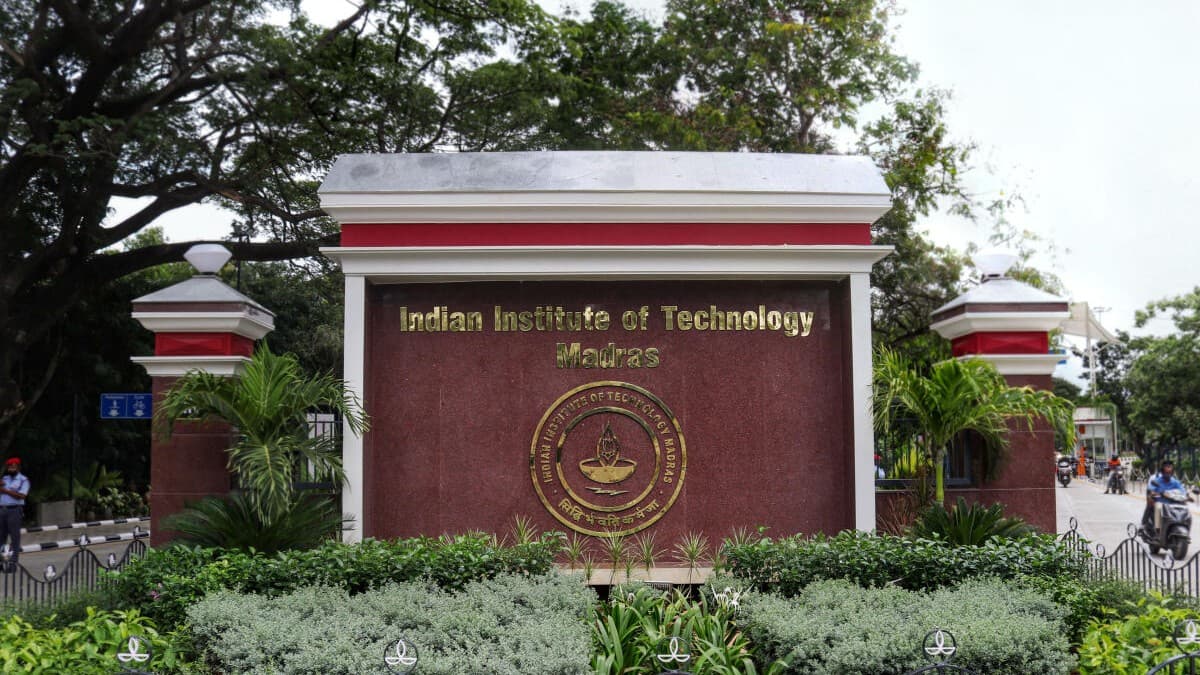
IIT Madras will offer a four-year Bachelor of Cybersecurity (BCyber) program from the 2026-27 academic session, joining IIT Kanpur in launching a practice-focused undergraduate degree aimed at addressing India's growing demand for cybersecurity professionals.
The inaugural batch will be admitted through a joint selection process, although students will complete the program independently at the institute they choose, IIT Madras said.

The announcement comes weeks after IIT Kanpur unveiled the same program with a separate admission process that does not require Joint Entrance Examination (JEE) scores.
It also follows IIT Kanpur's appointment of cybersecurity researcher Nisarga Adhikary, known for identifying alleged vulnerabilities in the Central Board of Secondary Education's (CBSE) on-screen marking (OSM) system, as an engineer at its C3iHub cybersecurity center.
According to IIT Madras, the undergraduate degree has been developed to strengthen India's cybersecurity workforce and equip students with the skills needed to safeguard the country's expanding digital infrastructure, critical sectors, and cyber ecosystem.
For the 2026-27 admissions, IIT Madras said it has integrated with IIT Kanpur's ongoing selection process.
“This year, because IIT Kanpur has already had such a thing started about a month back, and they have gone through the process of selection, we will essentially join them in the selection process. Every student will be given the opportunity, if they are selected, to choose between IIT Madras or IIT Kanpur,” the institute clarified.
While admissions will be conducted jointly this year, students enrolled at each institute will study separately on their respective campuses and receive degrees from their chosen IIT.
“It is much like the regular BTech program. The entrance into the degree would be the same. Once they start the course, it would be an independent degree,” the institute spokesperson noted.
The institute further said, “IIT Madras will run their own course, IIT Kanpur will run their own thing, and the degrees will be given independently.”
Beginning next year, IIT Madras plans to conduct its own admission process. Applicants will be required to take an aptitude test assessing basic mathematics, logical reasoning, and cybersecurity aptitude.
Describing the selection process, the institute said, “We will have a hackathon, which will be a much longer duration. The hackathon will actually test their programming skills, their expertise, or what they know in cybersecurity. Based on this hackathon and marks obtained during the hackathon, the shortlisting will be done.”
For the current admission cycle, however, IIT Madras will use IIT Kanpur's existing shortlist, with shortlisted candidates able to choose between the two institutes during the upcoming hackathon stage.
The institute said cybersecurity has become a national strategic priority as India continues to expand digital services across sectors, including governance, finance, healthcare, transportation, telecommunications, manufacturing, and defense.
It added that industry estimates point to a shortage of nearly 1.5 million cybersecurity professionals in the country, highlighting the need for a dedicated undergraduate program.
The curriculum has been designed with a strong emphasis on hands-on training. Students will spend the final four semesters working on a two-year Field Deployment Professional Project, gaining practical experience through live cybersecurity assignments under the supervision of experts from strategic and critical organizations.
According to IIT Madras, the competency-based program includes training in security operations, vulnerability assessment and penetration testing, secure systems, malware analysis, firmware reverse engineering, hardware security, cloud security, and critical infrastructure security.
The first academic session is expected to begin by the end of July, in line with the institute's other undergraduate engineering programs.