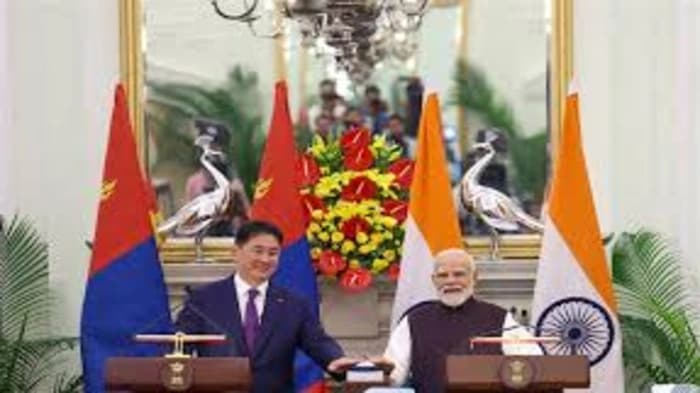
India and Mongolia share a longstanding relationship that extends beyond traditional diplomacy, encompassing cultural, historical, and strategic dimensions. Rooted in shared Buddhist heritage and historical interactions along the Silk Road, the bilateral relationship has evolved into a multi-faceted partnership that includes economic cooperation, defense collaboration, and regional security engagement. This growing partnership reflects India’s broader foreign policy priorities of strengthening ties with strategically located countries in Asia and enhancing its influence in Central and East Asia.
Cultural diplomacy has been a cornerstone of India-Mongolia relations. The shared Buddhist heritage serves as a bridge for people-to-people exchanges, educational programs, and cultural events. Initiatives such as scholarships for Mongolian students to study in India, joint cultural festivals, and the restoration of Buddhist monasteries have strengthened mutual understanding and goodwill. These cultural engagements are more than symbolic; they foster long-term trust and provide a foundation for deeper strategic cooperation.

Defense and security cooperation is another key pillar of the partnership. India has provided military training to Mongolian personnel and supplied defense equipment, enhancing Mongolia’s capacity to maintain regional security and respond to peacekeeping missions. Joint exercises, workshops, and capacity-building initiatives have further strengthened bilateral defense ties, aligning with India’s goal of promoting stability and peace in the Indo-Pacific region. Such collaboration also serves as a counterbalance to Mongolia’s geopolitical position between China and Russia, allowing it to diversify strategic partnerships while benefiting from India’s expertise in defense and technology.
Economic and trade engagements are gradually gaining momentum. While trade volumes remain modest, both countries are exploring opportunities in sectors such as mining, pharmaceuticals, IT, and infrastructure. Investments in renewable energy, particularly solar and wind projects in Mongolia, highlight India’s support for sustainable development in partner countries. Moreover, initiatives like the development of connectivity projects and capacity-building programs facilitate economic collaboration and promote regional integration.
The strategic significance of India-Mongolia relations is particularly evident in regional security dynamics. Mongolia’s position as a landlocked country between two major powers gives it a unique role in promoting regional stability. India’s engagement with Mongolia aligns with its Act East Policy and broader efforts to strengthen partnerships in the Indo-Pacific region. Cooperation in multilateral forums such as the United Nations and the Shanghai Cooperation Organization further reinforces shared commitments to peace, development, and adherence to international norms.
In conclusion, the India-Mongolia partnership exemplifies a holistic approach to bilateral relations, blending cultural affinity, strategic cooperation, and economic collaboration. Strengthening this relationship not only advances mutual interests but also enhances India’s presence in Central and East Asia, supporting regional stability and connectivity. By investing in education, culture, defense, and trade, India and Mongolia continue to build a resilient and multi-dimensional partnership that reflects the evolving priorities of both nations in an increasingly interconnected world.