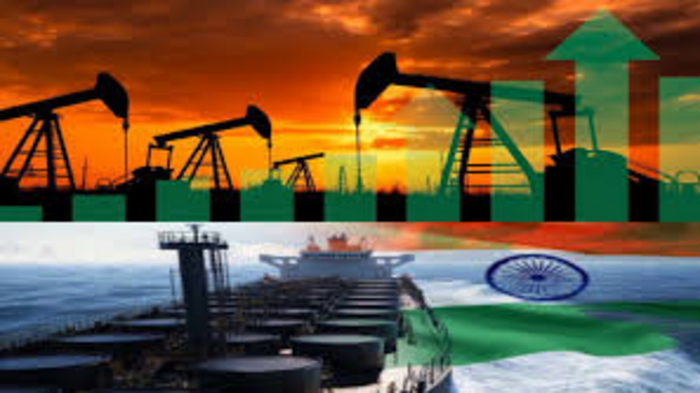
The main focus is on making sure India has a supply of oil and gas and that trade between India and these countries continues to grow even when the global economy is unpredictable

India has been talking to the countries in the Gulf about how to make sure they have a long-term supply of oil and gas. Since India imports a lot of oil it is affected by changes in the global energy market. By building relationships with the countries in the Gulf that have a lot of energy India can reduce the uncertainty and make sure it has a steady supply.
India and the Gulf countries are also looking at ways to increase trade and investment in areas like building infrastructure, renewable energy and technology. This will help both India and the Gulf countries to grow and diversify their economies.

There are a lot of Indians living in the Gulf region, which makes the relationship between India and these countries very important, not for strategic reasons but also for social reasons. India wants to make sure that Indians living abroad are safe during times of instability. Strong relationships between countries make it easier to work together to protect the interests of nationals.
This is important for India because it needs to make sure it has a supply of energy to keep its economy growing and to control inflation. If India can make long-term agreements with the Gulf countries it can protect itself from changes in the price of oil and gas.
By building relationships with the Gulf countries India is also improving its position in the region. This helps India to have a foreign policy and to play a key role in global energy and trade networks.
Overall Indias efforts to build relationships with the Gulf countries show how important it is to have good relationships with other countries when it comes to energy. This helps to ensure that Indias economy is stable and that it can work with countries, on strategic issues. India and the Gulf countries are working together to make sure they have a supply of energy and to grow their economies.

India’s Blue Economy Push Seeks to Balance Growth and Ocean Conservation

Supreme Court Seeks Panel to Curb Unethical Pharma Marketing Practices

NMC Tightens Rules on Doctors’ Digital Advertising and AI Use

Anthropic Launches Claude Haiku 5.5 as Its Fastest and Cheapest AI Model

Karnataka HC Replaces ‘Visitation’ with ‘Parenting Time’ in Child Custody Cases

Canadian author Anne Carson wins 2026 Nobel Prize in Literature for reshaping contemporary literary forms

AMU students’ protest enters third week as union election demand widens

DPDP Act Explained: What is India’s Digital Personal Data Protection Law and Why is it in the News?

IIT Bombay puts stricter cheating rules on hold, drafts new procedure for exam misconduct

Gujarat launches PARAKH Cell to shift school assessments toward competency-based learning

India’s Blue Economy Push Seeks to Balance Growth and Ocean Conservation

Supreme Court Seeks Panel to Curb Unethical Pharma Marketing Practices

NMC Tightens Rules on Doctors’ Digital Advertising and AI Use

Anthropic Launches Claude Haiku 5.5 as Its Fastest and Cheapest AI Model

Karnataka HC Replaces ‘Visitation’ with ‘Parenting Time’ in Child Custody Cases

Canadian author Anne Carson wins 2026 Nobel Prize in Literature for reshaping contemporary literary forms

AMU students’ protest enters third week as union election demand widens

DPDP Act Explained: What is India’s Digital Personal Data Protection Law and Why is it in the News?

IIT Bombay puts stricter cheating rules on hold, drafts new procedure for exam misconduct

Gujarat launches PARAKH Cell to shift school assessments toward competency-based learning
Copyright© educationpost.in 2024 All Rights Reserved.
Designed and Developed by @Pyndertech