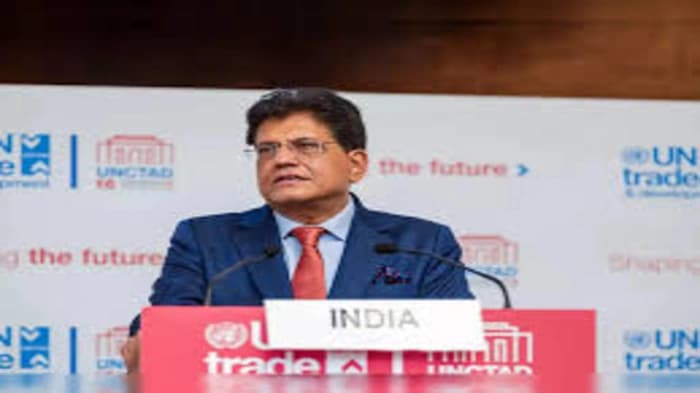
As India and the United States move closer to finalising a bilateral trade agreement, negotiators from both sides have begun drafting the initial language of the deal, marking an important step in ongoing discussions aimed at expanding trade, technology, and investment cooperation. However, India’s Commerce and Industry Minister Piyush Goyal has reiterated that New Delhi will not rush into a deal or compromise on its national interests, stating firmly that “India does not do deals with a gun to its head.”
The trade discussions aim to resolve long-standing issues such as tariff barriers, market access, digital trade, and intellectual property protection, while opening new avenues in sectors like renewable energy, semiconductors, pharmaceuticals, and defence manufacturing. The proposed agreement is expected to serve as a framework for deeper economic engagement, complementing the broader India–US strategic partnership.

Minister Goyal’s remarks highlight India’s approach to strategic trade autonomy — pursuing cooperation on equal terms rather than accepting externally imposed conditions. This stance reflects India’s broader philosophy of Atmanirbhar Bharat (self-reliant India), which seeks to attract foreign investment while safeguarding domestic industry and regulatory sovereignty.
Analysts note that while the US is keen to secure market access and strengthen supply chain integration with India, New Delhi remains cautious about potential implications for agricultural exports, e-commerce regulation, and data protection frameworks. India’s insistence on balanced reciprocity and policy space underscores its commitment to economic self-determination in a multipolar global economy.
The negotiations also carry broader strategic weight, aligning with both countries’ interests in maintaining supply chain resilience and geoeconomic cooperation in the Indo-Pacific region.
For UPSC students, the episode is a key example of India’s trade diplomacy, economic sovereignty, and balancing strategy between openness and protection of national interest.