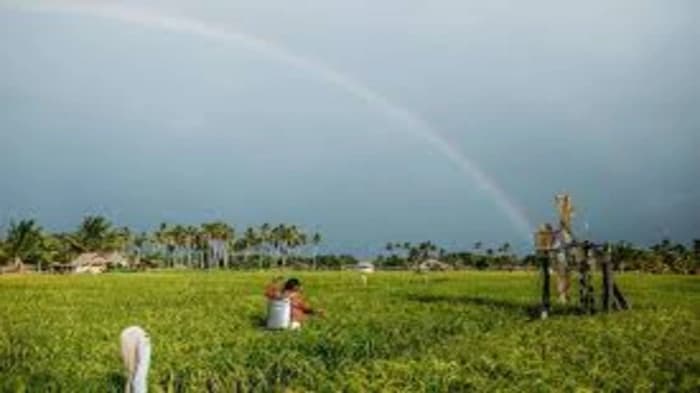
As of 27 September 2025, the Indian Meteorological Department (IMD) has signalled delayed retreat of the southwest monsoon in northwest India. Historically, the monsoon withdraws from northwest India by late September, but delays have occurred consecutively in past years.
Background & Climate Linkages

The southwest monsoon typically advances in June and retreats starting late September, culminating by early October in the northwestern zones.
Delays are often linked to lingering low-pressure systems, sea surface temperature anomalies, or atmospheric circulation patterns.
El Niño / La Niña phases, Indian Ocean Dipole, and Madden-Julian Oscillation (MJO) also influence retention of rain-bearing systems.
Impacts on Agriculture & Economy
Rabi crop sowing window shortened: farmers may delay sowing of wheat, pulses, oilseeds, affecting yields.
Soil moisture status: residual moisture in fields may influence fertilizer uptake, irrigation needs.
Pest/disease risk: lingering humidity may promote fungal outbreaks.
Market effects: delays may push procurement cycles, affect supply chains, prices of staples.
Regional & Socio‑economic Dimensions
States in Rajasthan, Punjab, Haryana, Uttar Pradesh more vulnerable.
Small and marginal farmers with limited irrigation may be hit hardest.
Government may need to intervene with extension services, input supply, crop insurance, and relief measures.
Policy Responses & Adaptation
Forecasting & advisories: IMD’s zone-wise advisories to farmers about sowing, fertilizer application, irrigation planning.
Promoting resilient cropping patterns: faster-maturing seeds, alternate crops less dependent on rainfall.
Strengthening irrigation infrastructure: micro-irrigation, groundwater recharge projects.
Crop insurance & buffer procurement: expanding buffer stock, flexible procurement timelines.
Conclusion:
The erratic monsoon pattern highlights the growing climate uncertainty India faces. Strengthening agrometeorological services, resilient cropping systems, and water-efficient farming are essential to climate-proof Indian agriculture.