India concluded its long-pending free trade agreement (FTA) negotiations with the European Union on equal terms after nearly 17 years of talks, Union Minister of State for Commerce and Industry Jitin Prasada said on Saturday, emphasising that technology transfer, local manufacturing and artificial intelligence (AI) will be critical to the country’s next phase of industrial growth.
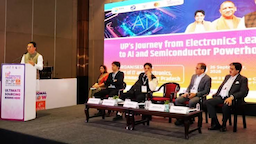
Speaking at the Uttar Pradesh International Trade Show (UPITS), Prasada described the India-EU FTA as a significant achievement, noting that negotiations had remained stalled for several years before gaining momentum again.

“The EU FTA was in talks for 17 years. They were not ready to have a conversation with us. Our government was able to strike a deal on equal terms,” he said.
India and the European Union concluded negotiations on the trade pact on January 27, 2026. The talks began in 2007 but remained stalled for several years before being relaunched in 2022.
The agreement moved closer to implementation earlier this month after the European Commission submitted it to the EU Council for authorisation for signature and conclusion.
Prasada also outlined the government’s evolving approach towards foreign investment, saying international companies would increasingly be expected to contribute to India’s domestic manufacturing capabilities and technological development rather than treating the country primarily as a consumer market.
He said foreign companies seeking to expand their operations in India would increasingly be encouraged to form joint ventures and facilitate technology transfers, helping strengthen domestic capabilities and manufacturing ecosystems.
The minister also stressed the need to improve the quality of Indian products as domestic manufacturers seek greater access to international markets.
“We need to ensure quality and the global market is waiting for us,” he said.
Prasada said artificial intelligence could play a major role in transforming India’s manufacturing sector, particularly by helping micro, small and medium enterprises (MSMEs) improve productivity and reduce production costs.
He also highlighted Uttar Pradesh’s emergence as an important hub for data centres and AI-related technologies, citing investments by companies such as Samsung and Yotta in the state.
Wider adoption of AI, he said, could help improve competitiveness across industries while supporting the broader expansion of India’s manufacturing and technology ecosystem.