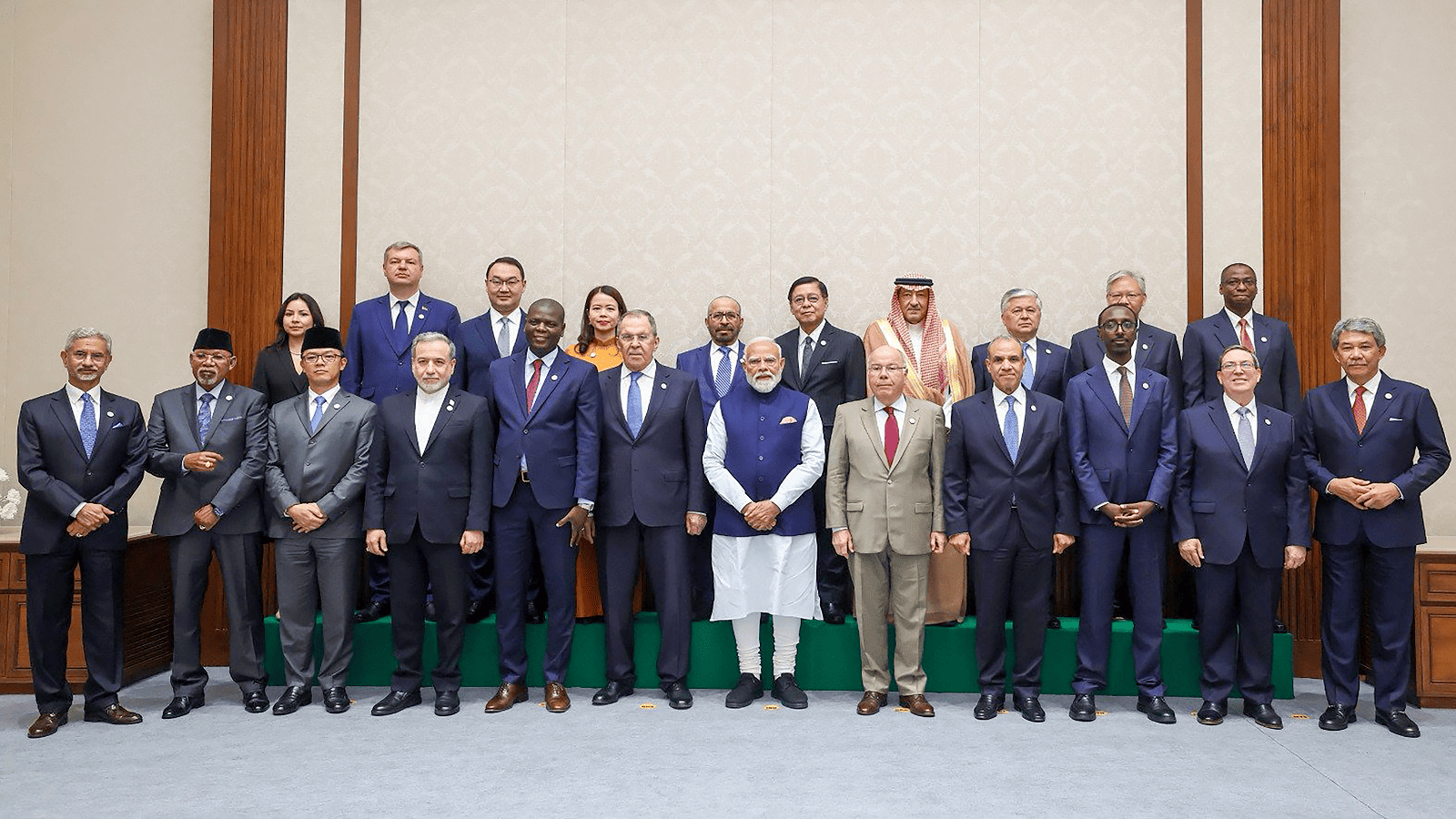
India’s proposal to build a digital bridge between the domestic currency payment networks of BRICS member nations has become the most important item on the agenda for the forthcoming summit of the bloc to be held in Delhi, according to an article published by South Africa’s IOL news website. The article highlights that BRICS countries are disproportionately exposed to dollar-denominated energy trade and the US financial infrastructure.
When Middle East tensions spike, every BRICS economy feels the shock through higher oil prices, capital outflows and currency depreciation. It points out that Russia faces sanctions that cut it off from SWIFT. China sees higher manufacturing costs and reduced export competitiveness when oil rises. Brazil, South Africa, Egypt and Ethiopia all grapple with dollar shortages and currency volatility.

Because IMF rankings measure nominal GDP in dollars, a weaker rupee mechanically shrinks India's dollar-denominated GDP. The IMF itself explicitly cited the rupee's continuous depreciation, caused by the Middle East situation, as the reason for the downgrade. “This is precisely why the payment-system interconnectivity proposal, tabled by India, has taken on such urgent weight. The war has exposed a fundamental truth: BRICS nations remain captive to a financial system they do not control.
A multi-CBDC bridge, or linked fast-payment rails, would allow direct settlements in local currencies, bypassing the dollar as an intermediary -- shielding members from the kind of currency-driven ranking dilemma India has just endured,” states the article written by Phapano Phasha. It explains that critically, this is not about a common BRICS currency, an idea that has divided the bloc and drawn US tariff threats. It is about functional de-dollarisation which entails building alternative infrastructure so that when the next crisis hits, BRICS nations can keep trading without watching their GDP rankings abruptly tumble.
The article also points out that currently payments between BRICS members, the money often travels through US banks, takes days to clear, and incurs fees of 3–5 per cent. The proposed system would allow direct, near-instant settlements in local currencies, using blockchain-like technology to ensure both sides get paid simultaneously, without a middleman. No single currency is replaced; instead, each nation's digital money learns to "speak" to the others, the article observes.
Disclaimer: "This story has been published from a syndicated news feed. Only the headline and subtitle have been edited by EPN."