Muscle-Mimicking Technology: Northwestern engineers have unveiled a groundbreaking, soft, flexible device that mimics human muscle movement, promising a future where robots are safer and more adaptable. This innovative actuator, showcased in Advanced Intelligent Systems on July 8, enables robots to expand and contract like muscles, allowing for a wide range of motions.
Affordable and Effective
Engineered from inexpensive thermoplastic polyurethane, an ordinary rubber, these actuators can be 3D-printed using standard desktop printers, reducing costs to around $3 per actuator, excluding the motor. This contrasts with traditional, rigid actuators costing hundreds to thousands of dollars.

Also Read: Johns Hopkins community celebrates $1 Billion transformative financial aid gift to School of Medicine
"Roboticists have long aimed to create safer robots," said Ryan Truby, the study's lead and the June and Donald Brewer Junior Professor at Northwestern. "If a soft robot hits a person, it wouldn’t hurt as much as a hard, rigid one. Our actuators make robots more practical and affordable for human environments."
Versatile and Practical Applications
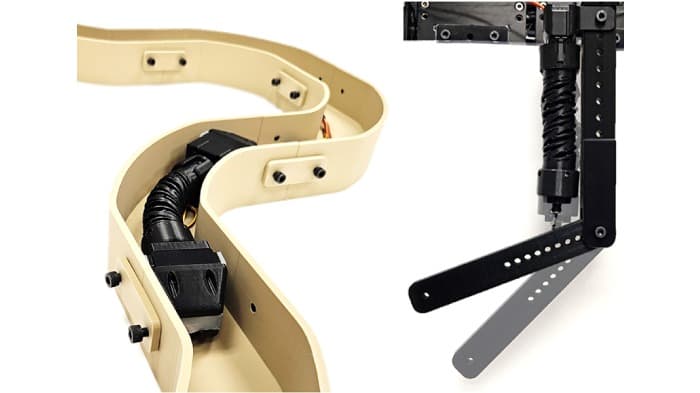
The new actuator's capabilities were demonstrated through a worm-like robot and an artificial bicep. The worm-like robot navigated tight, winding paths while the bicep repeatedly lifted a 500-gram weight 5,000 times without failing.
Truby’s team achieved this by designing "handed shearing auxetics" (HSAs), which expand and contract when twisted. This unique design, coupled with rubber bellows, enables the actuator to extend and contract with a single motor, simplifying the design and enhancing the robot's flexibility.
Bioinspired Innovation
Unlike previous soft actuators that softened under use, these new actuators stiffen, much like human muscles during exertion. This property allows for better force transmission and more effective movements.
"Our actuator gets stiffer as it operates, much like our muscles do when we twist off a jar lid," Truby explained. “This feature has been overlooked in soft robotics.”
The innovative actuators offer endless possibilities for bioinspired robots capable of performing tasks that rigid robots cannot. This advancement brings researchers closer to creating robots that can move and behave like living organisms, opening new avenues in robotics.
Future Prospects
These new actuators have vast potential applications, from medical devices to search-and-rescue robots. As they are inexpensive and easy to produce, they could revolutionize the field of robotics, making advanced, flexible robots accessible for a wide range of uses.
Also Read: University of Southampton: Exploring the past with the digital twin of RRS Discovery
“Robots that move like living organisms will enable tasks that conventional robots can't achieve,” Truby said, hinting at a future where soft robots play a crucial role in everyday life. To stay updated with more such articles, keep reading at Education Post News.



.jpg&w=256&q=75)



.jfif&w=256&q=75)