For the first time, the US Departments of Energy and Defense have transported a compact nuclear microreactor by air in a demonstration aimed at showing how small-scale nuclear power could be rapidly deployed for civilian and military use.
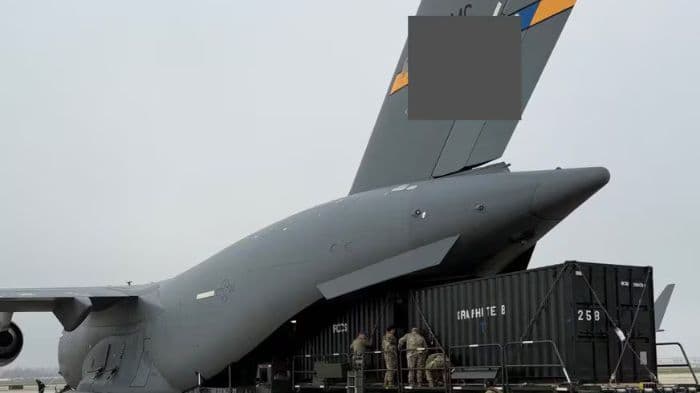
On February 15, the van-sized Ward microreactor, developed by Valar Atomics, was flown unfueled aboard a C-17 cargo aircraft from March Air Force Base in California to Hill Air Force Base in Utah.

Officials including Energy Secretary Chris Wright and Under Secretary of Defense for Acquisition and Sustainment Michael Duffey were present aboard the flight with the reactor and its components. They described the airlift as a notable step in improving how nuclear power systems can be transported quickly where needed.
“This gets us closer to deploy nuclear power when and where it is needed to give our nation’s warfighters the tools to win in battle,” Duffey said, describing the mission’s significance for national security logistics.
The Ward microreactor — slightly larger than a minivan — is designed to eventually generate up to 5 megawatts of electricity, enough to power approximately 5,000 homes, according to Valar Atomics chief executive Isaiah Taylor.
Officials said the unit will begin operating at lower power capacity in July 2026 before increasing toward full output later in the year. Plans call for test sales of electricity in 2027 and full commercial use by 2028.
The transport mission did not carry nuclear fuel; the reactor itself will require hauling of fuel from the Nevada National Security Site to Valar’s facilities in San Rafael, California for later work, Energy Department officials told reporters.
The air transport demonstration is part of a broader US push to explore small nuclear reactors as a flexible energy source that can supplement or replace power from diesel generators in remote areas and support national security and civilian energy needs.
The Energy Department plans to have three microreactors reach “criticality” — a sustained nuclear reaction — by July 4, 2026, as stated by officials involved in the program.
President Donald Trump’s administration has signaled support for expanding domestic nuclear power technology and issued executive actions to accelerate deployment of advanced reactors.




.jpg&w=256&q=75)





.jpg&w=256&q=75)
