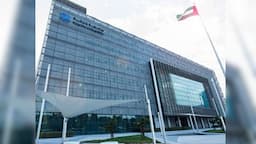
Carnegie Mellon University has received a record $3 billion commitment from hedge fund billionaire Ken Griffin, with the bulk of the money earmarked for a new campus in Miami designed to tackle some of the world’s most pressing scientific and societal challenges.
The Pittsburgh-based private research university announced the donation recently, describing it as the largest single gift ever made to a US university. The commitment places Griffin among the most significant benefactors of American higher education, as universities seek funding to strengthen research, expand academic programmes and adapt to rapid technological change.

The donation surpasses several landmark contributions to US universities, including the $1.8 billion gift former New York City Mayor Michael Bloomberg made to Johns Hopkins University in 2018 and the $2 billion contribution from Nike co-founder Phil Knight and his wife, Penny, to Oregon Health & Science University in 2025.
Of Griffin’s $3 billion commitment, $2 billion will go towards establishing a new 35-acre Carnegie Mellon campus in Miami’s Wynwood neighbourhood, just north of downtown. The campus is expected to accommodate approximately 3,500 undergraduate, master’s and doctoral students, with construction scheduled to begin next year.
Rather than organising its academic programmes solely around traditional majors, the Miami campus will concentrate on what the university and Griffin describe as “grand challenge areas”. These include human health and biological discovery, national security and strategic capabilities, energy and climate resilience, and advanced manufacturing and industrial transformation.
The remaining $1 billion will be divided equally between Carnegie Mellon’s computer science programme in Pittsburgh, which will be renamed in Griffin’s honour, and other projects at the university’s main campus.
University President Farnam Jahanian said the investment would help Carnegie Mellon respond to major technological shifts and strengthen its role in research and education.
“Artificial intelligence represents one of the defining intellectual developments of our time,” Jahanian said in a university statement, emphasising the need to rethink how students are educated, research is conducted and institutions collaborate.
The gift comes as colleges and universities face mounting pressure to prepare graduates for a labour market being reshaped by artificial intelligence. Demand for workers with AI and machine-learning skills is growing, prompting institutions to reconsider curricula, research priorities and links with industry.
At the same time, higher education institutions are confronting financial uncertainty. Declining international enrolment, demographic changes expected to reduce the number of high school graduates in many US states, and rising costs for healthcare, technology and fuel are adding to the sector’s challenges.
Griffin, founder of investment firm Citadel and a prominent Republican donor, owns a waterfront home in Miami, a metropolitan region with a population exceeding 6.4 million. He has supported a range of causes, including medical research, charter schools and universities.
Miami already has a substantial higher education network, including the private University of Miami, public research institution Florida International University and Miami Dade College. Together, the three institutions enrol around 135,000 students, alongside several smaller private colleges operating in the region.
Griffin said bringing Carnegie Mellon to Miami would expand the city’s role in scientific and humanistic advancement while extending the university’s international reach. He will also join Carnegie Mellon’s Board of Trustees.
The university’s move builds on existing partnerships and educational initiatives in Florida. Its computer science department operates a programme introducing middle school students in Florida and several other states to artificial intelligence. Carnegie Mellon is also working with the Gates Foundation on deploying AI-powered learning materials for introductory mathematics courses at Miami Dade College.
The new campus is expected to deepen those connections while establishing a dedicated centre for research and education in fields that are increasingly shaping the global economy, public policy and national security.





.jpg&w=256&q=75)
.jpg&w=256&q=75)
.webp&w=256&q=75)
