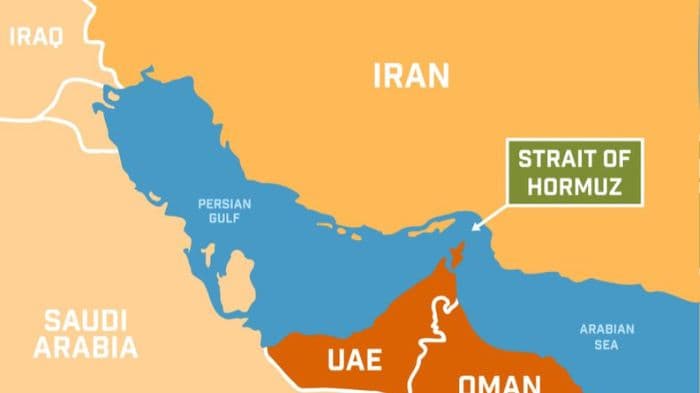
After a month of sustained conflict with the United States and Israel, Iran has significantly tightened its control over the Strait of Hormuz, effectively restricting maritime movement through one of the world’s most vital energy corridors.
According to recent data, ship traffic through the narrow waterway has dropped drastically, with an average of just about six vessels per day passing through in March, compared to around 135 daily crossings under normal conditions.

The sharp decline underscores the extent of disruption in the strait, which connects the Persian Gulf to global markets and carries a substantial share of the world’s oil supplies.
The near-total restriction of movement has emerged as one of Tehran’s most effective tools against its adversaries, even as it continues to face military strikes on its own territory.
Shipping patterns have also shifted significantly. Most vessels that are still transiting the strait are doing so along routes close to Iran’s coastline and only after securing approval, reflecting a de facto system of controlled passage.
Data further indicates that a large majority of tankers exiting the strait belong either to Iran or to countries maintaining relatively cordial ties with Tehran, highlighting the selective nature of current maritime access.
The tightening grip began soon after US and Israeli strikes on Iran in late February, when Tehran declared control over the chokepoint and warned that American vessels would not be allowed to enter the Persian Gulf.
Since then, the region has witnessed repeated attacks on commercial shipping, including projectiles hitting vessels and incidents that have raised safety concerns among shipowners, insurers and crews operating in the area.
Electronic interference has also been reported in the strait, affecting vessel tracking systems and complicating navigation. Some ships have reportedly switched off transponders, making monitoring and coordination more difficult.
Despite these challenges, a limited number of countries have attempted to negotiate safe passage for their vessels, with some securing bilateral arrangements to move ships out of the Gulf.
The Strait of Hormuz remains one of the world’s most strategically important maritime routes, and the ongoing disruption has already had ripple effects on global energy markets, pushing up oil prices and increasing uncertainty in supply chains.
Iran’s growing control over the strait could further complicate efforts by the US and its allies to restore normal shipping operations, particularly as tensions continue to escalate.




.jpg&w=256&q=75)





.jpg&w=256&q=75)
