A cautious diplomatic push is underway in the Iran conflict, with Abbas Araqchi signaling that Tehran is prepared to allow limited access through the Strait of Hormuz and suspend its attacks—provided strikes against Iran stop.
The move comes ahead of scheduled negotiations with the United States on April 10 in Islamabad, even as both sides agreed to a ceasefire early April 8, easing a 40-day conflict that rattled regions far beyond West Asia.

In a statement issued on behalf of Iran’s Supreme National Security Council, Araqchi said, “If attacks against Iran are halted, our Powerful Armed Forces will cease their defensive operations.” He added that safe passage through the Strait of Hormuz would be permitted “for a period of two weeks” in coordination with Iranian forces, indicating a tightly conditional de-escalation linked to ongoing talks.
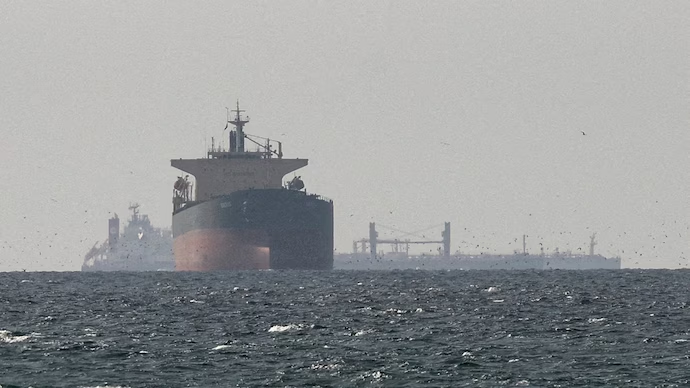
The Strait of Hormuz — a critical artery carrying nearly 20% of global oil trade — had effectively been shut after Iran targeted multiple vessels, disrupting energy supplies and driving crude prices sharply higher. Reopening the route has been a central demand of Washington in ceasefire negotiations.
Iran confirmed that talks with the United States, set to begin Friday in Islamabad, will follow a detailed 10-point proposal routed through Pakistan, which has been acting as a mediator. According to Iranian state media, the proposal addresses key issues including maritime transit through Hormuz, sanctions relief, and the withdrawal of US forces from regional bases.
However, Tehran underscored that diplomacy does not mark the end of hostilities. “This does not signify the termination of the war,” the council said, warning that “any error will be met with full force.”
The announcement coincides with Iran’s acceptance of a two-week ceasefire—described by officials as a “victory”—brokered with Pakistan’s involvement. The Islamabad talks are expected to last up to 15 days, with the possibility of extension, as both sides work toward a broader agreement.
A White House official indicated that the ceasefire would formally take effect once Iran reopens the Strait of Hormuz. Following an announcement by Donald Trump, The New York Times, citing Iranian officials, reported that Tehran had accepted Pakistan’s ceasefire proposal in the US-Israel conflict.
The report added that China intervened at the last moment, urging flexibility to prevent further escalation amid fears of economic fallout if US strikes targeted Iran’s energy infrastructure. It also noted that Iran’s new supreme leader, Mojtaba Khamenei—yet to appear publicly since succeeding his father—approved the truce.




.jpg&w=256&q=75)





.jpg&w=256&q=75)