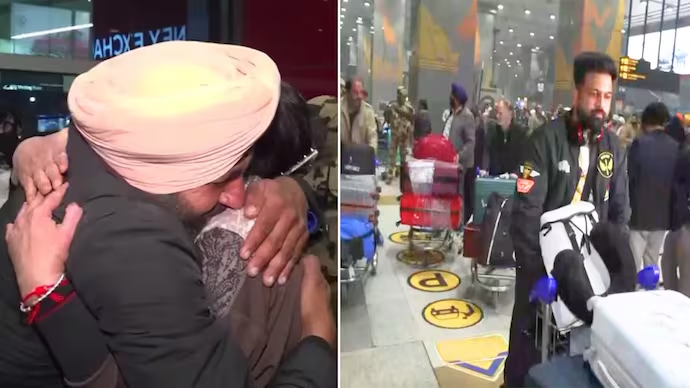
Anxiety gave way to tears of relief at Indira Gandhi International Airport late January 16 as Indian nationals evacuated from Iran stepped onto home soil, recounting days of fear, isolation and uncertainty in a country gripped by escalating protests and communication blackouts.
The arrivals followed urgent advisories from the Ministry of External Affairs and the Indian Embassy in Tehran, which asked Indians — including students, pilgrims, businessmen and tourists — to leave Iran using all available transport options as the security situation deteriorated.

New Delhi said it was closely monitoring developments and remained “committed to doing whatever is necessary” to ensure the safety of its citizens.
Returnees spoke of worsening conditions on the ground, describing a sharp turn from routine life to chaos in a matter of days. Protests, movement restrictions and internet shutdowns left many stranded and cut off from families back home. “The conditions are bad there. The Government of India cooperated a lot and the embassy guided us on leaving as early as possible. Modi ji hai toh har cheez mumkin hai,” one Indian national said shortly after landing.
Another evacuee recalled how the atmosphere grew increasingly tense in recent weeks. “We were there for a month, but problems started only in the last one or two weeks. Protesters would block our car when we went out. The internet was shut down, so we couldn’t tell our families anything. We were worried and couldn’t even contact the embassy,” he said.
A resident of Jammu and Kashmir described the protests as dangerous and unpredictable. “The situation was very serious. The Indian government made a strong effort and brought students back safely,” he said.
Outside the arrival gate, families waited anxiously, some after days of complete silence from loved ones due to internet blackouts. A man awaiting his wife’s aunt, who had travelled to Iran on pilgrimage, said the family had drawn reassurance from the government’s response. “Iran has always been a good friend of India, and we were confident in the Modi government, which kept supporting us. We are extremely relieved and thankful that our family member is returning,” he said.
Another relative, waiting for his sister-in-law, described the experience as “war-like”. “The internet was down and we had no way to contact her. We were terrified. We are very grateful to the Government of India for making arrangements in such difficult times,” he said. A separate family member said his mother and aunt were returning after three days of no contact. “We were very worried. Today, they are finally coming home,” he added.
In its advisory, the Indian Embassy in Tehran cited the “evolving situation” and urged nationals to exit Iran through commercial flights and other available means. The MEA has also strongly advised Indians to avoid travel to Iran until further notice, reiterating its January 5 advisory asking those already there to remain cautious and stay away from protests and demonstrations.
The unrest in Iran began on December 28 at Tehran’s Grand Bazaar after the Iranian rial plunged to record lows, later spreading into nationwide protests. The economic crisis — driven by water shortages, power outages, rising unemployment and soaring inflation — has further fuelled public anger and instability.
With more Indians expected to return in the coming days, officials said coordination with the embassy remains ongoing as New Delhi continues to assess the fast-changing situation in the region and facilitate the safe return of its citizens.




.jpg&w=256&q=75)





.jpg&w=256&q=75)
