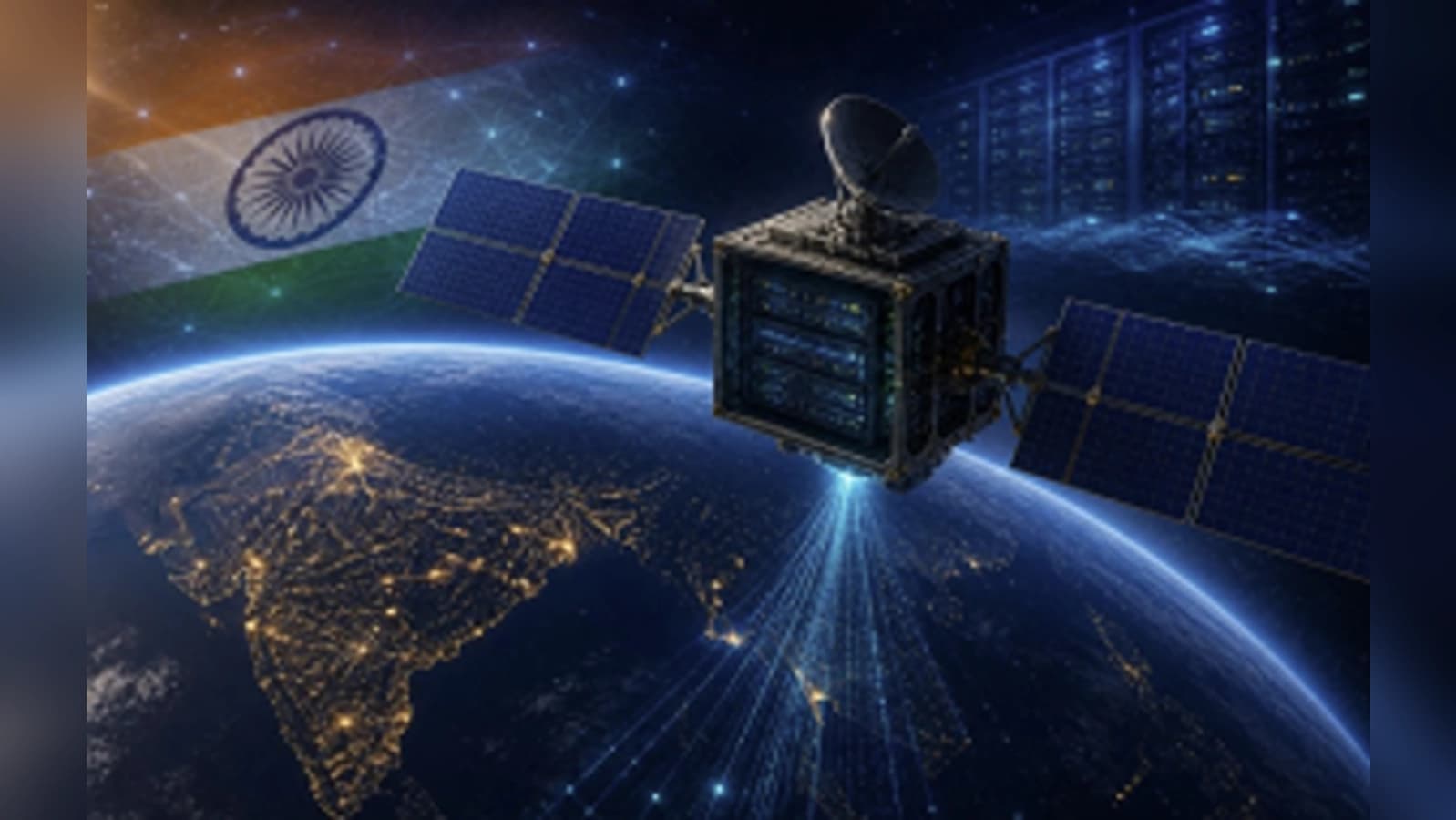
India is preparing to enter a new phase in the evolution of digital infrastructure with Pathfinder, its first orbital data centre that promises to take computing beyond the planet. Unlike traditional satellites that function primarily as data collectors, Pathfinder has been designed as a self-contained processing unit in space—capable of analysing vast volumes of information in real time while orbiting Earth. The mission, led by Pixxel in partnership with Sarvam AI, reflects a growing global shift toward integrating artificial intelligence directly with space-based systems.
At a time when the world is grappling with an explosion of data driven by AI, cloud computing and connected devices, the limitations of Earth-based data centres are becoming increasingly evident. These facilities require enormous amounts of energy, cooling infrastructure and physical space, raising concerns about sustainability and scalability. Pathfinder attempts to address these challenges by relocating part of this computational load to space, where solar energy is abundant and natural cooling conditions exist.

More importantly, the satellite represents a change in how data is handled. By processing information in orbit, it eliminates the need to transmit massive datasets back to Earth before analysis, significantly reducing delays and costs. This capability could prove crucial in sectors like disaster response, climate tracking and real-time surveillance, where speed is critical. As India positions itself in this emerging domain, Pathfinder stands as both a technological experiment and a strategic signal—pointing toward a future where computing is no longer confined to terrestrial boundaries.
What is Pathfinder?
Pathfinder is a 200-kg class satellite equipped with data centre-grade GPUs, similar to those used in advanced AI systems on Earth. Unlike conventional satellites that send raw data back to ground stations, Pathfinder will process and analyse data directly in orbit. It will also carry hyperspectral imaging sensors, allowing it to capture detailed Earth observation data and interpret it instantly using onboard AI models.
How it changes satellite operations
Traditionally, satellites act as data collectors, while processing happens on Earth. Pathfinder changes this model by embedding computing power in space itself. This reduces latency, bandwidth use and dependency on ground infrastructure. The ability to process data in real time is particularly valuable for applications such as disaster response, climate monitoring and defence, where faster insights can make a critical difference.
Why build a data centre in space?
The idea of orbital data centres is driven by the rapid rise of AI and the growing strain on Earth-based infrastructure. Data centres consume massive energy and require complex cooling systems. In space, satellites can use continuous solar power and natural cooling, making operations more efficient. Processing data closer to its source also reduces transmission costs and improves speed.
A global race with challenges
India’s Pathfinder enters a space where global players, including SpaceX and Meta Platforms, are exploring similar ideas. However, orbital computing remains experimental. High launch costs, limited repair options and long-term reliability are key challenges that need to be addressed before such systems can scale.
Why it matters for India
Pathfinder is also a strategic step toward technological self-reliance. By combining Indian satellite technology with indigenous AI models, it reduces dependence on foreign cloud infrastructure. It also highlights the rising role of private startups in India’s space sector, expanding beyond the traditional dominance of government-led missions.
What comes next
As a demonstrator mission, Pathfinder could pave the way for AI-powered satellite constellations and distributed computing networks in orbit. If successful, it may transform how data is processed globally—shifting from Earth-bound data centres to space-based systems.
In essence, Pathfinder is not just a satellite but an early blueprint of the future, where computation extends beyond the planet and space becomes the next frontier of digital infrastructure.






.jfif&w=256&q=75)





.webp&w=256&q=75)
