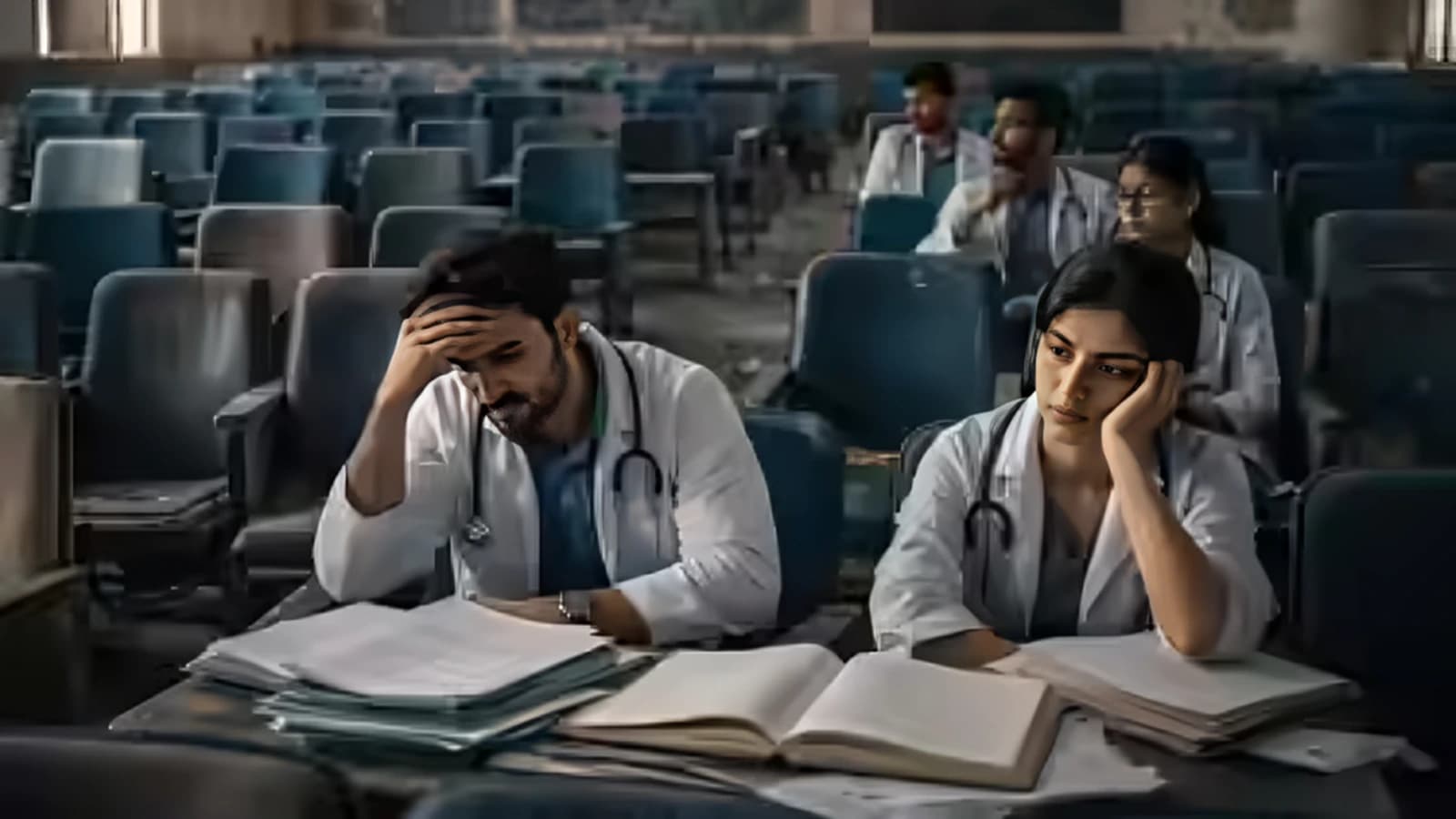
Every year thousands of students in India spend months or even years getting ready for postgraduate entrance exams. The competition is very tough. The pressure is very high.. Even with all this hundreds or even thousands of postgraduate medical seats are still empty after the counselling rounds are over. This is a problem and it makes us think about how medical education is structured and what kind of careers young doctors want.
Recently we saw this problem again. In the 2025-26 postgraduate admissions many seats were still empty even after many rounds of counselling. In some states the number of seats was over a hundred. For example in Karnataka 783 postgraduate medical seats were empty after the admission process was over. This is a percentage of the total seats available in the state.

This problem is not just in one state. Over the country thousands of seats were empty during the counselling for NEET-PG. The people in charge even lowered the qualifying marks so that more students could join the counselling and fill the seats.. Even with this many seats were still empty.
At first this seems strange. Medical entrance exams are very competitive. Many students take the NEET-PG every year.. When we look at the bigger picture of medical education we can see why this is happening.
One big reason is that there are more postgraduate medical seats now than there were ten years ago. India has opened new medical colleges and training programs to make up for the lack of specialist doctors. The number of postgraduate seats has more than doubled in the last ten years. It has gone from about thirty thousand seats to over seventy thousand seats. This is good for the healthcare system. It has also created a problem where there are more seats available than students want.
Another important reason is what kind of careers medical students want. Most students want to study things like General Medicine, Radiology, Dermatology, Paediatrics, Orthopaedics and Obstetrics and Gynaecology. These are the fields that have career prospects high salaries and a lot of clinical work. So the seats in these fields get filled up quickly.
On the hand many students do not want to study things like Anatomy, Physiology, Biochemistry, Microbiology or Pharmacology. These subjects are very important for education and research but many students think they do not have as many clinical opportunities or career growth. So many seats in these fields are empty every year.
The cost of education is also a big problem. Many of the seats are in private medical colleges, where the fees are very high. Many students cannot afford to pay much money every year. So some students choose to take the entrance exam in the hope of getting into a government college or a better field.
The timing and organization of the counselling process also play a role. Sometimes seats that are added late in the process do not get filled because many students have already made plans.
The problem of seats has big implications for the healthcare system. Postgraduate medical education is necessary to produce specialist doctors who can meet the growing healthcare needs of the country. When training positions are empty it is a missed opportunity to make the medical workforce stronger.
To fix this problem we need to think about it in a way. The people in charge may need to look at the fees in colleges tell students more about career opportunities in less popular fields and make sure that the seats available match the healthcare needs of the country. We can also encourage research improve career paths in academia and offer incentives in fields to attract more students.
In the end the fact that there are postgraduate medical seats does not mean that students are not interested in medicine. It just shows that there are complicated factors at play, in medical education. If we want to use our growing medical training capacity to build a healthcare system we need to understand and fix these problems.
(This editorial is authored by Dr. Abhinav Nikunj, a Healthcare Provider, Policy Observer, and Education System Analyst. Education Post is not responsible for its content as it expresses opinions.)