In the first years of life, typically between ages 0 and 6, children undergo rapid brain development, building foundational skills like communication, attention, social engagement, and the ability to manage daily tasks.
For children with intellectual and learning disabilities and those on the autism spectrum, these critical skills may emerge more slowly or differently, making early, structured support essential for their learning and participation. This is known as early intervention, and it refers to services provided to children with disabilities and their families during their early years of life. It focuses on helping children reach key developmental milestones before starting school, while also supporting parents to respond effectively to their child’s needs.

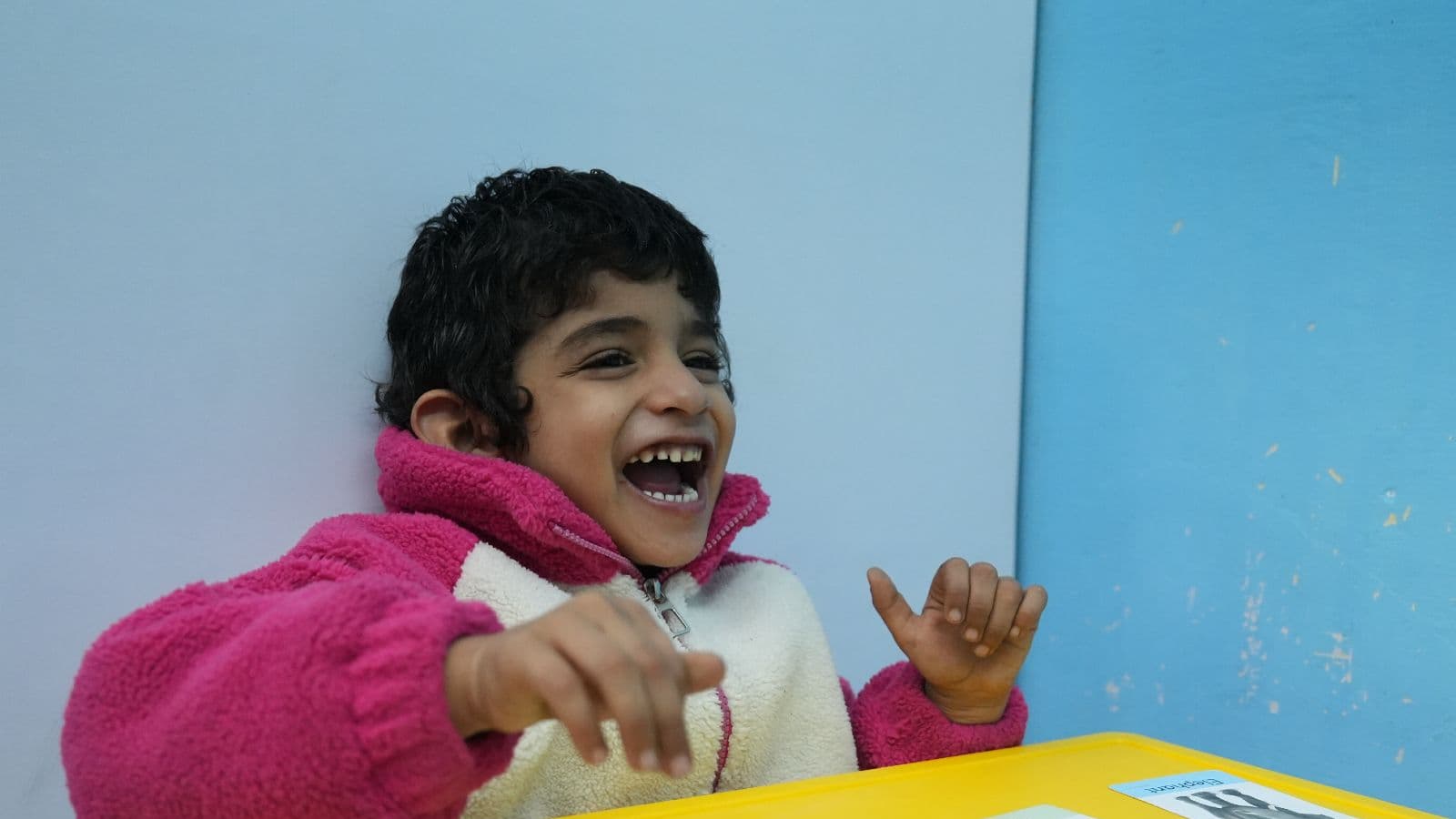
For Gideon and his family in Delhi, early intervention became the starting point.
Gideon is five years old and was diagnosed with autism last year. For him, this has mainly meant difficulties with communication—speaking, understanding words, and expressing his needs. Busy or noisy environments felt overwhelming, and being around groups of children was once unsettling.
Like many families from low-income backgrounds, Gideon’s parents struggled to find affordable and appropriate support. Private therapy options are out of reach, and public services, while affordable, are not always able to meet the volume of need. A conversation with another parent of a child with disabilities eventually led them to CBM India’s Early Intervention Centre, where they enrolled Gideon soon after his diagnosis.
At the center, Gideon began working with a coordinated team of specialists, including a special educator, a speech and language therapist, and an occupational therapist, each addressing different aspects of his development, such as communication, attention, and sensory and motor skills. This multi-disciplinary model takes a holistic view of a child's needs, allowing specialists to work together rather than in isolation.
For Gideon, changes began to appear within a few months. He started speaking simple words, including “mummy” and “papa”, and addressing his special educator and speech therapist as “ma’am”. He began following instructions, identifying objects, animals, and body parts, and engaging more with people around him. He can now hold a pencil and scribble independently. These seemingly small steps reflect growing cognitive and language development and readiness for more structured learning.
Early intervention is most effective when families are partners in the process, extending learning beyond therapy sessions into everyday life. As part of CBM India's early intervention model, the center works closely with Gideon's parents to actively reinforce what he learns, help them adapt daily routines at home, and learn how to respond to their child’s cues.
“As parents, we all want what’s best for our children,” Gideon’s father, Mr. Surjeet, says. “In a supportive learning environment like this, children gradually begin to learn faster.”
Mr. Surjeet has also become more open about his son’s journey. “When people ask me about my child, I speak honestly about his condition. I believe openness helps build understanding and acceptance.”
Gideon is one of many children in India who could benefit from early, coordinated support. When children with disabilities receive timely intervention tailored to their needs and are supported by trained professionals and families, they are better positioned to learn and participate independently and build skills that support a good quality of life.
As International Day of Education is observed on January 24, it offers an opportunity to think of education beyond the four walls of a classroom, as a continuum that includes early identification and intervention, school-based support, and sustained assistance for learners as they progress through the education system.
(This article is written by CBM India Trust. This is an opinionated article; EPN has nothing to do with this editorial.)