Manipur Ethnic Conflict Explained: What Is the Meitei-Kuki Conflict, Why It Started and What’s Happening Now
The Manipur violence, which began in 2023 over tribal status and land rights, continues into 2026, raising questions about its causes, impact and future.
Prabhav Anand22 April 2026 12:18
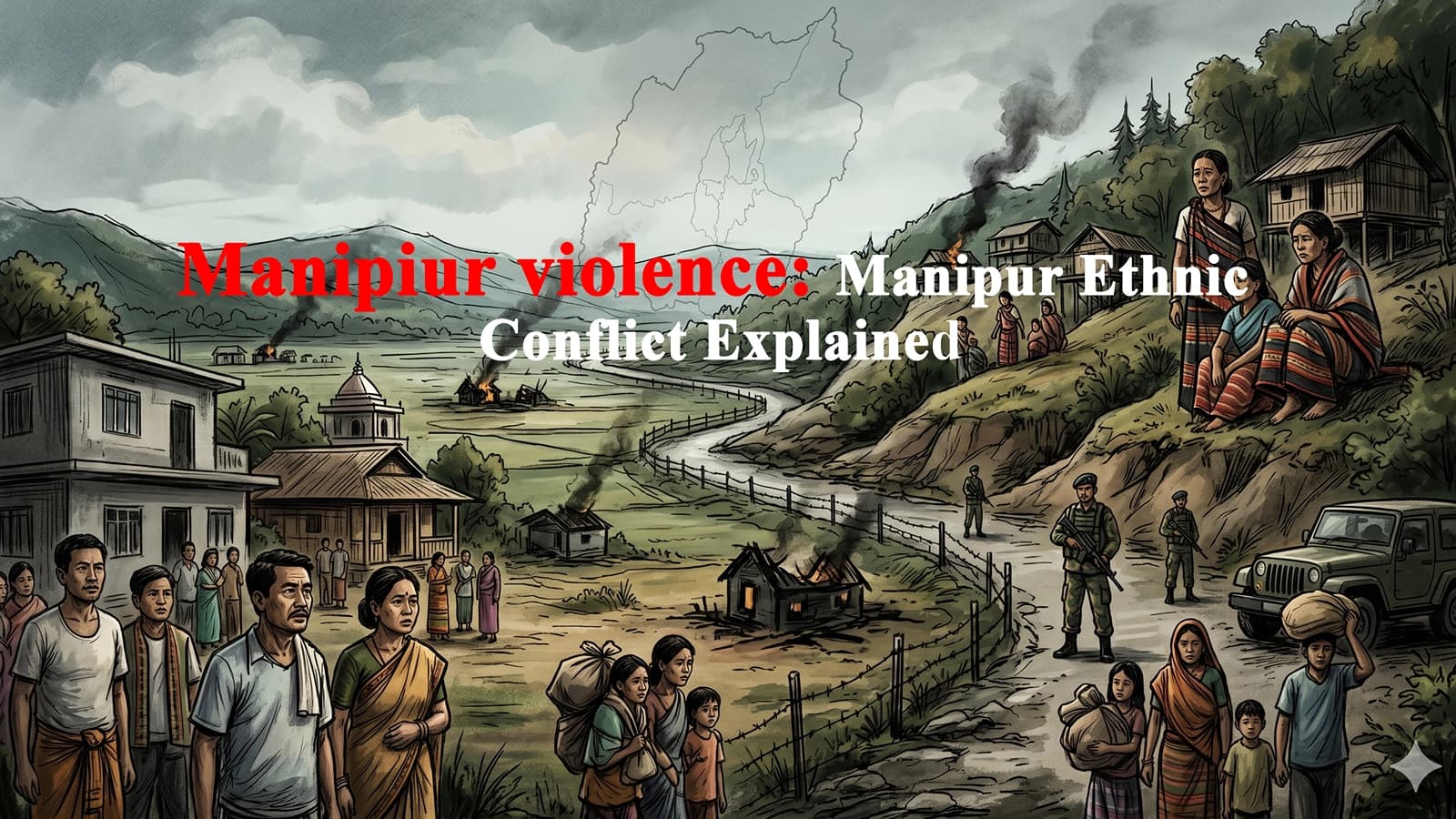
Illustration Image for showing conflict in Manipur. (Credit: AI Generated)
Nearly three years after ethnic violence first erupted in Manipur, the northeastern state continues to grapple with deep divisions between the Meitei and Kuki-Zo communities, as fresh clashes in 2026 underscore the fragility of peace.
What is the Manipur ethnic conflict?
The Manipur ethnic conflict is an ongoing clash between the Meitei community and the Kuki-Zo tribal groups that has gripped the northeastern Indian state since May 2023.
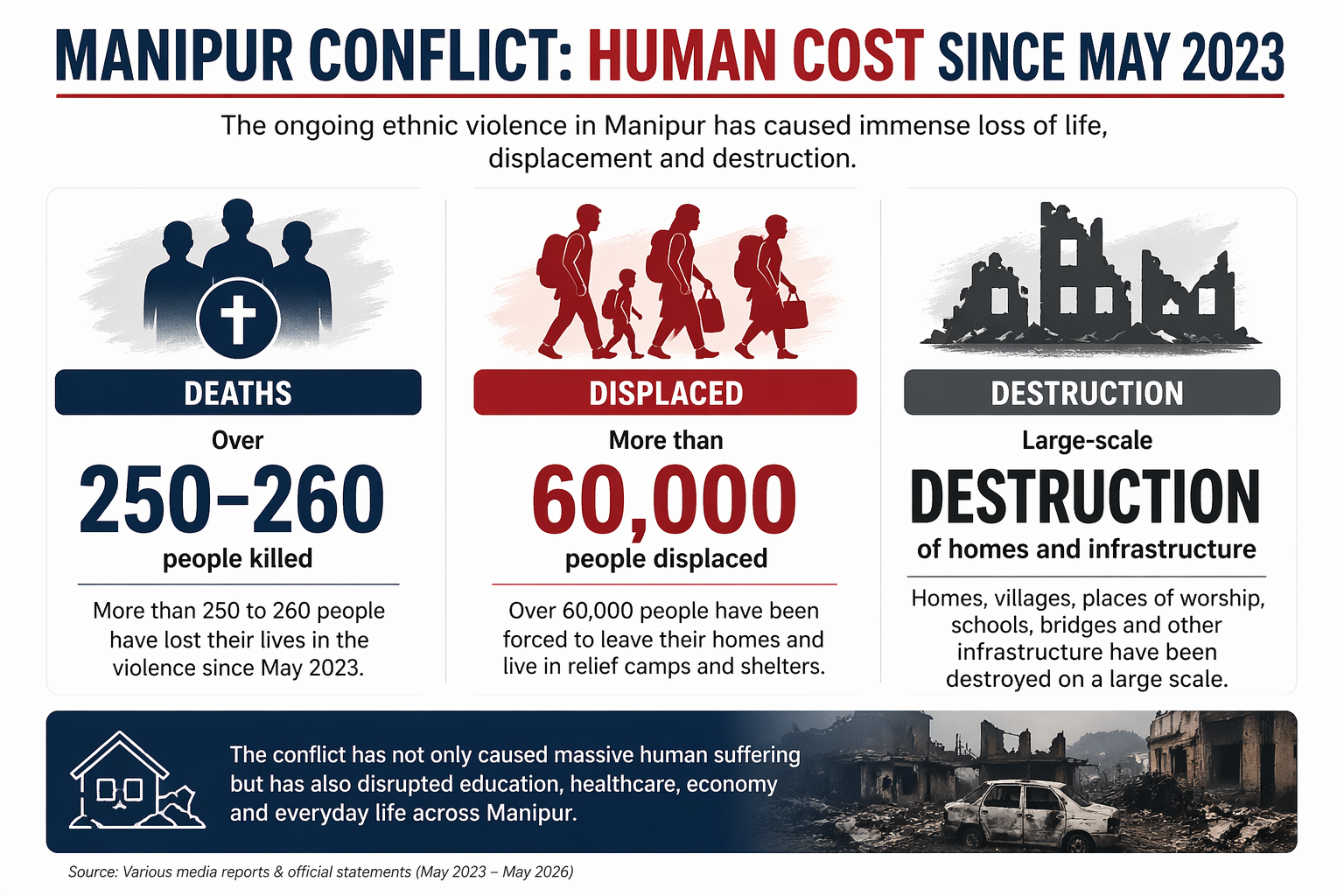
Often described as one of the most serious episodes of ethnic violence in Manipur, the conflict has left more than 250 people dead and displaced over 60,000 residents. The crisis has effectively divided the state into two parts, with Meiteis largely controlling the Imphal Valley and Kuki groups concentrated in the surrounding hill districts.
The Manipur violence explained in simple terms is a mix of ethnic rivalry, land disputes, and political tensions that escalated into widespread riots and armed confrontations.
Why did the Manipur violence start in 2023?
The immediate trigger behind the Manipur conflict 2023 was a recommendation by the Manipur High Court in April 2023 to consider granting Scheduled Tribe (ST) status to the Meitei community.
Tribal groups, especially the Kukis, opposed the move, fearing it would dilute protections over land and reservations. Protests erupted across the state, and on May 3, 2023, a tribal solidarity march turned violent, marking the beginning of large-scale clashes.
This moment is widely seen as the starting point of the Manipur riots explained in 2023, although tensions had been building for years.
What are the deeper causes of the Manipur crisis?
While the court order triggered the unrest, the causes of Manipur violence are rooted in long-standing structural issues.
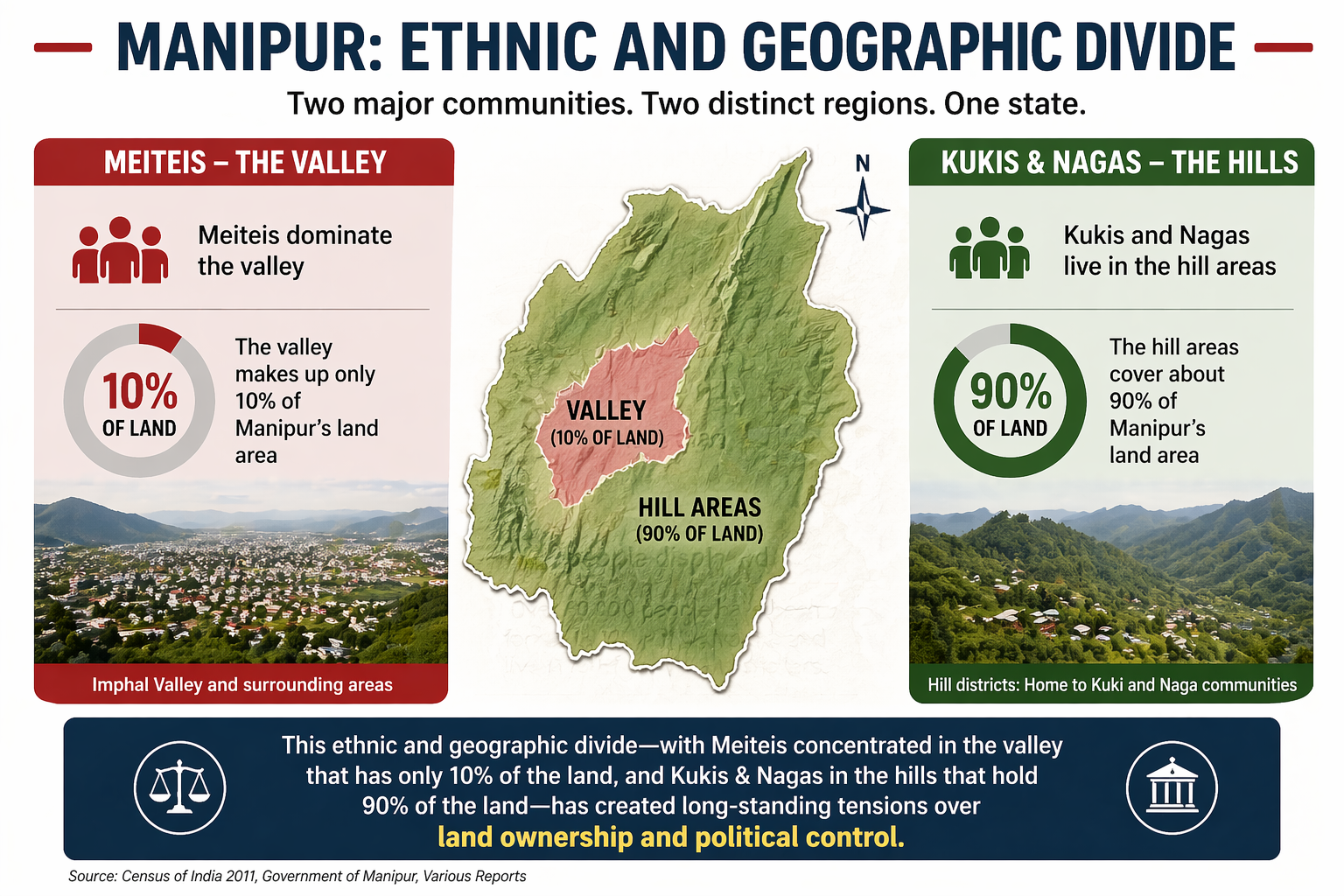
The Meitei community, which forms the majority population, lives mainly in the valley that accounts for a small portion of Manipur’s land. In contrast, tribal groups such as the Kukis and Nagas inhabit the hill areas, which make up most of the state’s territory and enjoy constitutional protections over land ownership.
This imbalance has led to competing demands over land rights, political power and identity. Analysts say the Meitei vs Kuki conflict is also shaped by historical grievances, economic inequality and distrust between communities.
The situation worsened after thousands of weapons were looted from police armories during the early days of the violence, turning the crisis into a heavily armed confrontation.
Where is the Manipur conflict happening?
The Manipur violence location is largely divided between the Imphal Valley and the hill districts.
The valley, dominated by Meiteis, has seen repeated incidents of arson and clashes, while the hill regions, home to Kuki-Zo groups, have witnessed counter-violence and displacement. Buffer zones now separate communities, making movement between these areas difficult and dangerous.
This geographic divide has reinforced what many describe as a “state within a state,” with both communities living in segregated zones.
What has happened since 2023? Timeline of the conflict
Since the initial outbreak, the Manipur conflict timeline has been marked by recurring violence, security crackdowns and failed peace efforts.
In 2023 and 2024, the state saw widespread killings, destruction of homes and religious sites, and mass displacement. Security forces were deployed in large numbers, but sporadic clashes continued.
By 2025, tensions remained unresolved, with little political consensus on key issues such as ST status and demands for separate administration by Kuki groups.
What is the latest news on Manipur violence in 2026?
The Manipur violence 2026 has seen fresh flare-ups, indicating that the conflict is far from over.
In April 2026, new incidents of violence, including deadly attacks on civilians, triggered protests and forced authorities to impose curfews and suspend internet services in several districts. The renewed unrest has once again highlighted the fragile security situation in the state.
Residents continue to live in fear, with many families still in relief camps nearly three years after the conflict began.
Why is the Manipur conflict still continuing?
Experts say the reason why Manipur conflict continues lies in unresolved political and social issues.
There has been no consensus on the Meitei demand for ST status, while Kuki groups continue to push for a separate administrative arrangement. Allegations of bias, lack of trust in institutions and limited dialogue between communities have further complicated peace efforts.
Without a long-term political solution, the Manipur crisis explained today remains one of deep division rather than resolution.
What is the impact of the Manipur ethnic violence?
The impact of Manipur violence goes beyond casualties and displacement.
The conflict has disrupted education, healthcare and economic activity across the state. Social ties between communities have broken down almost completely, and reconciliation appears distant.
For India, the crisis also raises concerns about internal security and governance, particularly in a sensitive border region.
The Manipur ethnic conflict explained is not just about a single trigger or event. It is the result of decades of tension over identity, land and political power.
As the latest Manipur news in 2026 shows, peace remains fragile. Unless there is meaningful dialogue and structural reform, the conflict risks continuing as a long-term crisis.








.png&w=256&q=75)