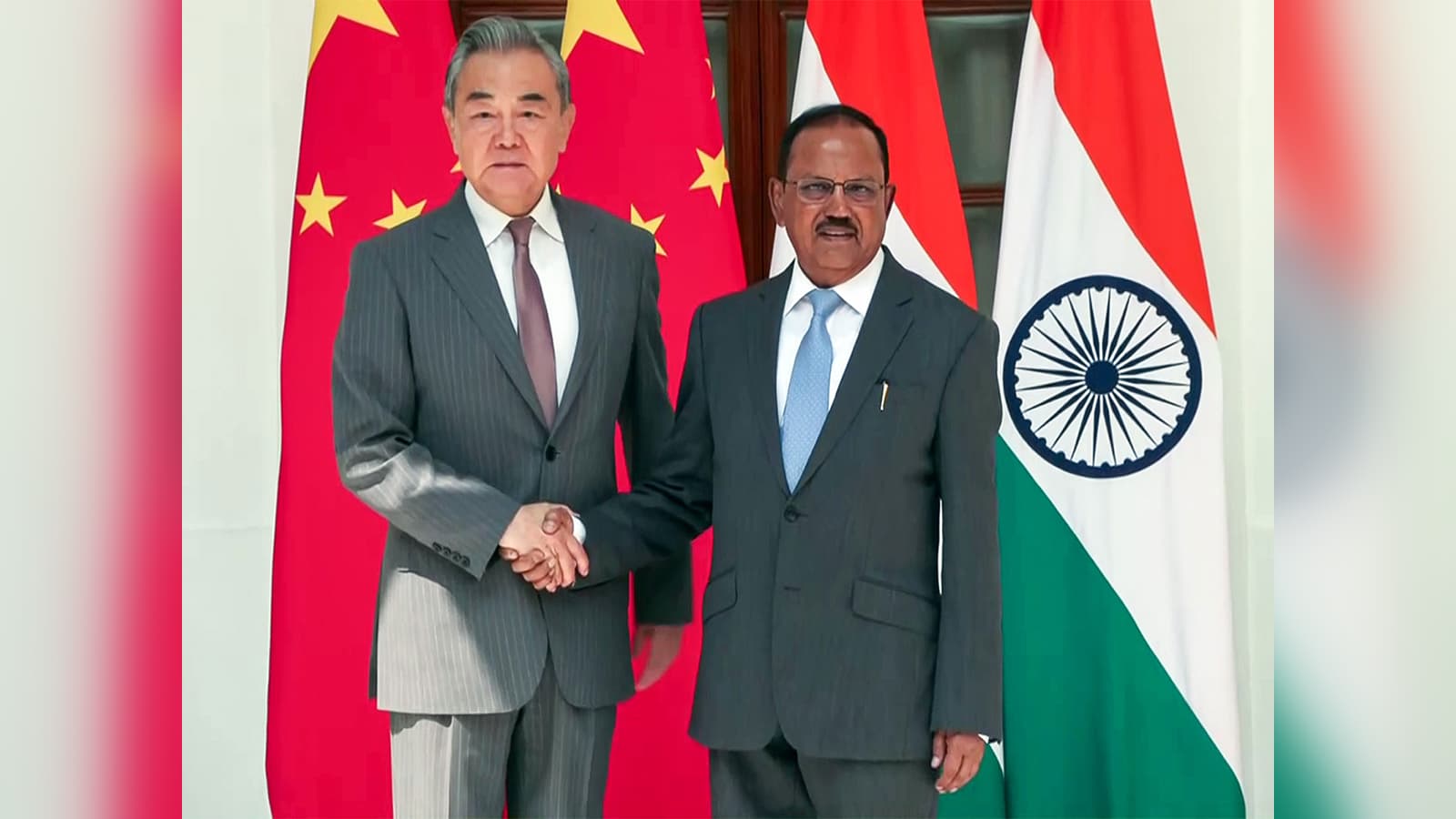
National Security Adviser Ajit Doval arrived in Beijing on Monday for the 25th round of India-China Special Representatives’ talks on the boundary dispute, with discussions scheduled with Chinese Foreign Minister Wang Yi on Tuesday.
Doval and Wang are the designated Special Representatives for the boundary negotiations, a mechanism established in 2003 to work toward a settlement of the long-running India-China border dispute. The two sides have yet to reach a final agreement on the boundary, but the mechanism has continued to serve as a channel for managing tensions and discussing border-related issues.

The talks come at a sensitive point in bilateral relations. In late July, Indian and Chinese patrols reportedly came face to face in the Taksing area of Arunachal Pradesh's Upper Subansiri district. Chinese personnel were reported to have returned across the area in early August. India's Ministry of External Affairs subsequently said the situation along the border would have a bearing on the broader relationship between the two countries. Indian security officials said the situation was under control.
The Arunachal Pradesh incident comes as New Delhi and Beijing continue efforts to stabilise relations following the military confrontation that began along the Line of Actual Control in eastern Ladakh in 2020.
India and China reached an agreement in October 2024 on patrolling arrangements in Depsang and Demchok in eastern Ladakh. According to the Ministry of External Affairs, the agreement led to disengagement from all the friction points that emerged during the 2020 standoff, with patrolling and, where applicable, grazing to resume according to longstanding practices.
The Special Representatives’ dialogue was also revived as part of the broader effort to improve relations. The previous round was held in New Delhi in August 2025. Both sides subsequently said they had reached several understandings, including maintaining peace and stability in the border areas.
The latest meeting is also taking place ahead of the BRICS leaders’ summit scheduled in New Delhi on Sept. 12-13. Chinese President Xi Jinping is expected to attend the summit, making the Doval-Wang discussions an important part of preparations for renewed high-level engagement between India and China.
The two countries have taken several steps toward restoring bilateral engagement since 2024. Prime Minister Narendra Modi and Xi met on the sidelines of the BRICS summit in Kazan in October 2024, their first bilateral meeting at the delegation level in nearly five years. The meeting underscored the importance of ensuring that differences over the boundary do not disrupt peace and stability along the border.
Doval and Wang also met in June on the sidelines of the BRICS national security advisers’ meeting in New Delhi. The discussions focused on bilateral relations and the continuing process of normalising ties.
The boundary question remains unresolved. The disputed India-China frontier stretches about 3,488 kilometres, and the two countries have different perceptions of the Line of Actual Control. The 2005 Agreement on Political Parameters and Guiding Principles for Settlement of the India-China Boundary Question remains one of the key documents guiding the negotiations.
The Beijing talks are therefore expected to focus on maintaining peace along the LAC, addressing outstanding boundary issues and sustaining the recent improvement in bilateral relations. Any substantive progress will depend on the positions taken by both sides during the discussions.