In a sweeping reform hailed as a milestone for labor rights, Saudi Arabia has officially abolished the controversial Kafala System, offering millions of migrant workers greater autonomy and protections in the kingdom. The decades-old sponsorship framework had long tied employees to their employers, giving sponsors near-total control over job changes, travel, and exit from the country.
What was the Kafala system?

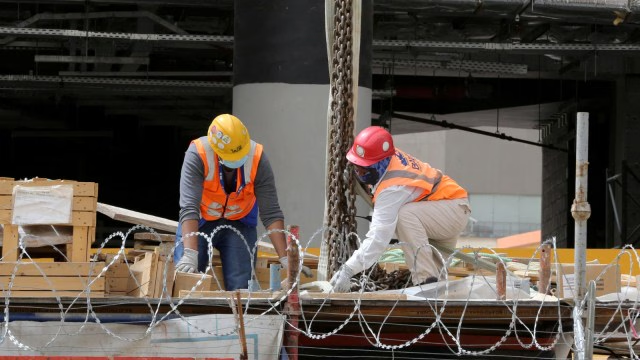
The Kafala, or sponsor, system bound migrant workers to a single employer throughout their stay in the country. Workers were required to seek the employer’s approval to switch jobs or leave Saudi Arabia, leaving them vulnerable to exploitation and abuse. Critics have long decried it as a form of modern-day slavery, pointing to the deaths and hardships faced by thousands of South Asian laborers, including Indians, during major construction projects like the 2022 FIFA World Cup in Qatar.
Saudi Arabia’s landmark shift
Earlier this year, Saudi authorities announced the dismantling of Kafala, replacing it with a contract-based employment system designed to enhance worker mobility and independence. Under the new framework, workers can change jobs upon contract completion without employer permission and can exit or return to the country simply by electronically notifying their employer.
Officials say the reform aligns with the Kingdom’s Vision 2030 and National Transformation Program and is expected to directly benefit over one million migrant workers. By granting greater freedom and legal safeguards, Saudi Arabia aims to make its labor market more globally competitive and worker-friendly.
The Gulf context
Saudi Arabia joins a growing list of Gulf countries reforming the Kafala system. Bahrain abolished it in 2009, and the UAE relaxed the system in 2015, allowing workers with expired contracts to stay in the country on six-month job seeker visas. However, strict Kafala rules remain in place in Kuwait, Qatar, and Oman.
For millions of migrant Indian workers, this move marks a historic turning point—liberating them from decades of restrictive labor practices and offering a pathway to fairer, safer, and more dignified employment.




_1600x900.jpg&w=256&q=75)



.jpg&w=256&q=75)
.jpg&w=256&q=75)
