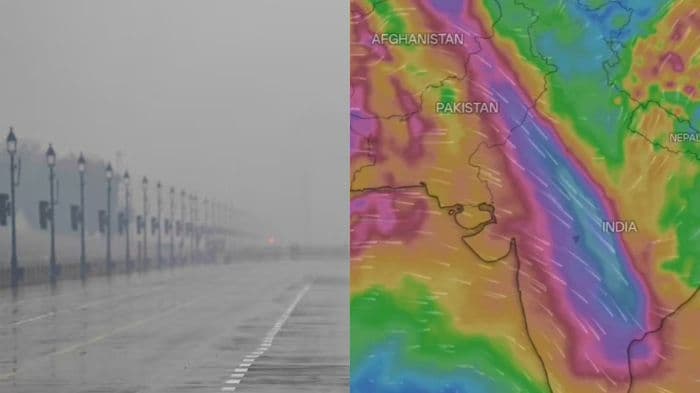
A rare 1,000-km-long rain band has formed across parts of India, Pakistan and Afghanistan, triggering widespread thunderstorms, gusty winds and rainfall in what meteorologists describe as an unusual weather event.
The system is linked to an active western disturbance that has developed into a straight low-pressure trough — a formation considered uncommon compared to the typically curved patterns seen in such systems.

Stretching from Afghanistan through Pakistan into northern India, the long, linear structure has intensified the weather system, leading to strong storms accompanied by lightning, hail and high-speed winds in several regions.
According to forecasts, northwest India is expected to experience moderate to heavy rainfall along with thunderstorms and gusty winds until around March 20, with authorities advising caution during the period.
The weather shift comes after several parts of north India witnessed unusually high temperatures earlier in March, with cities like Delhi recording heat close to 37°C. The arrival of the system has brought a noticeable drop in temperatures by around 3 to 7 degrees Celsius.
Experts say the straight alignment of the trough allows the system to cover a much larger geographical area, increasing its intensity and impact compared to conventional western disturbances.
Western disturbances are non-monsoonal weather systems that typically bring winter rainfall to northwest India. However, such strong activity in late March is relatively rare, making the current event notable.
The India Meteorological Department (IMD) is closely monitoring the system and has urged residents in affected areas to stay updated with official advisories, as thunderstorms, strong winds and possible hailstorms may continue over the coming days.
The development highlights increasing variability in weather patterns, with sudden shifts between heat and storm conditions being observed across the region.